Treating a deliberate vehicle attack on an elected official as an isolated criminal outlier or a simple security gap misses the structural trade-off at the heart of modern representative democracies: high public accessibility lowers the operational cost of violence while raising the political price of fortification.
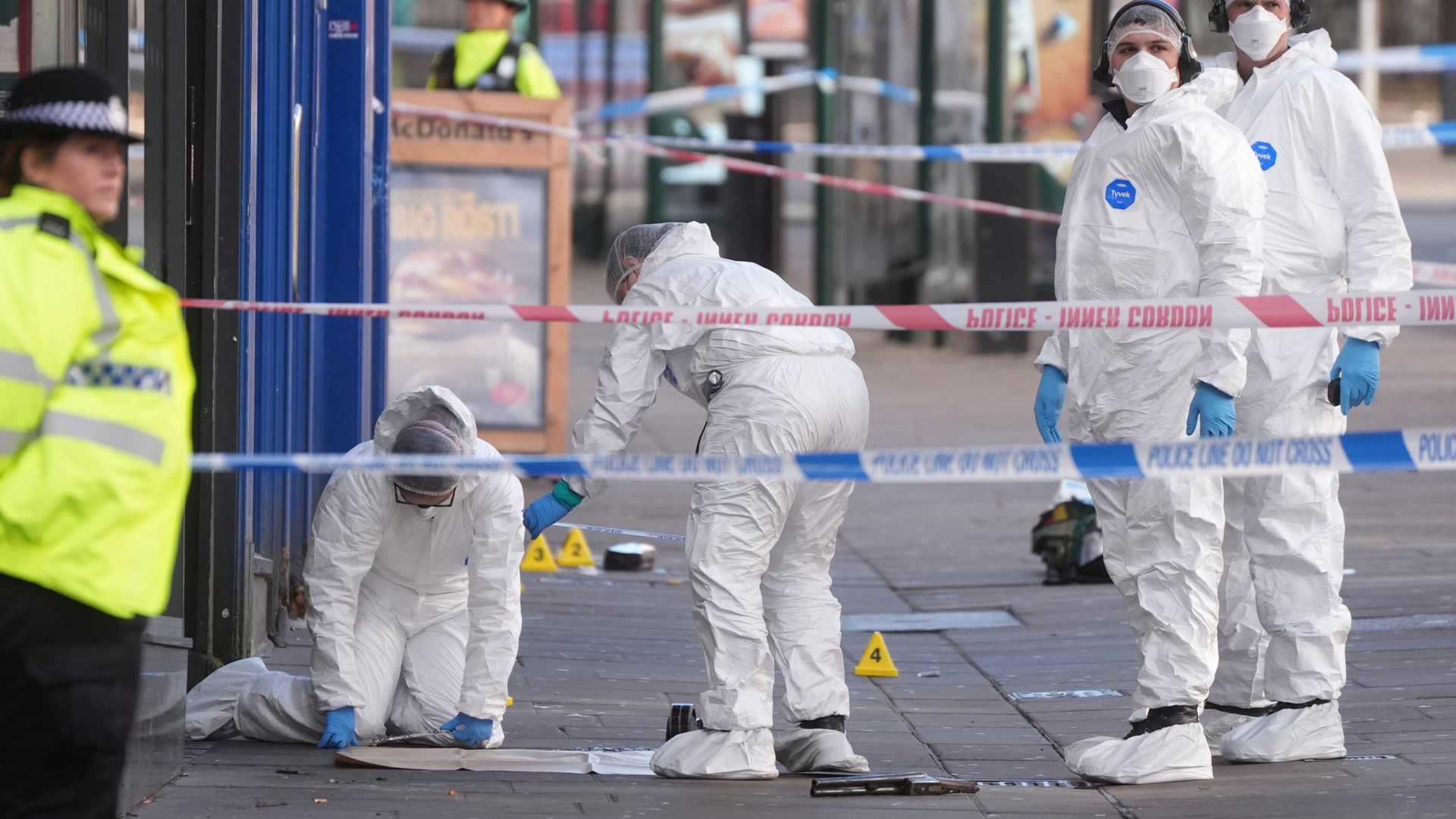
On October 19, 2026, independent federal member of parliament Helen Haines was critically injured outside her electorate office in Wangaratta, Victoria, after being struck by a vehicle that Prime Minister Anthony Albanese stated appeared to be a deliberate act. Police arrested a 43-year-old man at the scene, seized a knife from the vehicle, and opened an investigation involving counterterrorism resources while noting the motive remained unknown. Subsequent reporting established that surgeons amputated both of her legs before her hospital discharge a month later, and that charges including intentionally causing serious injury and harming a Commonwealth public official were brought against the accused, whose father described the lawmaker as a longtime family friend.
A standard wire report catalogs the immediate facts—the prime minister's characterization, the arrest, the counterterrorism involvement, and the historical contrast with past parliamentary norms. That structure stops at surface chronology. To understand why an attack in a regional electorate office reshapes institutional risk, the incident requires an analytical model that separates verified facts from working hypotheses, maps the mechanics of low-barrier attacks, and evaluates the security trade-offs facing lawmakers.
Deconstructing the Standard Wire Narrative
Conventional breaking-news coverage relies on a predictable sequence: official condemnation, initial law enforcement details, and a brief historical nod to civic openness. While accurate in reporting statements and charges, that template leaves three analytical blind spots.
First, it treats attribution and intent as a binary switch rather than an evolving evidentiary chain. Calling an act "no accident" or deploying counterterrorism investigators signals severe institutional concern, yet public statements regarding motive remain cautious or unresolved at early stages. Conflating a deliberate physical act with an ideological or terrorist motive blurs distinct threat categories that require different investigative and preventive responses.
Second, it flattens the operational geography of political work. National capital security—perimeters, bollards, and armed guards around a legislature—solves a completely different problem from local constituency work in a regional town. An independent MP operating an accessible storefront or regional office faces diffuse, unscheduled street exposure that fixed legislative barriers cannot address.
Third, it frames political violence as a simple contest between "more security" and "open democracy," without modeling the second-order distortion that heavy security introduces into constituent representation.
Known Facts Versus Working Hypotheses
Rigorous threat analysis separates confirmed record from inference so policy and risk decisions do not drift into speculation.
- Confirmed facts: Helen Haines was struck by a vehicle outside her electorate office in Wangaratta in October 2026, suffered critical injuries resulting in bilateral leg amputations, and was discharged from hospital in November 2026. A 43-year-old man was arrested at the scene, a knife was recovered from the vehicle, counterterrorism and police agencies investigated, and criminal charges were filed while motive remained unconfirmed publicly.
- Educated hypotheses: Rising online hostility, broader societal polarization, and high-profile overseas attacks on politicians increase the salience of targeted violence and may weaken traditional norms against harming public figures. In cases involving prior personal familiarity between an accused individual and a target, personal grievance, psychological crisis, or distorted fixation may interact with—or exist independently of—broader political or ideological grievances.
The Accessibility Cost Function in Representative Politics
Every democratic system operates along an accessibility-protection curve. In high-trust, low-barrier environments, citizens can walk into a local office, attend town halls, or approach officials on the street without screening. That openness lowers transaction costs for constituent service, community organizing, and grassroots campaigns—dynamics visible in independent movements that build trust through direct local presence.
When threat levels rise, the marginal cost of an attack drops for an offender who already uses everyday tools. A standard motor vehicle requires no specialized acquisition pipeline, blends into normal street traffic, and converts kinetic mass into severe force within seconds. Against an unarmored target in an open public space, attacker effort is low while potential harm is high.
Conversely, adding protective layers raises the friction cost for everyone. Close-protection details, hardened office entries, access controls, and advance screening impose financial costs on public budgets and behavioral costs on constituents. Worse, visible barriers alter the political signal: an office that feels like a bunker discourages routine civic contact, particularly in regional communities where personal approachability is part of the representative contract.
Cause-and-Effect Chains Wire Reports Often Miss
The first missed link connects electorate visibility to predictable exposure. Unlike cabinet ministers who travel primarily between secure ministerial suites, official vehicles, and scheduled events, local MPs often maintain regular hours and recognizable routines in regional hubs. Predictability reduces reconnaissance effort for a determined offender.
The second missed link connects high-salience incidents to institutional overcorrection. After a severe attack, political leaders face intense pressure to demonstrate decisive action. Blanket mandates—such as uniform close protection for hundreds of lawmakers—can misallocate scarce protective resources toward low-exposure settings while leaving high-exposure routines unaddressed.
The third missed link connects public rhetoric to threshold erosion. Even when an individual attacker's specific motivation is not yet established or is described as isolated, repeated normalization of aggressive language against officials lowers the social barrier that separates angry speech from physical action.
Three Pillars of Practical Electorate Risk Management
Protecting lawmakers without turning representative offices into fortresses requires managing risk across physical space, operational routines, and threat triage.
1. Situational Hardening Through Environmental Design
Crime prevention through environmental design focuses on shaping physical movement rather than building walls around every door. Practical measures include:
- Vehicle-to-pedestrian separation: Using planters, street furniture, bollards, or angled parking layouts outside high-footfall entrances where feasible to prevent direct curb-to-doorway vehicle approaches.
- Sightlines and controlled thresholds: Designing reception areas with clear visibility, a single defined public entry, and a secondary staff egress route so staff are never trapped in a dead-end room.
- Duress and alert integration: Linking panic alarms, cameras, and incident logging directly to local police response protocols rather than relying on improvised phone calls during an emergency.
2. Routine Variance and Movement Discipline
Security practitioners treat predictability as a vulnerability. A lawmaker or staff member who arrives at the same door at the same minute every week creates an observable pattern.
- Staggered arrival and departure windows: Varying times and entry points when moving between vehicles and offices reduces pattern reliability.
- Pre-meeting and arrival sweeps: Conducting quick visual checks of immediate approaches and entrances before high-visibility appearances or solo arrivals.
- Clear boundary rules for staff: Establishing standard operating procedures for handling walk-in distressed visitors, recording threatening communications systematically, and escalating anomalies early.
3. Tiered Threat Triage Instead of Uniform Lockdowns
Finite security budgets and personnel cannot cover every moment of every representative's week. Effective programs allocate protection proportionally based on objective threat indicators rather than title alone.
- Baseline posture: Standard environmental safeguards, staff training, and rapid reporting channels for all offices.
- Elevated posture: Targeted adjustments—such as temporary security presence, venue changes, or police liaison—when specific threats, heightened local tensions, or anomalous approaches occur.
- Critical posture: Dedicated protective measures triggered by credible, specific intelligence or active investigative indicators.
Limits and Trade-Offs of Protective Measures
No security architecture eliminates risk. Physical barriers can be bypassed, routine variance is difficult to sustain in small regional towns where "everyone knows everyone," and counterterrorism or police investigations take time to establish motive and legal proof.
Over-engineering protection carries its own failures. Excessive screening creates friction, delays legitimate constituent help, and can alienate voters who view distance as elitism. Security teams must therefore treat every measure as a calibrated trade-off between physical deterrence and civic access.
Strategic Recommendation
Parliaments and security agencies should replace one-size-fits-all security debates with a tiered regional office risk standard that pairs lightweight physical stand-off measures and staff incident protocols at every electorate office with rapid, intelligence-led protective surge capacity for elevated threats. Implementing baseline environmental controls and clear escalation thresholds protects frontline democratic access while concentrating specialized resources where actual risk concentrates.