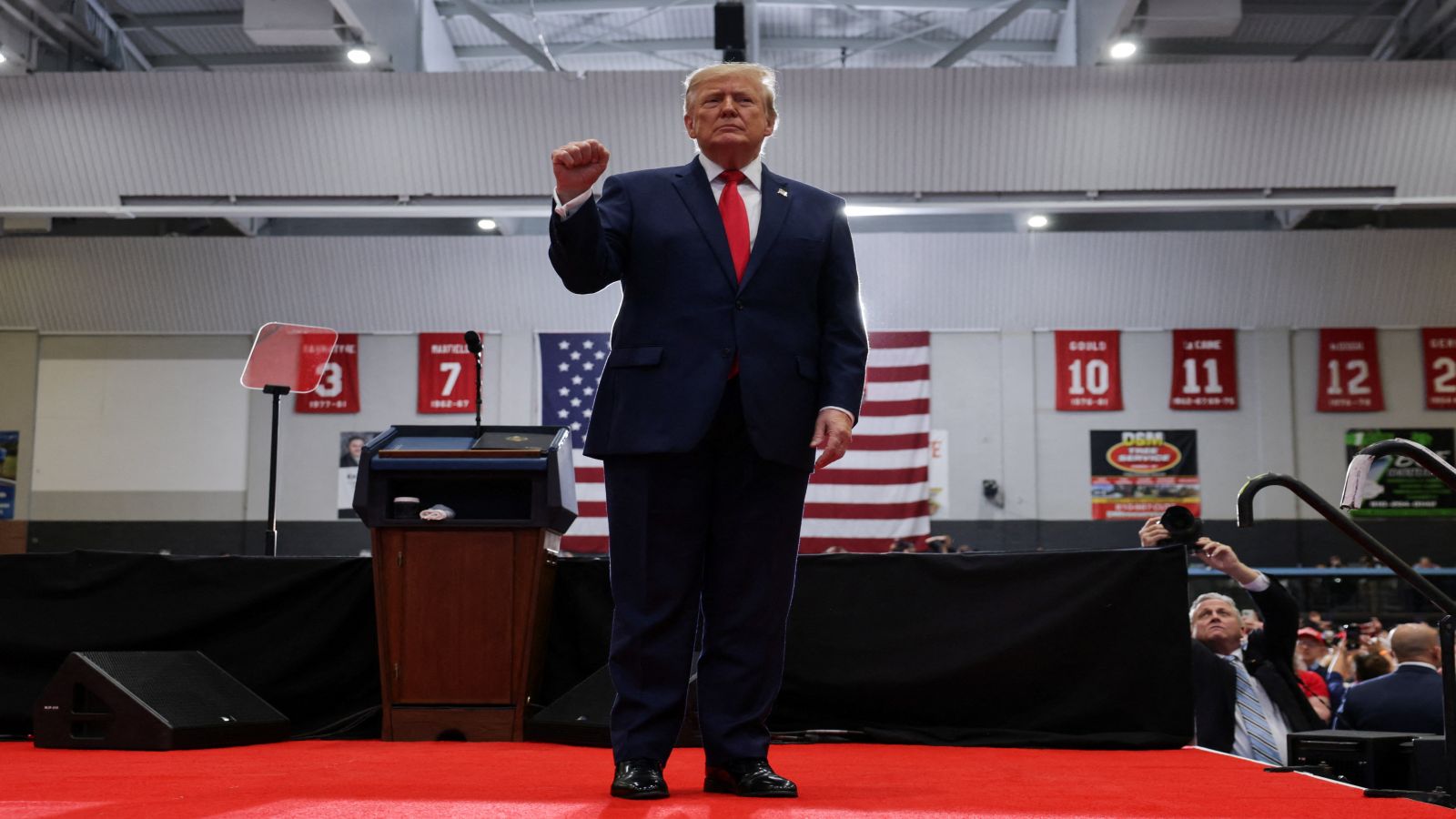
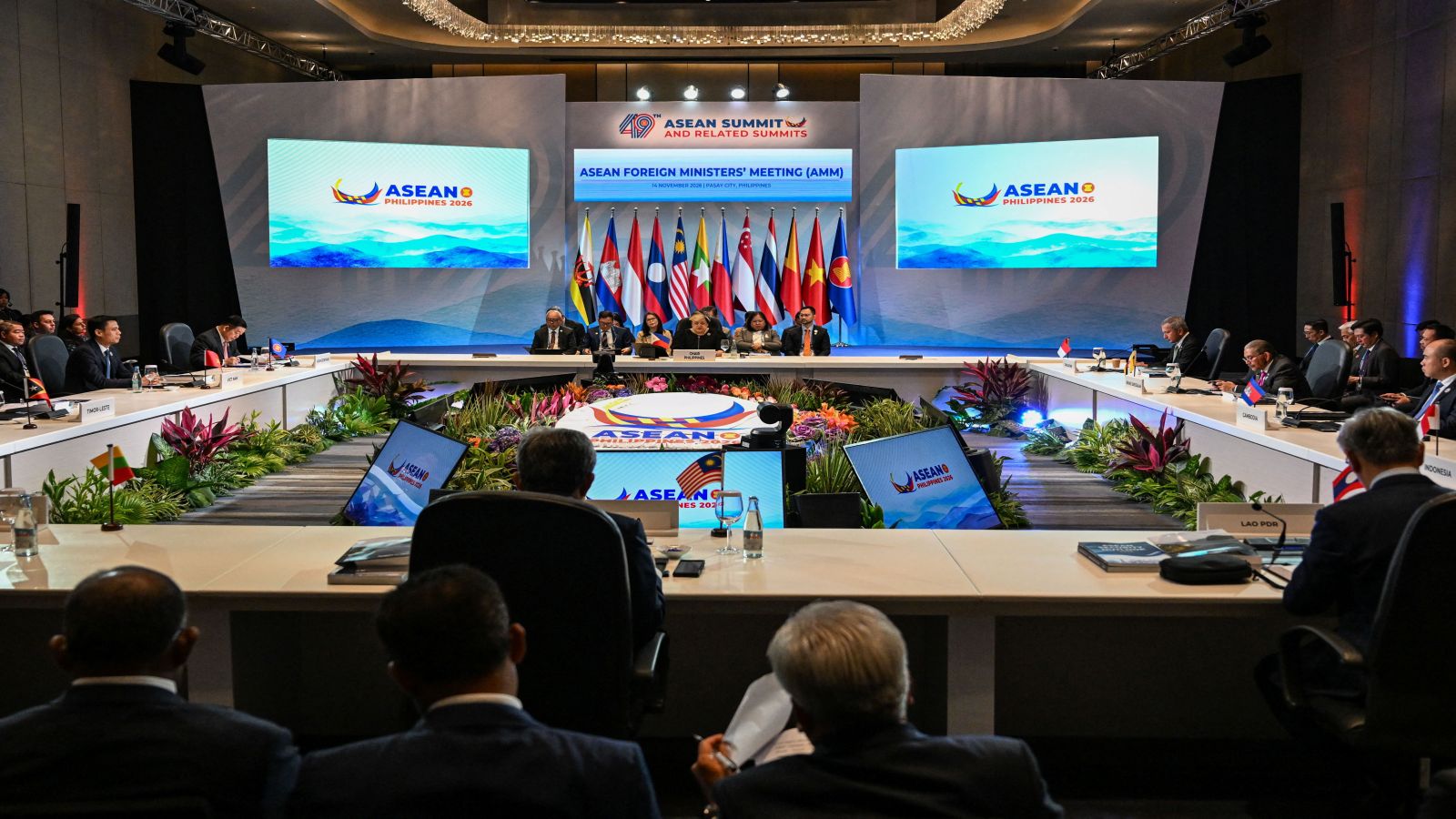
When an American president loses legislative majorities in a midterm election, executive power does not vanish—it migrates from domestic policymaking to foreign affairs. President Donald Trump’s November 2026 diplomatic tour across Manila and Shenzhen illustrates a recurring structural dynamic in American governance: the attempt to convert unilateral executive authority overseas into political capital at home. However, applying game theory and institutional constraint analysis to this pivot reveals a critical flaw in the strategy. While foreign summits offer immediate visual spectacles and bypass congressional gridlock, domestic electoral losses directly erode a president’s bargaining leverage with foreign counterparts, turning high-stakes negotiations into exercises in symbolic posturing.
The Institutional Mechanics of the Post-Midterm Pivot
To understand why second-term presidents routinely turn toward international diplomacy following midterm defeats—a pattern previously executed by Bill Clinton, George W. Bush, and Barack Obama—one must examine the asymmetry of constitutional authority. Once the opposition party captures control of Congress, as Democrats did in the November 2026 elections, the legislative pathway for domestic initiatives closes. Committee chairs shift, subpoena power transfers to political adversaries, and legislative bandwidth becomes consumed by oversight and budgetary standoffs.
Foreign policy operates under a different institutional architecture. Article II powers grant the executive branch wide latitude to conduct diplomacy, negotiate executive agreements, and command military deployments without immediate congressional approval. By shifting focus to the Asia-Pacific region, the administration seeks to achieve three operational objectives:
- Narrative Displacement: Replacing domestic coverage of legislative losses, air travel disruptions, and economic friction with high-profile international optics.
- Unilateral Execution: Pursuing bilateral commercial deals and executive frameworks that do not require Senate ratification.
- Alliance Recalibration: Engaging multilateral blocs like the Association of Southeast Asian Nations (ASEAN) and the Quad (the United States, Australia, India, and Japan) to project continuity in regional security.
The limitation of this institutional pivot lies in the two-level game of international relations. Put simply, a leader negotiates simultaneously at the international table and the domestic table. When domestic political capital drops, foreign adversaries immediately discount the longevity and enforceability of the executive’s promises.
The Leverage Deficit in Trilateral Negotiations
The centerpiece of the Shenzhen leg of the tour—a trilateral meeting alongside Chinese President Xi Jinping and Russian President Vladimir Putin on the sidelines of the Asia-Pacific Economic Cooperation (APEC) forum—highlights the friction between political theater and substantive diplomacy.
In any multipolar negotiation, outcomes depend on the Best Alternative to a Negotiated Agreement (BATNA) held by each participant. Entering Shenzhen, none of the three leaders possessed an unassailable position of strength:
- Washington’s Constraint: The administration arrived weakened by the steepest midterm losses for a sitting president's party in five decades, driven largely by voter dissatisfaction over broad tariffs and military entanglement in Iran. Furthermore, the absence of key technology advisers—specifically following the resignation of Nvidia CEO Jensen Huang amid national security controversies—complicated the administration's semiconductor diplomacy.
- Beijing’s Constraint: Xi Jinping faced domestic economic stagnation alongside new U.S. regulatory restrictions targeting China’s remote access to advanced American semiconductors.
- Moscow’s Constraint: Vladimir Putin entered the talks with Russian military and economic bandwidth severely depleted by prolonged attrition in Ukraine.
Because all three actors faced acute domestic or strategic vulnerabilities, the incentive structure favored low-cost symbolic concessions over binding structural treaties. For example, Trump’s push for trilateral nuclear arms control talks ran directly into asymmetric stockpile realities. Because China maintains a significantly smaller nuclear arsenal than either the United States or Russia, Beijing has historically refused to enter parity-based limits that would lock in its strategic inferiority. Consequently, while Beijing agreed to modest language regarding future nuclear risk management discussions in exchange for the diplomatic prestige of hosting the summit, the underlying trajectory of China’s nuclear expansion remained unaltered.
Symbolism Versus Binding Architecture in Southeast Asia
Before arriving in China, the administration’s stop in Manila demonstrated the divergence between headline announcements and enforceable trade policy. In modern trade economics, lowering tariff barriers requires granular schedules, rules-of-origin verification, and dispute resolution mechanisms. Without these components, trade agreements function merely as memoranda of understanding.
During the Manila engagements, the administration announced a major trade breakthrough with Thailand and described a finalized pact with the Philippines as the largest in bilateral history. Yet an examination of the operational details reveals significant gaps:
- Contradictory Tariff Claims: Assertions from Washington that the Thai agreement would eliminate all tariffs on U.S. exports were immediately disputed by Thailand's commerce minister, who noted that critical terms remained unresolved.
- Absence of Textual Specificity: Philippine diplomatic officials acknowledged that the bilateral trade announcement consisted of broad generalities rather than binding tariff schedules.
- Security Ambiguity: While the White House pointed to $2 billion in previously authorized foreign military financing for Manila, the president declined to address ongoing territorial friction in the South China Sea, creating strategic uncertainty for regional partners who rely on explicit U.S. deterrence guarantees.
This dynamic exposes a core vulnerability in personalist diplomacy. When a president bypasses formal multilateral summits—such as skipping the standard U.S.-ASEAN summit in favor of an informal leaders' dinner—to rely on personal rapport and bilateral announcements, the resulting agreements lack institutional depth. Regional allies take the rhetorical support while hedging their long-term security and economic bets, recognizing that an incoming opposition-controlled Congress will constrain the White House's fiscal and regulatory latitude.
The Domestic Feedback Loop and Congressional Oversight
A president cannot insulate foreign policy from domestic political realities when the domestic electorate holds the administration’s economic statecraft responsible for household costs. In the 2026 midterm cycle, voter backlash centered heavily on two executive-led initiatives: broad import tariffs that functioned as consumption taxes, and ongoing military friction with Iran.
Bringing business executives such as Elon Musk—who invested over $445 million in the midterm cycle and holds extensive commercial interests in China—into the diplomatic orbit creates additional friction. While intended to project private-sector alignment, this proximity invites immediate institutional pushback once the new Congress convenes in January. House committees armed with subpoena power can investigate potential conflicts of interest between corporate ventures in Shanghai or Shenzhen and U.S. trade concessions, effectively paralyzing the administration's ability to deliver regulatory relief to Beijing.
At the same time, deferring major U.S.-China trade resolutions to subsequent forums—such as the December G20 summit in Miami—merely delays the collision between the administration's protectionist instincts and the economic reality of supply chain interdependence. Foreign leaders understand the American electoral calendar; they know that a president facing domestic investigations and legislative gridlock has a narrowing window to enact durable policy.
Strategic Trajectory for Post-Midterm Statecraft
To convert international engagement into genuine strategic advantage rather than transient media coverage, executive leadership must abandon the pursuit of sweeping, unverified bilateral announcements and pivot toward institutional durability. First, trade negotiators must replace vague joint statements with narrowly scoped, sector-specific executive agreements—covering digital trade, supply chain resilience, and critical minerals—that do not require congressional tariff authorization and can survive legislative scrutiny. Second, in trilateral engagements with Beijing and Moscow, Washington should decouple nuclear risk-reduction protocols—such as missile launch notification systems and crisis hotlines—from broader arms-limit treaties, securing verifiable operational guardrails without conceding strategic leverage. Finally, reaffirming explicit maritime deterrence commitments with treaty allies like the Philippines and Quad partners must take precedence over personalist outreach to adversaries, ensuring that regional allies do not interpret domestic political turbulence in Washington as a retreat from Indo-Pacific security.