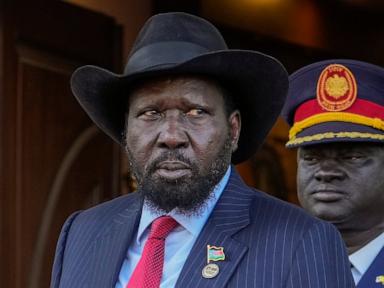
The headlines scream about democratic backsliding. Another African strongman pulls the rug out from under an electoral commission. Pundits in Western capitals clutch their pearls, warning that South Sudan is sliding back into the abyss because President Salva Kiir dismissed the head of the National Elections Commission months before a scheduled vote. The lazy consensus writes itself: elections equal democracy, delay equals authoritarianism, and any disruption to the ballot box is an unmitigated disaster.
That narrative is dangerously naive.
I have watched international democracy-promotion machinery grind through fragile states for decades, treating elections like plug-and-play software. You drop ballots into a country emerging from civil war, check a bureaucratic box, and declare victory while the underlying tribal fault lines pull the nation apart. South Sudan does not need a rushed election. It needs survival. Firing the electoral chief is not the death of democracy in Juba. It is a brutal, pragmatic recognition that holding a vote in a fractured, disarmed-on-paper state is an invitation to renewed slaughter.
Let us dismantle the orthodox view piece by piece.
The Ballot Box as a Match in a Powder Keg
International monitors treat elections as an absolute good. They assume that the mere act of voting confers legitimacy, binds factions to a social contract, and forces elites to share power peacefully. This view ignores the actual mechanics of state fragility.
In a mature democracy, an election is a referendum on governance. In a nascent, post-conflict polity divided along ethnic and militarized lines, an election is a zero-sum census of tribal strength. When you hold an election without a unified national army, without an agreed-upon security architecture, and without a census that settles demographic disputes over land and representation, you are not staging a democratic exercise. You are staging an auction for state resources where the losers face existential annihilation.
South Sudan’s 2018 Revitalized Peace Agreement envisioned a transition culminating in national polls. But transition timelines are drawn by diplomats in boardrooms who confuse wishful thinking with operational reality. The security sector remains fragmented. Command and control across rival military factions are porous at best.
Imagine a scenario where the electoral machinery grinds forward on schedule. Ballots are printed, polling stations are set up in contested territories, and armed factions secure their respective fiefdoms. The moment preliminary results show one group losing ground or crying fraud, the political contest moves instantly from the ballot box back to the barracks. Gunfire replaces governance.
Postponing that catastrophe by sidelining an electoral administration that was rushing blindly toward a cliff is not an assault on freedom. It is a firebreak.
The Myth of Procedural Fetishism
The international community suffers from procedural fetishism. They care deeply about the form of democracy while ignoring its substance. They want the paperwork to look right. They want the calendar to match the grant proposals submitted to foreign aid agencies.
When President Kiir removed the electoral chief, international bodies issued stern rebukes about institutional independence. But independence without capacity, and independence without a secure environment, is a cruel joke. An independent election commission cannot function when the state apparatus is hollowed out, when displaced populations cannot return home to register, and when local administrators answer to warlords rather than civil service codes.
Let us look at the structural reality on the ground. South Sudan's civil infrastructure is in shambles. Economic pressures are severe, driven by global oil price volatility and internal mismanagement. Pushing forward with an electoral process under these conditions would cost tens of millions of dollars—money diverted away from basic food security, health systems, and salary payments for civil servants and soldiers.
Spending a fortune to stage a deeply flawed poll that triggers localized violence is not an investment in democracy. It is fiscal and political malpractice.
The Uncomfortable Truth About State-Building
State-building does not follow a neat linear playbook. You do not get to skip the hard, grinding work of building a monopoly on legitimate violence, establishing a functional treasury, and forging a baseline national identity just because your constitution has a handy date printed on page four.
Elections are the capstone of state-building, not the foundation. Western democracies spent centuries consolidating central authority, unifying legal codes, and establishing professional bureaucracies before universal suffrage became stable. Expecting a country born in 2011 after decades of brutal liberation war to bypass centuries of institutional evolution because foreign donors demand a democratic report card is historical illiteracy.
By halting the rush to the polls, Juba is acknowledging a hard truth: state cohesion must precede popular competition. If the central government cannot guarantee the physical security of citizens in the periphery, an election is merely a mechanism for legitimizing local warlords with the biggest guns.
Of course, my contrarian stance carries a dark downside. Postponing elections indefinitely creates its own moral hazard. It risks institutionalizing stagnation. It gives entrenched elites an excuse to indefinitely defer accountability, suppress opposition voices, and loot state coffers without a reckoning at the ballot box. Perpetual transition is a convenient tool for autocrats who want to rule without a mandate.
That is the tension at the heart of South Sudan’s crisis. You are damned if you vote, and you are damned if you don't.
What Actually Needs to Happen
If we strip away the diplomatic hand-wringing, the path forward requires abandoning arbitrary timelines and focusing on structural prerequisites.
First, stop treating election dates as sacred cows. Tie the timeline to verifiable security benchmarks: the graduation and deployment of the unified forces, the return of refugees and internally displaced persons, and the passage of a permanent constitution that defines federal and central powers. If those take five years, so be it. A delayed election that happens in peace is infinitely superior to an on-time election that triggers a civil war.
Second, reallocate international donor funds away from electoral logistics and toward foundational governance. Pour resources into civil service training, transparent public financial management, and local peace committees. If the state cannot pay its teachers and soldiers reliably, no amount of international election observers will prevent a meltdown.
Third, hold elites accountable through alternative mechanisms. Where formal elections are stalled, leverage diplomatic pressure, targeted sanctions against spoilers, and civil society engagement to demand basic service delivery and human rights protections.
The obsession with holding an election on someone else's calendar has blinded observers to the physical reality of South Sudan. President Kiir's shakeup of the electoral commission is a symptom of a deeper governance crisis, but stopping a premature vote is the most rational survival strategy left on the board. Stop mourning a timetable that was designed to fail. Start building a state that can actually survive a vote.


