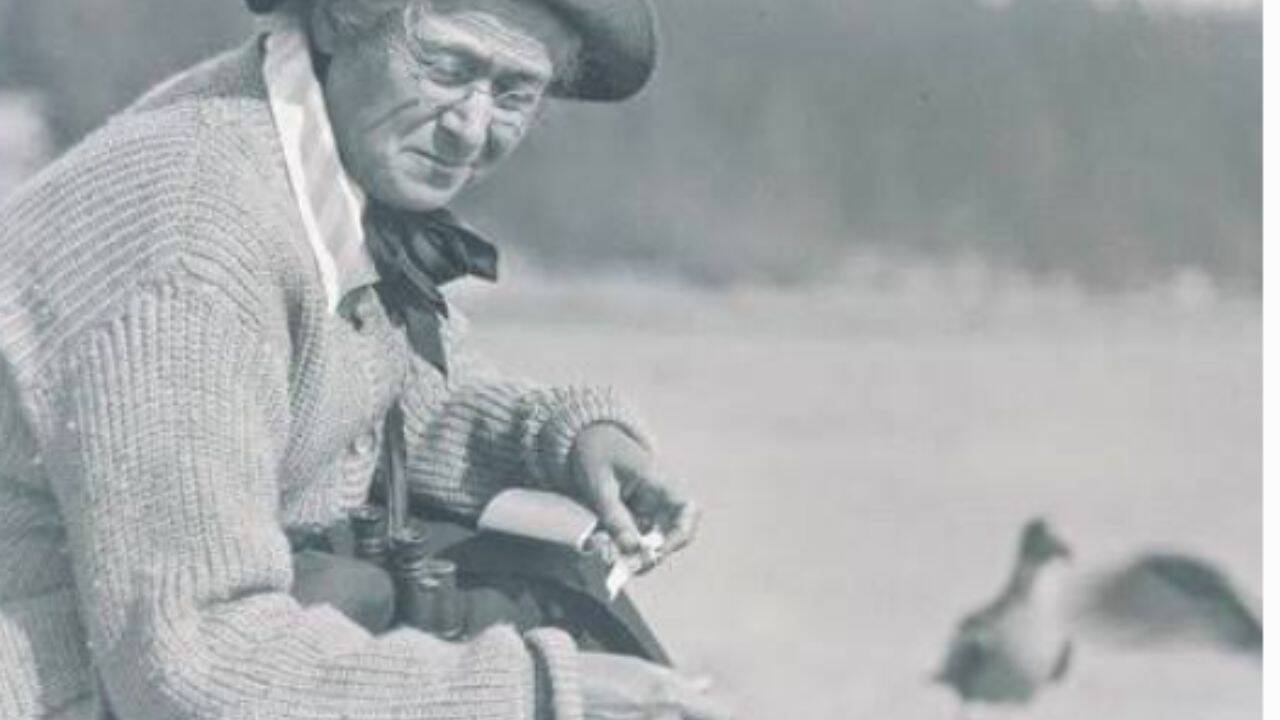
Land acquisition decisions made over a century ago frequently establish structural precedents that dictate contemporary conservation economics. When an individual purchases a family farm, embeds a restrictive covenant, and redirects liquid capital toward observation and documentation rather than liquidation or commercial scaling, a distinct economic anomaly occurs. This mechanism prevents the fragmentation of biological assets while removing land parcels from the short-term transactional market. Analyzing this transition requires examining how early twentieth-century property acquisitions laid the groundwork for modern ecological preservation models, bypassing standard capitalist depreciation cycles.
The transaction structure of land acquisition in 1908 relied on distinct liquidity constraints, title deeds, and agrarian capital allocation. Purchasing a working farm at the turn of the century required immediate capital outlays for foundational infrastructure—fencing, water rights, and outbuildings—followed by variable operational expenditures tied to crop yields. When a landowner shifts utility functions away from agricultural extraction toward passive observation, the economic footprint changes from a high-turnover revenue model to a low-liquidity capital preservation model.
The Shift from Extractive Agriculture to Biological Stewardship
Traditional land economics dictates that property must generate yield to justify its tax assessment and carrying costs. Transforming a productive farm into a protected sanctuary alters the functional utility of the real estate.
- Capital Reallocation: Agricultural equipment, livestock, and seed inventory are liquidated or phased out, stopping the cycle of seasonal operational debt.
- Opportunity Cost Acceptance: The owner explicitly foregoes agrarian cash flows in exchange for the compounding ecological value of undisturbed habitat.
- Asset Stabilization: Real estate values shift from speculative agricultural development metrics to conservation easement appraisals.
This transition creates a localized closed-loop system. Without heavy tillage or chemical inputs, soil microbiomes begin a multi-decade recovery process. Native flora re-establishes root networks that stabilize erosion channels, reducing downstream siltation. The decision to prioritize painting and birdwatching over commercial farming effectively externalizes the cost of ecological restoration to natural succession, guided purely by human non-interference.
The Mechanics of Intergenerational Land Protection
Securing a landscape against future subdivision requires navigating the legal frameworks of inheritance, trusts, and municipal zoning. Property held continuously across decades faces pressures from partition suits, estate taxes, and shifting municipal boundaries.
When a multi-decade owner designates a property as an uncompromised sanctuary upon exit, they utilize legal instruments that permanently sever the property title from commercial development rights. This process involves specific statutory mechanisms.
- Deed Restrictions: Placing perpetual encumbrances on the land title that survive subsequent transfers of ownership.
- Conservation Easements: Transferring development rights to a qualified land trust or non-profit entity while retaining title ownership.
- Testamentary Directives: Structuring wills to prevent fractionalized inheritance among heirs, which routinely forces asset sales.
Without these structural safeguards, historical family farms typically undergo subdivision within two generations. The economics of modern property taxation, combined with sibling buyout demands during estate settlements, create an inevitable liquidation pressure. By converting personal lifestyle choices into a permanent land trust blueprint, the original operator bypasses the market forces that fragment contiguous ecosystems.
Ecological Succession and Long-Term Observation Value
Decades of continuous, localized observation—such as systematic birdwatching and ecological documentation—generate empirical baselines that formal science frequently lacks. Amateur naturalists operating on private land over a span of forty to fifty years record micro-climatic shifts, avian migration timing, and floral distribution changes long before institutional researchers deploy formal monitoring protocols.
This longitudinal dataset, even when recorded anecdotally through journals or visual arts, provides an audit trail of environmental stability.
- Phenological Tracking: Consistent observation dates document the shifting emergence of local insect hatches and plant blooms relative to historical temperature averages.
- Population Density Metrics: Long-term presence of specific avian guilds indicates habitat carrying capacity and regional biodiversity health.
- Disturbance Documentation: Detailed notes on weather anomalies, invasive species encroachment, and predator-prey dynamics offer granular insights missing from macro-level satellite analysis.
The convergence of land ownership and passive observation prevents the data loss inherent in transient land management. When corporate or short-term tenant farmers manage acreage, records of soil amendments, pest outbreaks, and local wildlife populations reset with every lease renewal. Permanent residence by an observant steward preserves institutional memory regarding the exact carrying capacity of the land.
Systemic Limitations of Private Sanctuaries
Relying on individual historical acquisitions to preserve regional biodiversity introduces distinct structural vulnerabilities. These private conservation models are entirely dependent on initial private wealth accumulation and the personal philosophy of a single decision-maker.
Capital starvation represents the primary bottleneck. A sanctuary relying solely on the original endowment or the residual wealth of an estate often lacks the capital required for aggressive invasive species eradication or large-scale ecological remediation. Natural succession does not automatically correct ecological damage caused by historical intensive farming; aggressive management is frequently required to reintroduce native fire regimes or control dominant non-native plant species.
Furthermore, these properties operate in isolation. Fragmented pockets of preserved land surrounded by commercial sprawl or industrial agriculture function as biological islands. Without contiguous wildlife corridors, isolated sanctuaries suffer from genetic bottlenecks among local fauna populations. The nineteenth and early twentieth-century homestead model prioritized self-contained homestead boundaries, which structurally runs counter to the large-scale connectivity required by contemporary conservation biology.
To maximize the long-term viability of historical land legacies, modern estate planners and conservationists must integrate standalone private parcels into regional greenway initiatives. Transitioning a historical homestead from a passive artistic retreat into an active node within a larger ecological network requires pairing the original preservation intent with formalized, endowed land trust partnerships that possess the operational scale to manage invasive species, fund scientific monitoring, and maintain contiguous migration corridors.