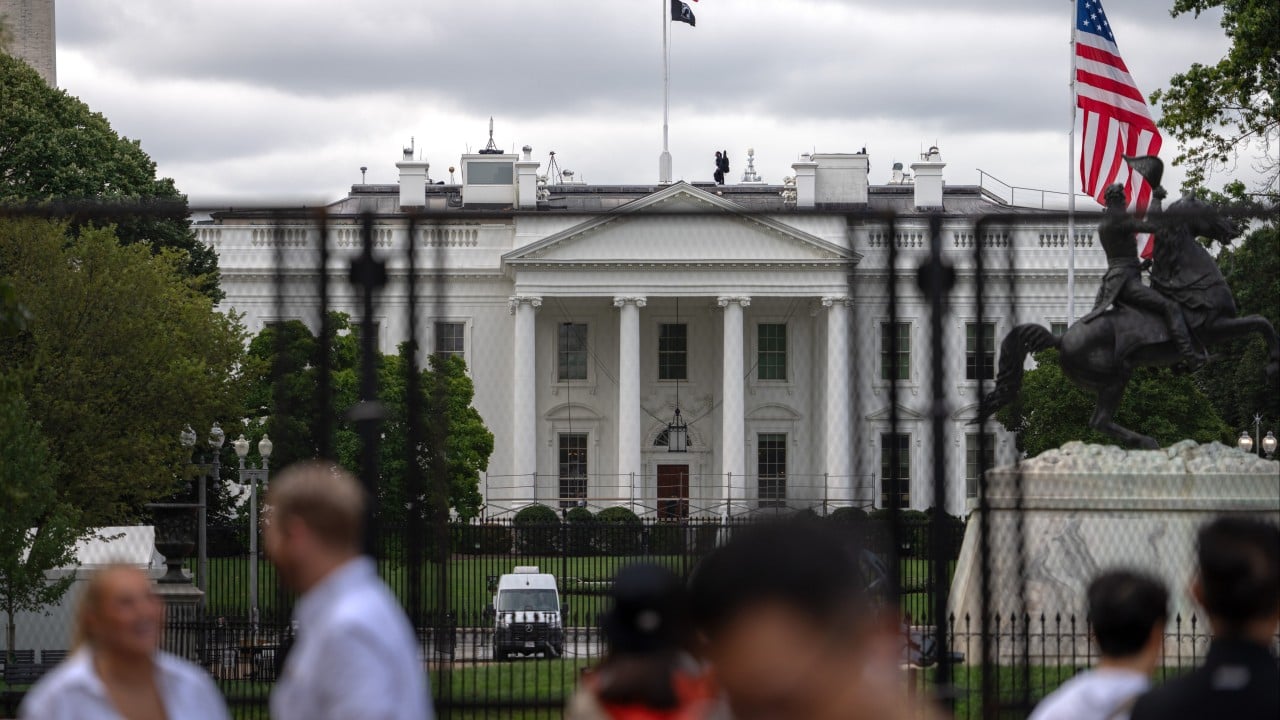
Access has always been the currency of the capital. When CNN, MS NOW, and Politico filed a joint federal lawsuit against Donald Trump over sweeping White House media bans, they did not just challenge an administration's arbitrary rules; they struck at the foundational machinery of political reporting. For decades, the White House press corps operated under an unspoken contract: proximity in exchange for accountability. That contract has fractured into a bitter war of attrition, where executive power meets institutional media in a courtroom showdown that will define the boundaries of the First Amendment for generations.
The catalyst for this legal confrontation stems from a systematic escalation of punitive credential revocation. Reporters who push uncomfortable lines of inquiry find themselves suddenly stripped of hard passes, relegated to the outer perimeter, or barred entirely from briefings. Administration officials defend these actions under the banner of executive privilege and operational discretion, arguing that no media outlet holds an inherent right to an all-access pass inside the West Wing. The networks, however, view it differently. They argue that weaponizing access against critical reporting transforms the press room from an independent public forum into a state-managed bulletin board.
To understand the gravity of this lawsuit, one must examine the mechanics of modern political exclusion. When a major network or publication is frozen out, the penalty extends far beyond bruised journalistic egos. It disrupts the vital flow of information to millions of citizens. A restricted press corps cannot independently verify real-time policy shifts, hold officials accountable during live QandA sessions, or counter official narratives with eyewitness context. By shrinking the circle of accredited journalists, the administration effectively curates its own reality, silencing dissent through bureaucratic attrition.
Legal scholars point out that previous administrations routinely bristled at critical coverage, often complaining bitterly about media bias. Yet, few crossed the constitutional Rubicon of revoking press credentials purely on viewpoint discrimination. The landmark 2018 federal court ruling regarding Jim Acosta established a critical precedent: once the government opens a public forum like the White House press room, it cannot revoke access arbitrarily or in retaliation for unfavorable coverage. The current plaintiffs are betting that federal judges will view these sweeping bans not as routine security or logistical adjustments, but as viewpoint-based retaliation prohibited by the First Amendment.
Beyond the courtroom drama lies a deeper structural crisis within political journalism itself. For years, legacy outlets relied on proximity as a substitute for aggressive, shoe-leather investigation. When access became the ultimate measure of success, reporters risked domesticating their coverage to protect their credentials. The ban, ironic as it may seem, forces these institutions to break free from the narcotic of institutional dependency. Organizations like Politico, CNN, and MS NOW are learning to operate without the immediate convenience of the West Wing briefing room, rediscovering the value of independent reporting networks that do not rely on executive branch handouts for their daily scoops.
The financial and operational stakes for these media companies are immense. Producing rigorous coverage of the executive branch requires massive resource allocation, and shareholders demand proof that legal battles against the federal government serve a tangible purpose. Yet, executives recognize an existential truth: capitulate to credential bans today, and independent journalism becomes an endangered species tomorrow. If an administration can blacklist outlets for asking sharp questions, the press ceases to be a check on power and becomes a compliant echo chamber.
Critics of the media argue that these lawsuits amount to performative litigation designed to boost ratings and subscriber counts rather than defend constitutional principles. They point to sensationalized coverage and partisan framing as justification for the administration's defensive posture. There is a kernel of truth in this skepticism. Modern cable news and digital publishing thrive on conflict, and a high-profile legal battle against the sitting president generates undeniable traffic.
However, reducing this confrontation to a mere media ratings ploy ignores the broader constitutional architecture at stake. The First Amendment was not drafted to protect polite journalism; it was designed to protect adversarial reporting that makes those in power deeply uncomfortable. When access is granted only to those who flatter the administration, the public interest is the ultimate casualty.
As the litigation winds its way through the federal courts, both sides are digging in for a protracted war. The administration insists its executive authority over federal property and communications is absolute, while the media coalition argues that the White House press room belongs to the public, not the occupant of the Oval Office.
The outcome will send shockwaves through every statehouse and municipal building across the nation. If the courts uphold the right of the executive to ban critical outlets at will, local politicians will quickly adopt the same playbook against local newspapers and investigative reporters. The precedent set here will determine whether accountability journalism remains a protected pillar of American democracy or gets quietly relegated to the history books.