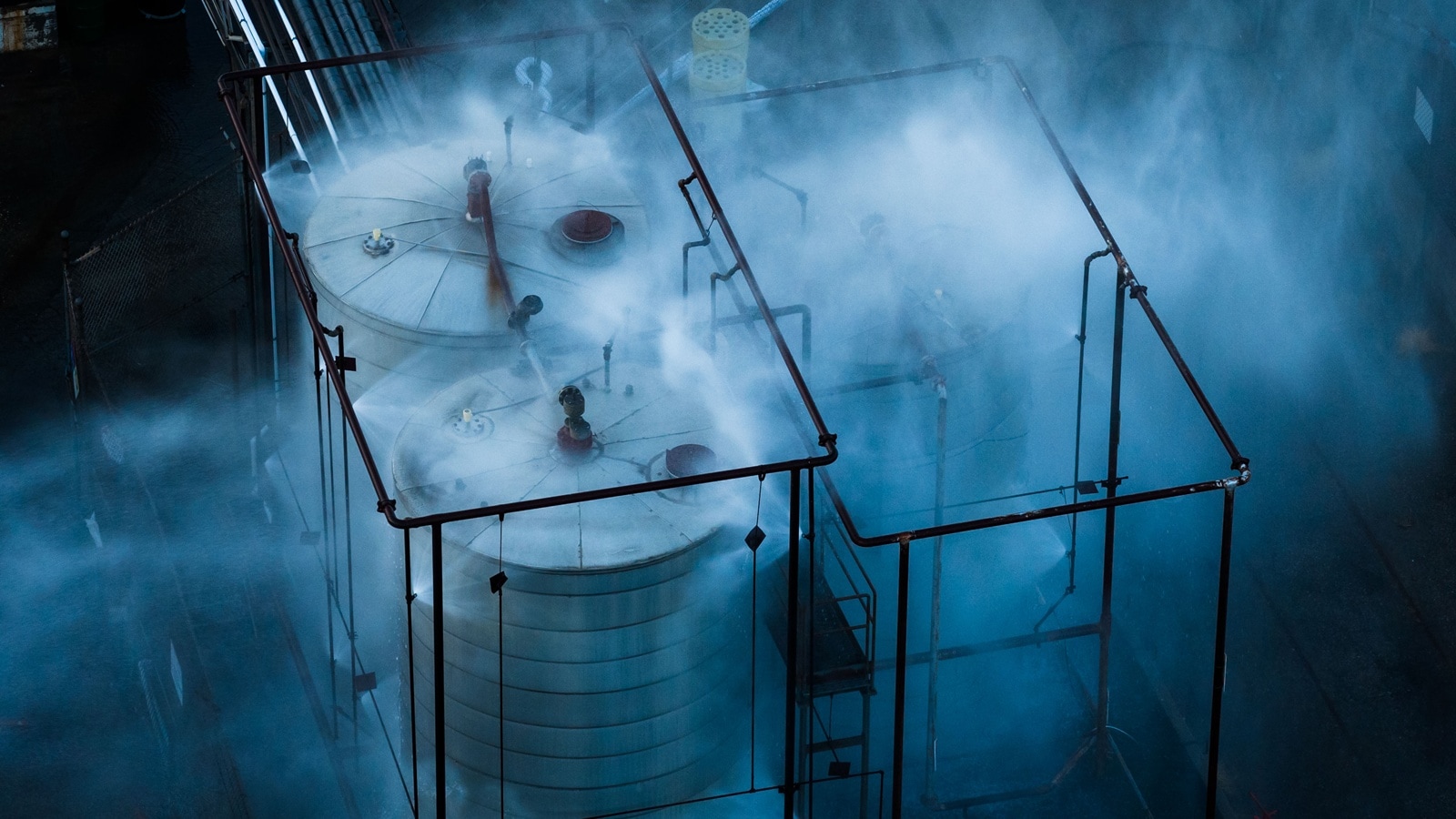
The evacuation of 50,000 residents in Perris, California, was not a drill or a routine precaution. It was a desperate attempt to stay ahead of a runaway chemical reaction inside a single rail car. When a commercial chemical tank begins to undergo "thermal runaway," the laws of physics take over, and human intervention becomes a game of inches and minutes. At the center of the Perris crisis was styrene monomer, a common building block for plastics that turns into a bomb when it gets too hot.
The Mechanics of a Polymerization Crisis
Styrene is stable only when it is kept cool and treated with chemical inhibitors. These inhibitors act like a brake on a car parked on a steep hill. If the temperature rises above a certain threshold—usually around 65°C (150°F)—the styrene molecules begin to link together on their own. This process, known as polymerization, generates its own heat. Learn more on a similar issue: this related article.
The heat speeds up the reaction, which generates even more heat. This is the definition of a "positive feedback loop" in the worst possible context. Once the temperature inside a 30,000-gallon tank hits a critical point, the liquid expands into a gas, and the internal pressure climbs until the steel can no longer hold. At that point, you don't just have a leak; you have a BLEVE—a Boiling Liquid Expanding Vapor Explosion.
Why the Safety Systems Failed
Every industrial chemical tank is equipped with pressure relief valves. These are designed to vent gas and prevent the tank from bursting. However, in a polymerization event, the liquid inside often turns into a thick, gooey mass or a hard plastic. This "slug" of material can plug the relief valves. Additional journalism by TIME highlights comparable views on the subject.
In the Riverside County incident, the sheer volume of heat meant that even if the valves stayed clear, they couldn't vent the pressure fast enough. We are talking about a vessel that was built to withstand high pressure being pushed far beyond its engineering limits. The risk wasn't just a fire; it was the structural failure of the tank, which would have sent shrapnel through a two-mile radius.
The Invisible Infrastructure Problem
Most people driving past industrial zones or rail sidings see stagnant tanks as part of the scenery. They aren't stagnant. They are active chemical environments that require constant monitoring. The Perris event highlights a massive blind spot in our national infrastructure: the "temporary" storage of hazardous materials on rail sidings near residential developments.
As California's housing crisis pushes suburbs further into formerly industrial and agricultural land, the buffer zones are disappearing. People are moving closer to the chemicals, but the chemicals aren't moving away from the people.
The Problem with the Cooling Strategy
When firefighters arrived on the scene, their primary tool was water. But they weren't just putting out a fire; they were trying to cool the external shell of a tank that was cooking from the inside out.
The physics of this are working against the first responders. Steel is a decent conductor of heat, but the styrene inside acts as an insulator. By the time the outside of the tank feels hot to the touch, the core is already a cauldron. Using drones with infrared cameras allowed the team to see the "hot spots" without sending a technician into the kill zone. This tech is the only reason we didn't see a repeat of the 1970s-era disasters where firefighters were lost during the initial assessment.
The Economic Pressure Behind the Risk
Why was that tank sitting there? Usually, these incidents are the result of logistics delays. A chemical plant might be full, or a customer might not be ready to receive a shipment. When a rail car sits on a siding for too long, the chemical inhibitors can begin to degrade.
Companies often treat these rail cars as mobile warehouses. It saves money on permanent storage infrastructure, but it offloads the risk onto the local municipality. The cost of evacuating 50,000 people and shutting down a major interstate like the I-215 is astronomical, yet the companies owning the chemicals rarely pay the full bill for the societal disruption.
Managing the Aftermath
Once the tank began to cool, the danger didn't vanish. The styrene inside likely solidified into a massive block of plastic. You can't just pump that out. The rail car is now a multi-ton piece of industrial waste that has to be cut apart with specialized tools that won't spark a secondary fire.
This isn't a "one-off" freak accident. It is a predictable outcome of a supply chain that prioritizes volume over safety margins. If a tank can't sit on a siding for three days in the California sun without becoming a bomb, the chemistry is too volatile for the current transport methods.
The residents of Perris were allowed back into their homes because the temperature dropped by a few degrees, not because the problem was solved. The "all clear" is a temporary reprieve in a system that remains fundamentally unchanged. We are relying on the hope that the next tank doesn't sit in the sun quite as long as this one did.