The ticker at the bottom of the screen flickers in a relentless cycle of neon green and emergency red. $118. $119. $119.50. To a trader in a glass tower in Manhattan, these are just digits, a scoreboard for a high-stakes match played with pixels. But three thousand miles away, at a truck stop in rural Ohio, those numbers translate into a heavy, metallic click. It is the sound of a fuel nozzle snapping shut before the tank is full because a credit card reached its limit.
Global politics often feels like a series of moves on a chessboard where the players are giants and the pawns are invisible. Right now, the board is dominated by a standoff that spans continents. The United States has reaffirmed its blockade on Iranian oil, a move that President Donald Trump has explicitly tied to the crumbling remains of the 2015 nuclear deal. On the surface, it is a matter of sanctions, enrichment levels, and diplomatic leverage. Beneath that surface, it is about the cost of living in a world where energy is a weapon.
The Ghost of a Deal
Consider a hypothetical diplomat named Elias. He spent years in windowless rooms in Vienna, fueled by stale espresso and the belief that a few hundred pages of legal jargon could prevent a war. He remembers the moment the Joint Comprehensive Plan of Action (JCPOA) was signed. It was supposed to be a pressure valve. Iran would scale back its nuclear ambitions, and in return, the world would let its oil flow back into the global veins.
That valve has been hammered shut.
The decision to maintain the blockade isn’t just a carryover of policy; it is a deliberate tightening of the screws. By linking the oil embargo to the nuclear negotiations, the U.S. is betting that economic pain will eventually outweigh national pride. It is a gamble with a high entry fee. As Iranian tankers sit idle in the Persian Gulf, heavy with crude that has nowhere to go, the global supply shrinks.
Economics 101 dictates that when supply drops and demand remains steady, prices climb. But this isn't a textbook. This is a reality where the price of oil is creeping toward $120 a barrel.
The Invisible String
Every time a geopolitical decision is made in Washington or Tehran, an invisible string pulls on the pockets of people who have never heard of the JCPOA.
Think of a small-scale logistics company owner. Let’s call her Sarah. She manages a fleet of six delivery vans. When oil was at $70, her margins were thin but manageable. At $120, she isn't just losing profit; she is losing sleep. She has to choose between raising prices for her local customers—many of whom are already struggling—or cutting back on her drivers' hours.
The blockade is a macro-economic tool, but its sharpness is felt at the micro-level. The "Trumpian" logic of maximum pressure assumes that the target will break before the bystander does. However, the bystander is currently paying four dollars a gallon at the pump, watching the cost of groceries rise because the trucks that deliver the bread and milk are also paying that four dollars.
There is a strange irony in the way we talk about "energy independence." No country is an island in the oil market. Even if a nation produces every drop it consumes, the price is set on a global stage. If Iran’s 2.5 million barrels a day are kept off that stage, everyone pays the "conflict premium."
The Nuclear Calculus
Why keep the blockade? The argument from the U.S. perspective is rooted in a fundamental distrust. The administration views the original nuclear deal not as a solution, but as a temporary mask. By keeping the oil locked away, they believe they are stripping Iran of the funds needed to bridge the gap between "civilian energy" and "military capability."
It is a strategy of starvation. Not of the people, necessarily, but of the regime's ambitions.
But a cornered entity often becomes more volatile, not less. While the U.S. waits for Iran to return to the table with a weaker hand, Iran is spinning centrifuges. The blockade hasn't stopped the enrichment of uranium; it has only increased the stakes. We are witnessing a game of "chicken" played with mid-range ballistic missiles and supertankers.
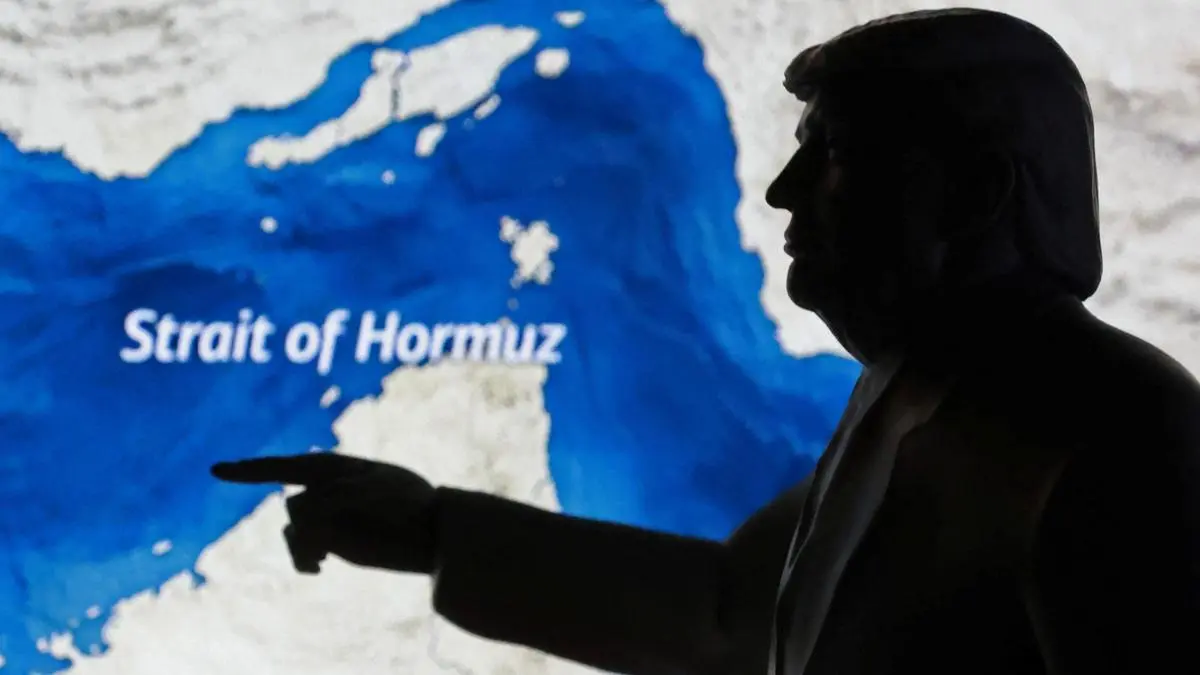
The tension is palpable in the shipping lanes of the Strait of Hormuz. This narrow stretch of water is a jugular vein for the world's economy. One-fifth of the world’s oil passes through here. When the U.S. maintains a blockade, the Strait becomes a flashpoint. A single misunderstanding, a stray drone, or a misinterpreted maneuver by a patrol boat could send that $120 price tag into a vertical climb that no economy is prepared to handle.
The Friction of Reality
Statistics are often used to sanitise the human experience of policy. We hear that "inflation is up 4%" or "GDP growth is slowing." These phrases are soft. They don't capture the friction of reality.
The friction is the father who takes a second job because his commute now costs him an extra $200 a month. It is the factory in Germany that slows production because the energy costs have made their steel too expensive to compete. It is the reality that while the "nuclear deal" is discussed in hushed tones in grand halls, its failure is felt in the heat of a kitchen where the stove stays off to save on the gas bill.
We are told this is a necessary sacrifice for global security. Perhaps it is. But the "security" gained by a blockade is often offset by the "instability" caused by economic desperation. When people can no longer afford the basics of life, they don't look at the nuances of nuclear non-proliferation treaties. They look for someone to blame.
The Deadlock
There is no easy exit ramp here. If the U.S. lifts the blockade without a new deal, it risks appearing weak and giving Iran a multi-billion dollar windfall. If it keeps the blockade, it risks a global recession and a potential military escalation.
Trump’s linkage of the oil price to the nuclear deal is a way of saying that the world’s economic health is contingent on Iran’s behavior. It places the burden of proof on Tehran, but it places the burden of payment on the global consumer.
Meanwhile, the tankers wait. They are massive, silent monuments to a diplomatic failure. They carry enough energy to power cities, to lower prices, to ease the friction. But they sit still, anchored by the weight of signatures on papers that no longer seem to matter.
The sun sets over the Persian Gulf, casting long shadows across the hulls of those idle ships. On the other side of the world, a commuter stares at the flickering numbers on a gas pump, wondering when the "maximum pressure" will finally find its breaking point. They are connected, the tanker and the commuter, by a thin, invisible line of policy and pride.
The price of a barrel isn't just about oil. It is the cost of a world that has forgotten how to talk, and instead, has learned how to squeeze.