The green paint on the monster is peeling, just a little, if you look closely enough from the third-base line. For a century, that cathedral in Boston has traded on something money isn’t supposed to be able to buy. It traded on a sacred, multi-generational trust. You buy a ticket, you sit on a wooden grandstand that cramps your knees, you eat a cold hot dog, and in return, you get to belong to something that feels entirely yours.
Then the spreadsheets arrived.
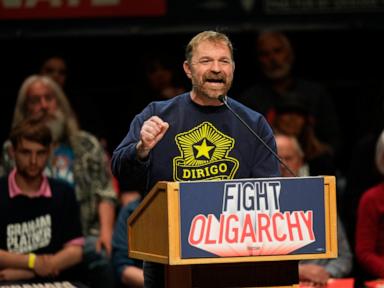
When Graham Platner, a independent candidate running for the United States Senate in Maine, launched a campaign advertisement taking aim at the ownership of the Boston Red Sox, it wasn't just a political stunt. It was an eviction notice served on behalf of every fan who has ever looked at a ticket price and realized they’ve been priced out of their own heritage. Platner’s ad didn't just critique a baseball team; it targeted the massive private equity firm, RedBird Capital Partners, which holds an eleven percent stake in Fenway Sports Group.
To understand why a politician in Maine is building a campaign around a Massachusetts baseball team, you have to understand what happens when a community asset becomes an alternative asset class.
Imagine a fictional fan named Thomas. Thomas lives in Bangor. His grandfather took his father to Fenway in 1967 to see the Impossible Dream team. Thomas took his own daughter there in 2004, standing in the concourse weeping when the curse finally broke. To Thomas, the Red Sox are an emotional anchor. To an institutional investor sitting in a glass tower in Manhattan, however, the Red Sox are a diversified yield-generating mechanism with high barrier-to-entry real estate value.
The investor isn't evil. They are just playing a completely different game.
The primary mandate of private equity is not to win the World Series. It is to maximize return on investment for limited partners. When those two motives clash, the fan always loses. Platner saw this friction and realized it wasn't just a sports problem. It is the defining economic story of our time.
The Financialization of the Fences
Baseball used to be owned by local eccentrics. They were often beer barons, shipping magnates, or self-made millionaires who viewed the local ballclub as a vanity project or a civic duty. They wanted to win because losing made them look bad at the local country club.
Now, sports ownership looks like a portfolio. RedBird Capital Partners isn't just invested in the Red Sox. They have their hands in European football, alpha-generating entertainment properties, and data analytics firms. When a private equity firm buys into a sports empire, they bring a specific set of tools. They optimize concessions. They restructure debt. They view the stadium not as a ballpark, but as a multi-use real estate development capable of capturing consumer surplus twelve months a year.
The immediate casualty of this optimization is the roster.
For years, Red Sox fans watched homegrown stars walk out the door. Mookie Betts, a generational talent who should have worn the old English 'B' until his hair turned gray, was traded away. Xander Bogaerts departed. The payroll, once among the loftiest and most aggressive in the league, began to look strangely disciplined. Management spoke of sustainability, CBT thresholds, and long-term financial health.
But fans don't chant for financial sustainability. They don't throw parades for a healthy balance sheet.
Platner’s political ad struck a nerve because it articulated a truth that sports radio had been screaming for five years. The ownership group was treating the baseball team like a cash cow to fund other acquisitions, from golf leagues to racing teams, while the product on the field was treated like a mid-tier software company trying to cut overhead.
Why Maine Cares About Boston’s Bullpen
It is easy to look at Platner’s campaign and ask what a Massachusetts baseball team has to do with the voters of Maine. The connection is deeper than the regional sports network carriage agreements.
Maine is a state defined by its working-class roots. It is a place of loggers, lobstermen, paper mill workers, and small-town entrepreneurs. These are people who understand the value of a hard day's work, and more importantly, they understand what happens when outside capital buys up a local industry, strips it for parts, and leaves the community holding the bag. They have seen it happen to their mills. They have seen it happen to their timberlands.
When Platner points at Fenway Sports Group and says, "Look at what they are doing to your team," he is really saying, "Look at what this economic model is doing to your life."
Consider the mechanics of the modern economy. The cost of living rises while wages stagnate. The things that used to be affordable luxuries—a weekend trip, a family night out at the ballpark—have become elite experiences. A family of four going to Fenway Park can easily run into the hundreds of dollars before they even buy a single container of popcorn.
This is the invisible tax of financialization. When every asset must be optimized for maximum return, the regular people who built the cultural value of that asset are systematically excluded. The bleacher seats, once the domain of the loud, the loyal, and the local, are replaced by corporate hospitality suites filled with people checking their phones.
The Backlash Against the Boardroom
When the competitor's coverage handled this story, they treated it as a standard campaign pivot—a candidate looking for a populist hook to grab headlines in a crowded race. They noted the pushback from ownership defenders who point out that Fenway Sports Group delivered four World Series championships to a city that had gone eighty-six years without one. They argued that modern sports requires modern corporate structures to compete with the financial might of New York or Los Angeles.
That argument misses the entire point of the grievance.
The championships of 2004, 2007, 2013, and 2018 were bought with blood, sweat, and an immense amount of capital. But they were also built on an unwritten contract: the ownership would spend what it took because the fans gave everything they had. The private equity era feels like a breach of that contract. It feels like the ownership group took the loyalty generated by those championships and collateralized it to buy other assets, leaving the baseball team to survive on nostalgia alone.
Platner stood by his ad because he recognized that this isn't a temporary dip in a team's competitive cycle. It is a permanent shift in philosophy.
When a candidate stands on a campaign trail and talks about private equity, the eyes of the audience usually glaze over. It sounds like jargon. It sounds like abstract accounting principles that have no bearing on whether someone can pay their heating bill in January. But when you talk about why the local ballgame is no longer on free television, or why the star shortstop was allowed to leave over a few million dollars while the owners bought a hockey team, the abstract becomes immediate. The jargon becomes a gut punch.
The Changing Shape of What We Own
The broader question Platner is raising is one of stewardship. Who really owns a sports team?
Legally, the answer is clear. The shares are registered, the LLCs are filed in Delaware, and the deeds are locked in vaults. Fenway Sports Group owns the bricks, the mortar, and the trademarked logos.
Culturally, the answer is entirely different. Without the generations of fans who listened to games on transistor radios in the Maine woods, without the families who saved up for months to make the drive down Interstate 95, those logos are worthless pieces of cloth. The value was created by the community. The profit is being extracted by the partners.
This is the friction point that defines our current era. It stretches far beyond the outfield walls of a ballpark. It is present in the housing market, where institutional investors buy up single-family homes, turning potential first-time buyers into permanent renters. It is present in healthcare, where private equity acquisitions of rural hospitals often precede service cuts and fee hikes.
Platner’s ad works because it uses the Red Sox as a Trojan horse to smuggle a radical critique of modern capitalism into the living rooms of ordinary voters. He isn't asking them to read a white paper on market consolidation. He is asking them if they are tired of seeing the things they love get more expensive while getting worse.
The Final Inning of Civic Trust
There was a time when a sports stadium was considered a public utility of sorts, a place where the banker and the bricklayer sat in adjacent rows, spilled beer on the same concrete, and suffered through the same ninth-inning collapse. It was one of the few remaining spaces in American life where class distinctions were temporarily erased by a shared obsession.
The financialization of sports has built walls within those spaces. It has created tiered experiences, VIP entrances, and dynamic pricing algorithms that adjust the cost of a seat based on the weather and the opponent, squeezing every last drop of revenue from the desperate fan.
Graham Platner is betting his political future that voters are angry enough to see past the team colors. He is betting that a fisherman in Stonington and a teacher in Lewiston care more about the erosion of their shared cultural life than they do about defending the corporate strategy of a multi-billion-dollar sports conglomerate.
As the sun sets over the grandstands, casting long shadows across the diamond, the old park still looks beautiful. The lights come on, the grass is impossibly green, and for a few minutes, you can almost forget about the hedge funds, the debt structures, and the investment committees. You can almost believe that it's still just a game.
But then the commercial break ends, the digital billboards flash the logo of a global investment firm, and you realize that the old park isn't a temple anymore. It’s an invoice.