The courtroom in Lahore felt like a different universe from the high-octane, neon-lit world of the internet. In the digital space, everything is velocity. Everything is volume. In the courtroom, however, time moves with a crushing, rhythmic slowness. Judges do not care about subscriber counts. They do not care about the parasocial intimacy built over thousands of hours of video content. They care about bank statements, dates, and the cold, unyielding language of the law.
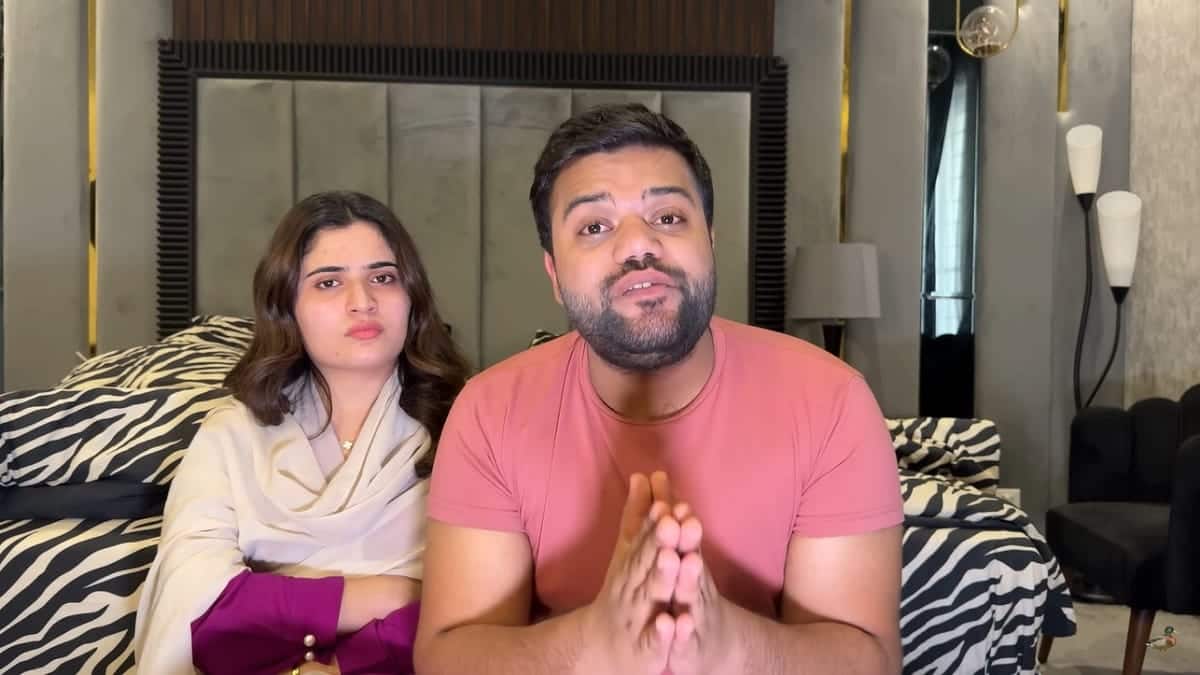
When the news broke that the court had unfrozen the assets of Saad ur Rehman—better known to millions as Ducky Bhai—the internet reacted with its usual polarized frenzy. Supporters cheered the vindication. Critics sharpened their knives, ready to drag the ethics of digital influence back into the spotlight. Yet, the legal reality was quieter. A judge had looked at the ledger, weighed the evidence presented, and decided the money could be released.
But there is a distinction between an account being unlocked and a reputation being cleared. The money is back in the coffers, but the mouth—the voice that launched a thousand gambles—remains under the burning, critical gaze of the public.
Consider the reality for someone like Zain, a nineteen-year-old student living in a crowded apartment block in Rawalpindi. He isn't a celebrity. He is the person behind the view count. Last year, he found a link on a screen—the same screen that brought him laughter and comfort during long, lonely study sessions. He saw a creator he trusted telling him about a shortcut, a way to turn a few hundred rupees into a windfall. The promise was simple: quick money for a small risk.
Zain clicked.
He didn't see the complex algorithms or the corporate machinery behind the gambling app. He saw the face of an influencer he liked, someone who felt like an older brother. When the money vanished—not into a windfall, but into the bottomless pit of a digital casino—the feeling wasn't just financial loss. It was a betrayal of trust. The influencer moved on to the next video, the next sponsorship, the next trend. Zain was left staring at a zero on his bank balance, wondering how the person who provided his nightly entertainment had become the architect of his ruin.
This is the invisible stake of the influencer economy. When a creator promotes a product, they are not just selling a widget or a service. They are selling their own credibility. For years, the digital economy in Pakistan grew in a state of wild, unchecked expansion. There were no guidebooks. There were no guardrails. It was a gold rush, and everyone with a camera and a stable internet connection was encouraged to dig. Some struck gold through genuine craft. Others found it by peddling the digital equivalent of snake oil to a demographic that hadn't yet learned how to filter the signal from the noise.
Then came the gambling apps. They were the apex predators of the influencer world. They offered payouts that traditional brands couldn't dream of, and they targeted the most vulnerable parts of the human brain: the craving for status and the desperate desire for financial independence.
Ducky Bhai found himself at the center of this storm not because he was the only one doing it, but because he was, and remains, a titan of the medium. When you occupy that much space, every action is magnified. When you are the loudest voice in the room, the silence that follows a legal investigation becomes deafening.
The court’s decision to unfreeze his money is a procedural move, one rooted in the specifics of his financial dealings and the legal limitations of the current charges. It is not an absolution. It is merely a statement that the law, in this specific instance, could not find sufficient cause to hold those specific assets.
We often make the mistake of conflating legal outcomes with moral ones. We assume that if someone walks out of a courtroom with their assets intact, they have been cleared of the emotional and social debt they owe to their audience. This is where we get the story backward.
The real trial isn't happening in a room with a judge. It is happening in the comment sections, in the discourse of the youth who feel misled, and in the quiet reflection of a creator who has reached the pinnacle of his field only to realize that influence is a double-edged blade. To command the attention of millions is to hold a power that is poorly understood and even more poorly regulated.
If you look at the trajectory of the influencer industry, you see a predictable cycle. It begins with the rush of new media, the democratization of fame, and the raw, unpolished energy of people speaking directly to their peers. It evolves into a business, where the goal shifts from connection to optimization. This is where the rot sets in. Optimization requires monetization at any cost. That is how a trusted face ends up selling a predatory gambling app to a teenager with no money to spare.
The return of the money to Ducky Bhai’s accounts marks a return to the status quo, but the status quo has shifted. The public now knows. The curtain has been pulled back. They see the sponsorships for what they are: transactions, not endorsements. The myth of the organic, authentic internet star is fading, replaced by the understanding that everyone is selling something.
But even with that knowledge, the temptation remains. The apps are still there, flickering in the corners of social media, waiting for the next person who is tired of waiting for their break. They don't need to win every time. They only need to win once.
When the legal dust settles, the question remains: what does a creator owe to the people who built their kingdom? Is it enough to simply follow the law, or is there a standard of conduct that transcends the courtroom?
We have watched the rise of a new class of celebrity, one whose wealth is tied to the collective attention of the masses. In any other era, this level of influence came with institutional checks. Now, it comes with nothing but the platform's terms of service. And as we have seen in cases involving high-profile creators, those terms are often malleable.
The courtroom outcome is a footnote in a much larger narrative. It is a reminder that while the law can adjudicate on the movement of currency, it has no mandate to govern the movement of ideas or the betrayal of trust. That is a task left entirely to us. Every click, every view, and every subscription is a vote for the type of digital ecosystem we want to inhabit.
If we choose to keep watching, keep amplifying, and keep ignoring the consequences of the shortcuts being sold to us, we are just as responsible for the outcome as the person holding the microphone. The money might be back in the bank, but the true cost of those sponsorships will continue to be paid, installment by installment, by those who are still waiting for their own reality to catch up to the promise of the screen.
The courtroom is empty now. The lights have dimmed. But the phone in your hand is still glowing, still pinging, still waiting for you to make a choice about what you value more: the content that entertains you, or the truth that might actually cost you something. The choice, as it always has been, is yours to make, even if the algorithm tries its hardest to take the decision out of your hands.
Somewhere in the quiet of an ordinary evening, the notification sounds again. A new video. A new pitch. Another chance to choose wisely. Or not. The screen remains, watching you back, waiting to see if you have learned anything at all.