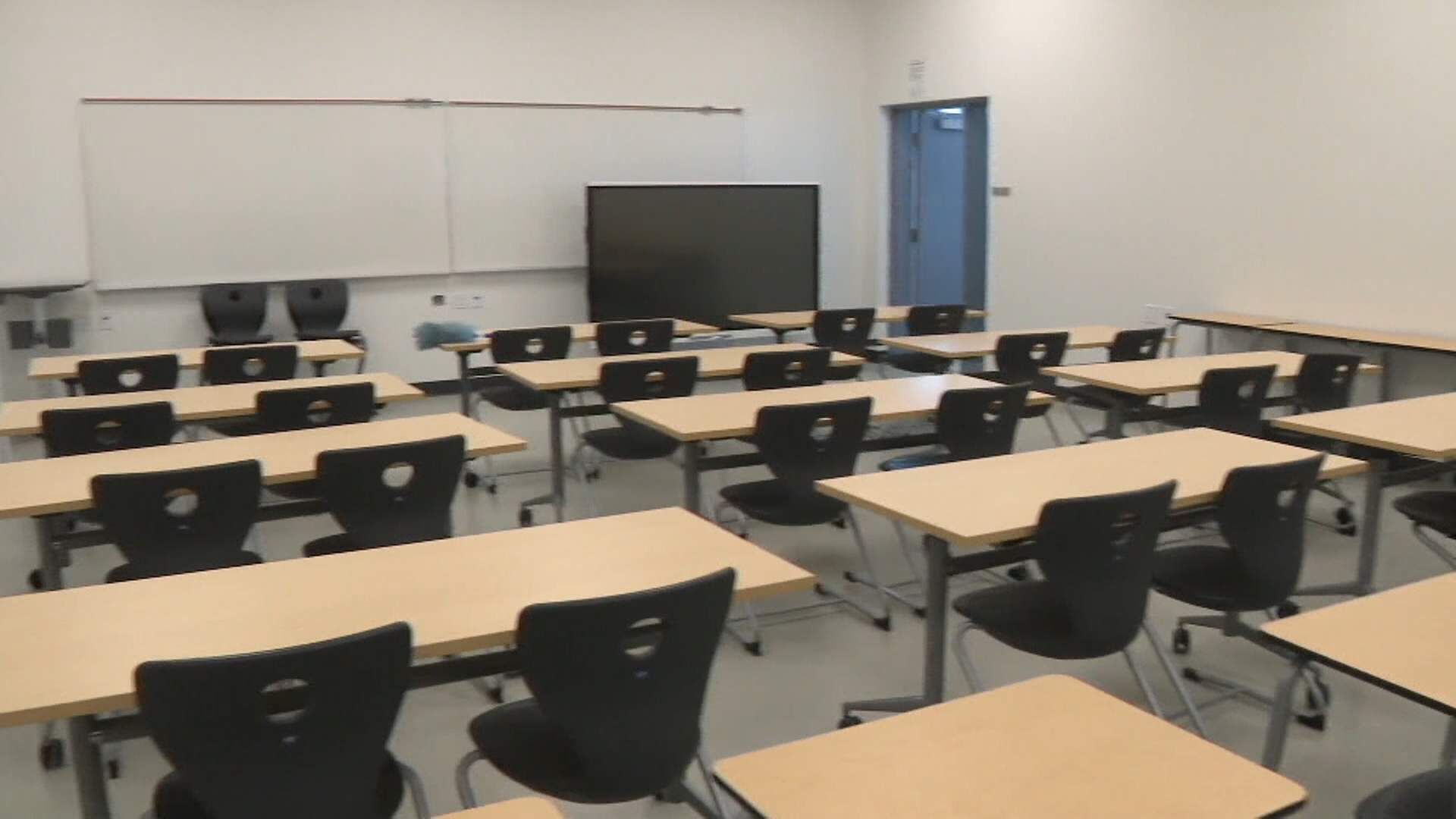
The fluorescent lights of a late-night study lounge have a distinct sound. It is a low, persistent hum that vibrates right behind your eyes when you have been staring at a textbook for six hours. If you sit still enough, you can hear the collective anxiety of fifty twenty-year-olds trying to calculate their futures against the compounding interest of their student loans.
For years, that hum was the soundtrack of higher education in Alberta. It was the sound of a gamble.
To understand what just happened in the province, you have to understand the quiet math that happens at kitchen tables every August. Imagine a student named Maya. She is not a statistic; she is every kid from Red Deer or Medicine Hat who ever looked at a tuition breakdown and felt a sudden tightness in her chest. Maya wants to be a nurse. The province desperately needs nurses. Yet, the barrier between Maya and a hospital ward isn't her work ethic or her intellect. It is a ledger.
Every semester, the calculation is the same. Tuition plus textbooks plus rent minus the meager earnings from a part-time retail job equals a deficit that feels like a mountain. When the provincial government adjusts its financial dials, the tremors are felt instantly at those kitchen tables.
Then came the announcement.
The Alberta government committed a massive influx of funding—crossing the threshold of $1 billion—directly into student financial assistance. On paper, it looks like a staggering bureaucratic victory. It is a number so large it loses its meaning. To a student drowning in a sea of grocery bills and textbook costs, a billion dollars sounds like abstract mythology.
But break that number down into the currency of actual human lives.
The investment signals a major shift in how the province handles the cost of learning. By expanding the threshold for non-repayable grants and increasing the caps on student loans, the policy effectively moves the goalposts for thousands of families. It is the difference between a student taking an extra shift at a convenience store or staying in the library to master organic chemistry.
Consider the mechanics of the old system. For years, financial aid was a rigid box. If your family made a dollar over a certain limit, you were cast out into the cold waters of private financing. If you were a mature student trying to retrain after a layoff in the oil patch, the system often viewed your previous life as an obstacle rather than an asset. The financial friction was immense.
The new funding behaves differently. It acts as a pressure valve. By lowering interest burdens and expanding eligibility, the province is attempting to rewrite the unspoken social contract of the region. The underlying message used to be: Prove you can survive the financial gauntlet, and we might give you a degree. The new narrative is shifting toward: We need your skills, so we are going to help you clear the hurdle.
This is not philanthropy. It is economic survival.
Alberta has always been a place defined by its booms and busts, a region where wealth can feel as volatile as the weather. In that environment, investing in human capital is the only real hedge against the future. A bridge built today might last fifty years, but an educated workforce creates a self-sustaining engine of innovation that does not depend on the global price of crude.
Yet, money alone does not solve the psychological weight of debt.
Speak to anyone who graduated with a heavy loan burden, and they will tell you about the ghost that follows them through their twenties. It is the ghost that influences whether they buy a house, start a business, or move to a rural community that desperately needs their expertise. Heavy student debt forces young professionals to make defensive life choices. They chase the highest immediate paycheck just to keep the collections letters at bay, often abandoning the vital public-sector roles they initially wanted to fill.
By injecting this capital into student aid, the province is effectively buying back the future choices of its youth.
But the real problem lies elsewhere, hidden beneath the euphoria of big numbers. An injection of cash into financial aid can sometimes act as an accidental incentive for institutions to raise costs. It is a delicate economic dance. If the government provides more room to pay, do universities and colleges simply take up that room with higher fees?
The policy only succeeds if it is paired with structural accountability. The funding must serve as a shield for the student, not a subsidy for campus bureaucracy.
Walk through the halls of the University of Alberta or the Southern Alberta Institute of Technology today, and the air feels slightly different. The low hum of anxiety hasn't vanished—finals are still difficult, and the future is still unwritten—but the desperation has been dialed back.
Maya can look at her second-semester textbook without wondering if she needs to skip meals to afford it. A welder apprentice can focus on the precision of his bead rather than the balance of his bank account.
We often measure the success of a society by the monuments it builds or the infrastructure it leaves behind. But the most profound investments are the ones you cannot see from an airplane. They are the quiet, invisible decisions made by young people who suddenly realize that the path ahead of them is just a little bit smoother than it was yesterday.
The ink on the provincial budget is dry. The dollars will flow through electronic transfers and institutional accounts, eventually trickling down to thousands of individual bank statements.
In the end, it comes down to a simple, human truth. A province cannot move forward if its brightest minds are stuck at the starting line, staring at a bill they cannot pay. The desk is finally within reach.