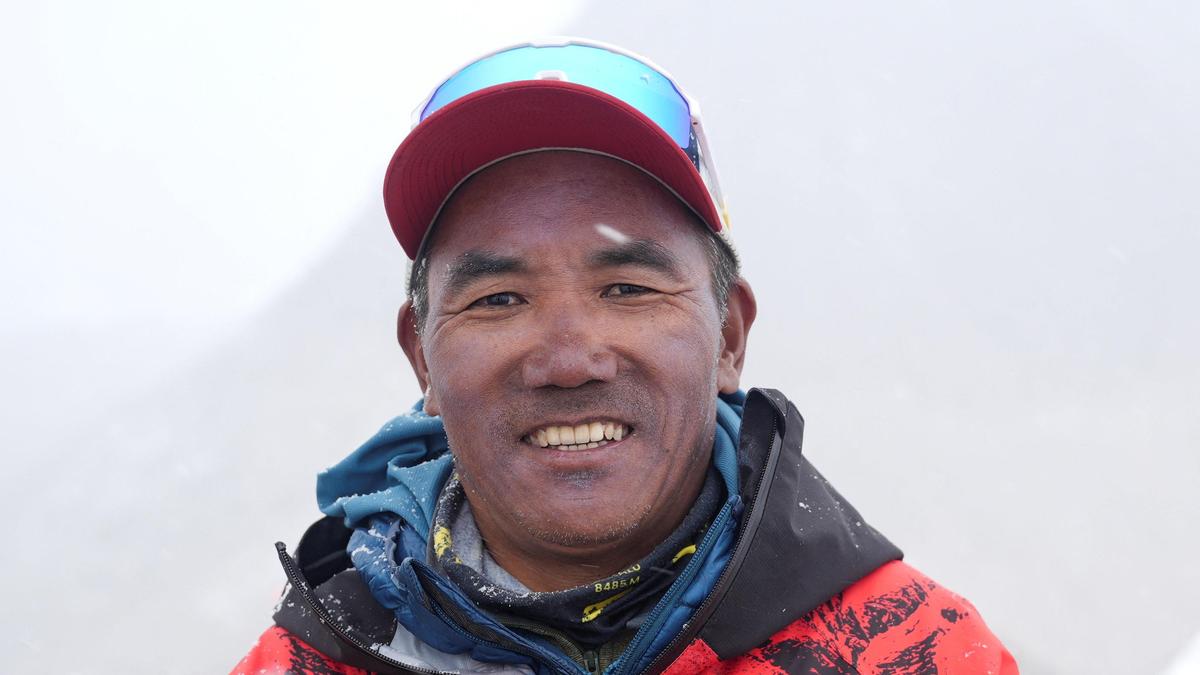
Nepali guides Kami Rita Sherpa and Pasang Dawa Sherpa have once again rewritten mountaineering history, breaking their own respective world records for the most successful ascents of Mount Everest. On May 17, 2026, the 56-year-old veteran Kami Rita scaled the 8,849-meter peak for an astonishing 32nd time, further cementing his title as the "Everest Man." Meanwhile, his closest contemporary, Pasang Dawa Sherpa, continues to shadow this historical trajectory close behind, having secured his own 29th summit. While the global press celebrates these feats as triumphs of human endurance, the reality on the ground reveals a far more complex narrative. These records are not merely athletic milestones; they are the byproduct of a brutal, high-stakes commercial machine that reshapes the ethics of high-altitude mountaineering.
To view these climbing tallies simply as an athletic rivalry is to miss the entire mechanics of the modern Himalayan tourism economy. Western media often frames the achievements of Kami Rita and Pasang Dawa through the lens of individual sporting greatness, akin to tracking the championship rings of legacy athletes. This framework is fundamentally flawed. These men are not recreational climbers chasing personal vanity. They are working professionals operating within an increasingly hyper-commercialized industrial complex.
Every single entry into their record books represents an assignment as a high-altitude worker. This requires rigging miles of safety ropes, carrying crushing loads of gear, and managing the lives of wealthy foreign clients who often lack basic mountaineering autonomy. The race for the ultimate summit tally is deeply intertwined with the economic survival of the indigenous guiding community and the aggressive marketing tactics of Nepali-owned expedition agencies.
The True Cost of Route Fixing and Client Care
The public consumes the triumphant images of the summit, but the labor that produces those images remains largely invisible. The mechanics of a modern Everest expedition require a small army of indigenous workers to construct a virtual highway from Base Camp to the peak.
The Mechanics of the Mountain
- Establishing the Khumbu Icefall Route: Before a single commercial client sets foot above Base Camp, a specialized team of Sherpas, known as the "Icefall Doctors," risks their lives negotiating the shifting, labyrinthine crevasses of the Khumbu Icefall. They install aluminum ladders and miles of safety ropes.
- The Rope-Fixing Heavy Lifting: Elite guides like Kami Rita are frequently part of the frontline teams that fix the lines all the way to the summit. This requires hauling heavy spools of static rope, snow stakes, and ice screws into the Death Zone while operating under severe oxygen deprivation.
- The Burden of Client Logistics: A typical Western client requires multiple oxygen cylinders, tents, food, and specialized gear. Sherpa guides carry the vast majority of this equipment up and down the mountain across multiple rotations to ensure camp infrastructure is flawless.
This logistical reality turns the traditional concept of mountaineering upside down. In traditional alpine climbing, a mountaineer is entirely self-sufficient, making decisions based on personal risk tolerance. On Everest, the guides bear the collective risk of the entire expedition. If a client freezes up, suffers an illness, or panics at 8,000 meters, it is the guide who must physically guide, carry, or drag them down to safety. The physical toll is cumulative. Decades of repeated exposure to extreme altitude permanently degrade the human body, yet the economic incentives keep pushing these veterans back into the Death Zone.
Changing Dynamics in the Himalayan Economy
The explosion of local, Nepali-owned expedition companies over the past decade has fundamentally disrupted the business of high-altitude guiding. Historically, Western-based agencies dominated the luxury market, employing local guides primarily as secondary labor. Today, indigenous outfits like Seven Summit Treks and Imagine Nepal have taken control of the market share. They offer lower price points and highly aggressive logistical strategies.
+------------------------------------+---------------------------------------+
| Historical Western-Led Era         | Modern Nepali-Led Commercial Era      |
+------------------------------------+---------------------------------------+
| Restricted, small-scale operations | Mass-market, high-volume expeditions  |
| Strict client screening processes  | Open-door policies for paying clients |
| Sherpas utilized as support staff  | Sherpas as elite business executives  |
| Single summit attempts per season  | Double or triple summits per season   |
+------------------------------------+---------------------------------------+
This structural shift has elevated the status of top-tier guides into highly visible brand ambassadors. When Kami Rita summits Everest twice in a single climbing season, it serves as a powerful marketing tool for the agency employing him. It signals absolute competence and safety to prospective international clients.
However, this commercial pressure creates a dangerous feedback loop. To maintain their market dominance and premium status, these elite workers must continually return to the peak, driving up their summit counts. The records are a direct symptom of an industry that demands constant, repeating validation to sustain its corporate pipeline.
The Hidden Generational Divide in Thame and Pangboche
Behind the celebrations lies a quiet crisis threatening the long-term sustainability of the guiding community. The veterans of Kami Rita's generation entered the industry when options in the remote Solukhumbu region were starkly limited. Climbing was the most viable path to wealth, international travel, and social mobility.
The strategy succeeded. The income generated by these veteran guides allowed them to relocate their families to Kathmandu and send their children to private schools or universities abroad. Consequently, the younger generation of the Sherpa community has little interest in following their fathers into the lethal trade of high-altitude labor. They see the physical toll, the frostbite, and the catastrophic loss of life from avalanches and serac collapses. They are choosing careers in business, technology, and academia instead.
"I climb so that my children do not have to," is a common refrain among the senior guiding elite in Kathmandu.
This success creates a severe labor shortage at the highest levels of the sport. As the demand for Everest permits reaches all-time highs, the pool of highly experienced indigenous guides is actually shrinking. Expedition companies are increasingly forced to hire younger, less experienced workers from outside the traditional climbing valleys to fill the gap. This structural change raises serious questions about mountain safety in the coming decades. The institutional knowledge possessed by individuals with 20 or 30 summits cannot be easily replaced by a checklist of technical training certifications.
Accountability and the Future of the Death Zone
The international climbing community must confront the ethical reality of modern mountaineering records. Celebrating a 32nd summit without acknowledging the structural economic forces driving that ascent is a form of willful blindness. The government of Nepal remains heavily dependent on the millions of dollars generated by Everest climbing permits each spring, leaving little incentive to regulate crowd sizes or enforce stricter client qualifications.
As long as the global market rewards raw numbers over sustainable practices, the pressure on high-altitude workers will continue to mount. The true measure of achievement on the world's highest peak should no longer be calculated by how many times a guide can survive the Death Zone, but by whether the industry can evolve to protect the lives of those who make the journey possible.