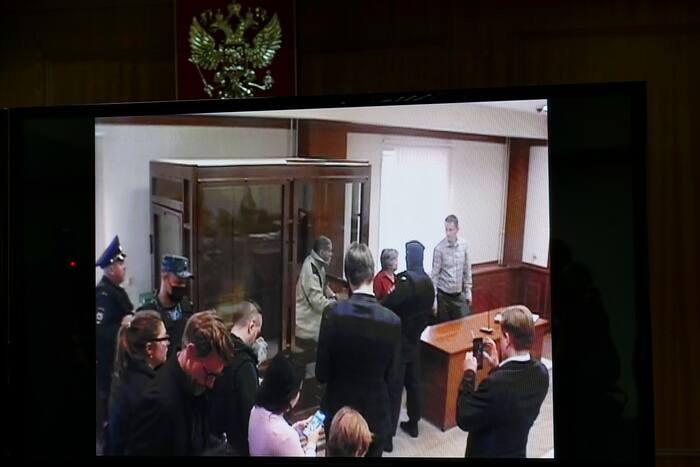
The release of 74-year-old retired American teacher Stephen Hubbard from a Russian penal colony after more than four years of captivity offers a masterclass in how modern authoritarian diplomacy extracts concessions long before a prisoner boards a flight. Hubbard, a native of Big Rapids, Michigan, who was arrested in the Ukrainian city of Izium in April 2022 and later convicted on dubious mercenary charges, walked free not through a traditional prisoner swap, but amid a high-stakes realignment of Washington's foreign policy posture.
When U.S. special envoy Steve Witkoff met with Russian leadership in St. Petersburg, the transaction underlying Hubbard's freedom became glaringly apparent. The Kremlin did not grant clemency out of sudden benevolence. Days prior to Hubbard's release, the White House moved to waive specific sanctions against Russia and struck a deal concerning Russian diesel imports. While presidential statements insisted that no direct quid pro quo occurred, the timing exposes an ongoing reality of geopolitical negotiations involving Moscow: human lives held by the state remain currency in broader economic and territorial disputes.
To understand the mechanics of Hubbard's detention and subsequent release, one must examine how penal systems in Russia operate under wartime conditions. Arrested during the chaotic early weeks of the full-scale invasion, Hubbard was an aging expatriate living quietly abroad. Russian state media quickly painted him as a paid combatant, a narrative firmly rejected by his family and dismissed by independent observers who pointed to his advanced age and civilian background. Yet, in the machinery of Russian jurisprudence, the veracity of the charge matters far less than the utility of the prisoner.
State-sponsored hostage diplomacy relies on creating high-value leverage points. When a foreign national is designated as wrongfully detained by Washington, the individual transitions from a standard judicial defendant into a strategic asset. Moscow understands that democratic governments face intense domestic pressure from families and media outlets to secure the return of citizens at all costs. This asymmetry creates an environment where diplomatic visits by envoys are paired with subtle, or explicit, economic trade-offs.
The optics of Witkoff's mission to St. Petersburg highlighted a profound shift in how backchannel diplomacy is conducted. Rather than working through rigid multilateral frameworks, the approach relied on direct transactional adjustments. By lifting legislative pressure and easing restrictions on energy flows, the administration secured a humanitarian victory that played well domestically ahead of electoral cycles. However, foreign policy analysts note a dangerous precedent in this model. When concessions on sanctions or trade precede the release of detained citizens, it signals to authoritarian regimes that holding foreign nationals yields tangible economic dividends.
Hubbard's ordeal ended in the Oval Office, where television cameras captured the stark contrast between a broken, aging man returning from years in harsh penal colonies and the polished veneer of summit diplomacy. He stated that only during the final leg of his journey from Moscow to St. Petersburg did he truly believe he was heading home.
Yet, for every individual who boards that flight, others remain behind bars in Russian facilities, caught in the same bureaucratic dragnet. The structural incentive for the Kremlin to refill these cells with new detainees remains entirely intact as long as diplomatic and economic relief can be bartered in exchange for human freedom.
American teacher detained in Russia returns home after release
This video provides news coverage and background context on Stephen Hubbard's release after four years of imprisonment in Russia.