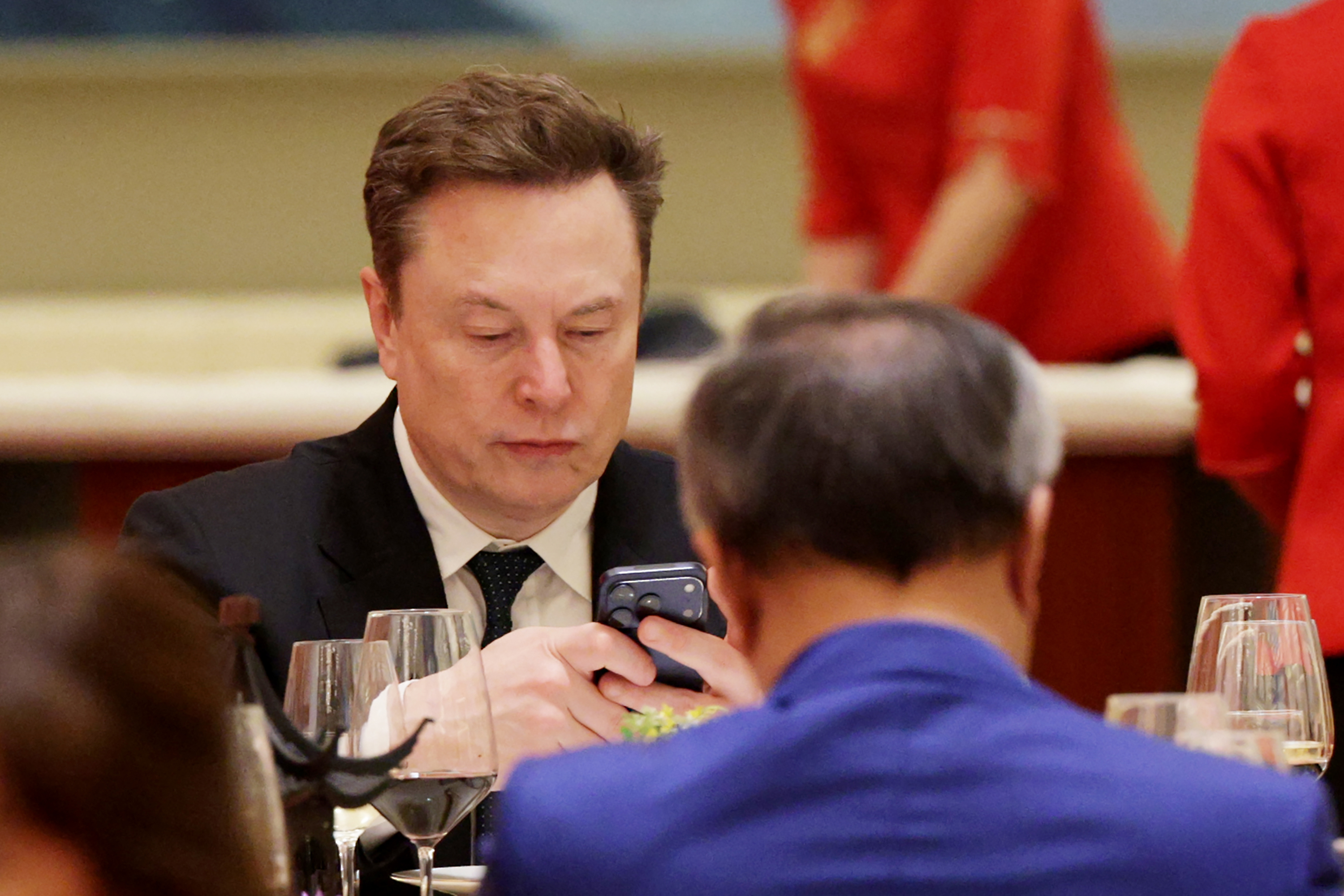
The conference room smelled of stale espresso and expensive wool. For months, a high-stakes legal drama played out not just in legal briefs, but in the court of public opinion, pitting two of the tech world’s most formidable forces against each other. On one side stood Elon Musk, the billionaire who helped fund OpenAI's infancy. On the other sat Sam Altman, the quiet architect of AI’s commercial dawn.
Between them lay a fractured dream. What began as a nonprofit research lab dedicated to saving humanity from its own technological creations had mutated into a corporate titan.
Now, the gavel has fallen. A judge dismissed Musk’s sprawling lawsuit against OpenAI, clearing the final, towering roadblock on the company’s march toward a historic initial public offering.
The courtroom victory is a corporate triumph. But beneath the financial celebration lies a deeper, darker question about who owns the minds we are building.
The Genesis Pact
To understand why this legal battle felt so personal, you have to picture San Francisco in 2015. It was a time of ideological romanticism. Silicon Valley billionaires were genuinely terrified that Google would achieve a monopoly on artificial general intelligence and, intentionally or not, build a digital god that might destroy us.
Musk and Altman sat down with a handful of brilliant young engineers. They forged a pact. They would build an open-source counterweight to Big Tech. They named it OpenAI. The mission was explicitly stitched into its charter: build safe, beneficial AI, and ensure its fruits belong to the world, not to shareholders. Musk poured tens of millions of dollars into this idealism.
Money, however, has a way of rewriting charters.
By 2019, the sheer computing power required to train massive AI models outstripped any charity's budget. Microchips cost millions. Electricity bills rivaled the budgets of small nations. OpenAI faced a brutal choice: wither away in idealistic obscurity, or build a corporate engine capable of attracting billions in venture capital.
Altman chose the engine. He created a for-profit arm.
Musk walked away, his early investments feeling like a bait-and-switch. Years later, he sued, alleging a breach of the company’s foundational contract. He claimed OpenAI had abandoned its altruistic soul to become a de facto subsidiary of Microsoft.
The Anatomy of the Verdict
The legal system operates on cold mechanics, not broken promises.
The judge’s dismissal of Musk’s lawsuit turned on a harsh reality of corporate law: a foundational charter is not a binding contract with individual donors unless explicitly stated. Musk’s lawyers argued that OpenAI’s shift to a commercial model violated an implied agreement. The court disagreed. Without a formal, signed contract stipulating that OpenAI could never seek profit, the allegations lacked a leg to stand on.
Consider what happens next when a multi-billion-dollar legal cloud evaporates overnight.
Wall Street did not just sigh in relief; it salivated. The pending lawsuit was a poison pill. No investment bank would touch an IPO while a volatile billionaire held the power to drag the company through years of discovery, demanding access to proprietary code and internal communications.
With the lawsuit dead, the path to the public markets is wide open. Analysts estimate OpenAI’s potential valuation could rocket past $150 billion, making it one of the most anticipated corporate listings in human history.
But the real problem lies elsewhere. The victory in court does not erase the philosophical whiplash of OpenAI’s evolution.
The Myth of the Pure Scientist
Imagine a young researcher. Let's call her Sarah. She joined OpenAI in its early days, turning down a massive salary at a hedge fund because she believed she was working for the collective good of humanity. She spent eighty hours a week staring at code, fueled by the belief that her work would be democratized.
Today, Sarah watches the company prepare for an IPO. She will likely become incredibly wealthy from her stock options. Yet, the tools she helped create are locked behind corporate paywalls, licensed to massive enterprises, and used to optimize corporate efficiency.
Is Sarah a success story, or the casualty of a compromised ideal?
This tension is the invisible tax of the tech boom. We are told that to build the future, we must surrender it to the market. The argument is seductive because it is practical. Without Microsoft’s billions, ChatGPT would likely be a footnote in an academic journal rather than a tool used by hundreds of millions of people every day.
Yet, something vital gets crushed in the machinery of scaling up. The transition from a public trust to a Wall Street darling requires a form of corporate amnesia. You have to forget why you started in order to justify where you are going.
The Public Market Paradox
An IPO changes a company’s DNA forever.
When OpenAI lists on the stock exchange, its ultimate fiduciary duty shifts. It will no longer legally answer to its original charter of global benefit. It will answer to public shareholders. It will answer to quarterly earnings reports, institutional investors, and the relentless demand for growth.
Can a company truly prioritize the existential safety of humanity when its stock price drops five percent if it delays a product launch?
History suggests it cannot. When profit and safety collide on a corporate balance sheet, profit rarely blinks first. The dismissal of Musk’s lawsuit is not just a victory for Sam Altman; it is a validation of the Silicon Valley playbook. It proves that idealism is an excellent seed stage funding strategy, but scale requires the old, familiar structures of capitalism.
Musk wanted to freeze OpenAI in its 2015 purity. He failed because you cannot fight the economic gravity of the modern tech world with nostalgia. Altman understood that gravity. He rode it.
The Final Invoice
The legal battle is over, but the cultural reckoning is just beginning.
We are left with a landscape where the most powerful technology ever conceived by human intelligence is being steered by the same corporate incentives that govern social media algorithms and ride-sharing apps. The dream of a purely altruistic, open-source digital savior is dead.
In its place stands a highly efficient, incredibly well-capitalized corporate juggernaut preparing to ring the opening bell on the New York Stock Exchange.
The lawyers have packed their briefcases. The executives are preparing their roadshow pitches for institutional investors. The spreadsheets look immaculate.
But as the tickers prepare to update and the billions change hands, one cannot help but think of that quiet room in 2015, and the strange, fleeting moment when we believed the future might belong to everyone.