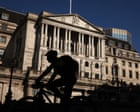
The ink on the ledger was barely dry, yet the room felt heavy, smelling faintly of old wool and damp London stone. Across the mahogany table, an aging civil servant adjusted his spectacles and looked at a set of figures that should have belonged to a different century. UK long-term borrowing costs had just quietly crossed a terrifying threshold, touching levels not seen in twenty-eight years.
To the casual observer passing a newsstand in the autumn chill, the headline looked like financial jargon. A yield curve shifting upward. Gilt rates ticking past four and a half, then five percent. Just dry numbers printed by people in grey suits for people in taller grey buildings.
Numbers do not bleed. But they do bite.
Consider Arthur, a hypothetical retired carpenter living in a modest brick terrace in Nottingham. Arthur does not track bond yields. He does not know a gilt from a guilder. He only knows that his monthly grocery bill has crept upward like ivy on a wall, and that his local council has quietly dimmed the streetlights on his corner to save a few pounds. When the cost of government debt surges to a generation-high peak, Arthur feels it not as a percentage point, but as the sudden, cold realization that the world he saved for is quietly being unstitched at the seams.
Debt is simply deferred reality. Every nation borrows against tomorrow to pay for the noise and necessity of today. For decades, Western economies operated under a collective, unspoken hypnosis: money was practically free. Governments could borrow trillions to fight pandemics, patch motorways, and subsidize energy bills, and the interest payments barely registered as a murmur on the balance sheet.
Then the music stopped.
The twenty-eight-year high on long-term borrowing costs is not merely a marker of inflation or shifting central bank rates. It is a reckoning. It represents the moment the bill collector finally knocked on the door of the Treasury, demanding payment in full, with interest.
When the British government issues a thirty-year bond, it is making a promise. It is telling investors, both domestic and foreign, that it will remain stable, solvent, and trustworthy for three decades. When those investors demand higher yields to take on that risk, they are whispering a nervous truth: they are no longer entirely sure. They see a country aging rapidly, grappling with sluggish productivity, navigating the strange economic gravity of post-Brexit trade, and staggering under a mountain of legacy obligations.
Every tick upward in the cost of government borrowing acts like an invisible tax. It drains oxygen from the room. Money that could have built new hospitals, repaired crumbling school roofs, or funded the green energy transition must instead be siphoned off into the gaping maw of debt servicing.
Picture a municipal hospital in Leeds. Let us call it St. Jude’s, though its crumbling brick facade and drafty nineteenth-century corridors could belong to a hundred similar institutions across the realm.
Inside Ward 4, Dr. Evelyn Vance listens to the rhythmic, exhausted beep of a cardiac monitor. She has worked these wards for twenty-two years. She remembers the early 2000s, when investment flowed like water, when new wings were bolted onto the old hospitals and modern scanners arrived in shiny crates. Back then, money was cheap. Hope felt cheap, too.
Today, Evelyn spends half her morning fighting for basic supplies. Bandages are rationed. A specialist diagnostic machine has been broken for three weeks because the maintenance contract was deferred to meet an emergency fiscal target.
"We are running a marathon in lead boots," she says, her voice flat with a fatigue that sleep cannot cure.
She does not read the financial pages. But she lives downstream from them. The soaring cost of national borrowing trickles down through local authorities, health trusts, and public sector pay freezes until it hits the cold linoleum of her ward. When the Treasury pays more to service its multi-billion-pound debt pile, every public institution feels the tourniquet tighten around its throat.
To understand why this twenty-eight-year high matters, we have to look past the spreadsheets and examine the psychology of trust.
Financial markets are essentially giant, anxious nervous systems. They react to fear, fatigue, and fragility. For generations, British gilts were treated as the gold standard of safety—the rock upon which conservative portfolios were built. Pension funds bought them by the billions. Insurance companies anchored their long-term liabilities to them. They were boring. They were safe. They were the financial equivalent of a sturdy oak door bolted against the storm.
That oak door is now rattling in its frame.
When long-term yields spike, the market value of existing bonds plummets. This creates a hidden chain reaction that ripples through the pensions held by millions of ordinary workers. Suddenly, the funds designed to pay out secure retirements are forced to rebalance, absorbing losses born of a shifting economic climate. The shockwaves are quiet, subterranean, and terrifyingly vast.
We are living through the end of an era of magical thinking. For a long time, political leaders of every stripe promised voters that they could have everything: lower taxes, better public services, green transformations, and limitless borrowing capacity, all without consequences. It was a comforting fairy tale.
Reality, however, is notoriously stubborn.
When borrowing costs hit a twenty-eight-year peak, the math simply ceases to cooperate with political convenience. Every new spending pledge comes wrapped in a hidden penalty. Every delayed structural reform becomes exponentially more expensive.
Yet, there is a strange clarity in crisis.
When the floor drops out of easy money, societies are forced to rediscover the uncomfortable art of making choices. You cannot borrow your way to prosperity when the interest on your past mistakes consumes the budget. You have to build, innovate, and grow. You have to confront the gnarly, unglamorous truths of productivity, education, and infrastructure.
Back in Nottingham, Arthur turns off his kitchen radio as another news anchor discusses bond yields and fiscal headroom. He doesn't understand the terminology, but he recognizes the tone. It is the sound of autumn settling in early.
He walks to the window and looks out at the street where the municipal light flickers dimly in the gathering dusk. The wind rustles the dry leaves across the pavement, carrying away the remnants of a summer that lasted longer than it should have. The bills are on the counter, waiting. And somewhere out there in the dark, the ledger remains open.