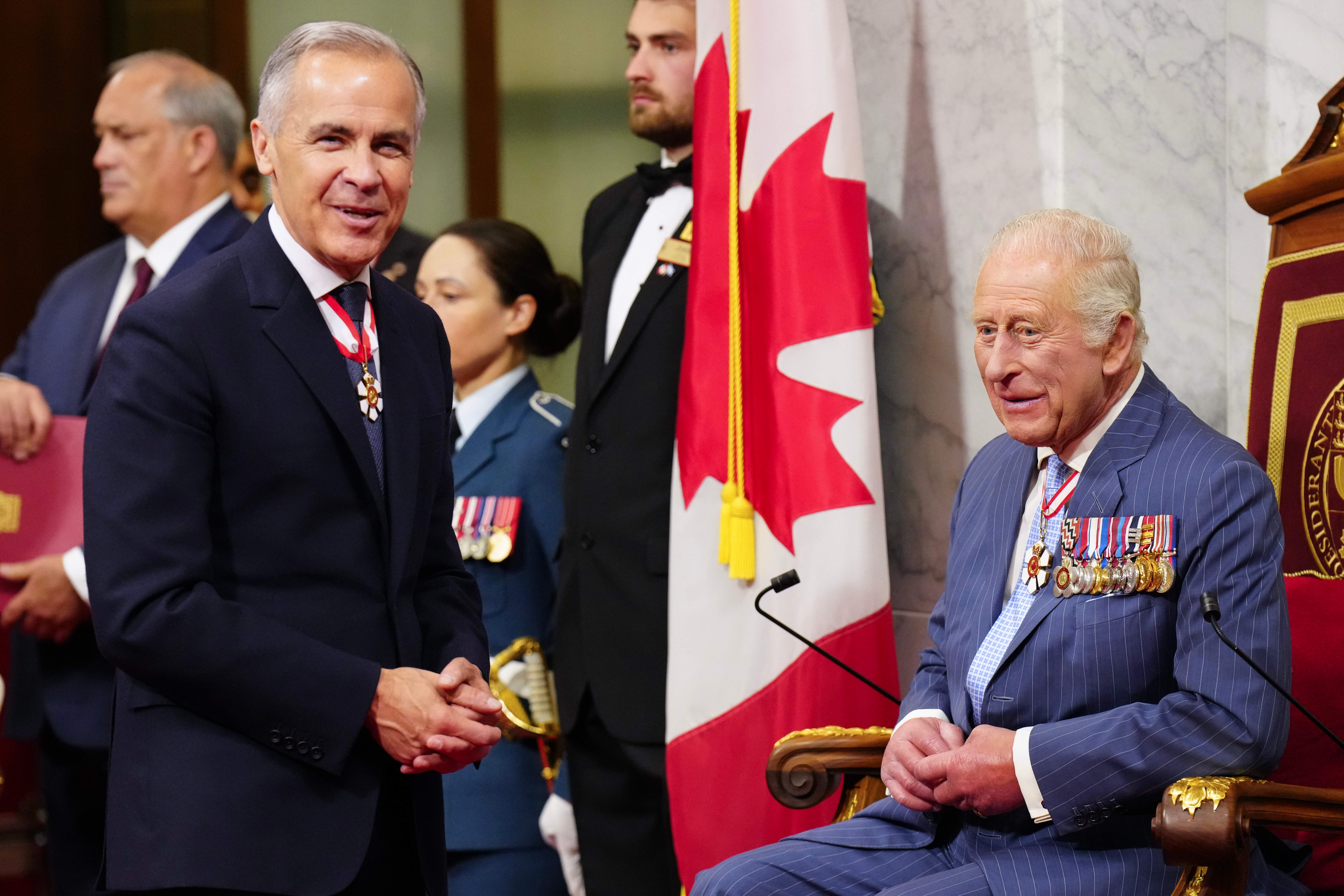
A nation state's sovereign identity cannot be calculated purely through a standard ledger, yet the logistical apparatus required to execute symbolic statecraft carries a quantifiable fiscal burden. When King Charles III arrived in Ottawa to deliver the speech from the throne to open the 45th Parliament, public debate focused intensely on immediate treasury outlays. This granular economic deconstruction moves past superficial tallies to analyze the true cost structure of state ritual, establishing a formal framework for evaluating the trade-offs of monarchical governance.
The total direct expenditure incurred by the Canadian treasury for the 24-hour state visit reached $2,636,484.92. Amortized across the exact duration of the itinerary, the operational burn rate stands at $109,853.54 per hour, or $1,830.89 per minute. Media analyses frequently isolate the $900,000 threshold associated with core ministerial logistics, yet this baseline understates total liabilities by ignoring interdepartmental resource allocation and structural fixed costs.
The Four Pillars of Statecraft Expenditure
To properly evaluate the fiscal impact, expenditures must be categorized by operational utility rather than departmental origins. The state visit cost structure splits into four distinct tactical pillars.
Tactical Air and Ground Logistics
Transportation protocols command the highest operational premium due to the requirement for secure, non-commercial transit assets. The Department of National Defence allocated approximately $400,000 strictly to dispatch a Royal Canadian Air Force (RCAF) strategic transport aircraft and dedicated crew to the United Kingdom to facilitate the transatlantic round-trip. Ground transportation assets within the National Capital Region, utilizing armored pools and specialized detail routing, added further delivery costs, bringing total air and ground transport liabilities close to $370,000 outside of the primary transatlantic flight itself.
Combined Security and Ceremonial Protection
The threat matrix associated with a visiting head of state mandates a multi-layered security architecture. Public Safety Canada and the Royal Canadian Mounted Police (RCMP) logged a combined security bill exceeding $857,000. This fiscal category comprises:
- Close-protection details for the Royal Household.
- Perimeter isolation and physical security barriers across the Parliamentary precinct.
- Tactical deployment of an RCMP ceremonial guard.
- Overtime compensation for municipal and federal law enforcement personnel required to secure the transit corridors.
Aerospace Demonstration and Ceremonial Protocol
The single largest line-item within the Department of National Defence's $1.28 million total allocation was a ceremonial air force flypast. Executed by the RCAF over the National War Memorial following the wreath-laying ceremony, this display generated an invoice of $824,700. This cost reflects the high hourly operational baseline of military aviation assets, including specialized jet fuel, maintenance-hour accruals, and pre-flight tactical positioning.
Civil Event Infrastructure and Inter-Agency Hosting
The Department of Canadian Heritage, acting as the primary logistical coordinator for the state visit, incurred $442,670.65 in costs. This capital was deployed to manage hotel accommodations for the Royal household staff, formal staging inside the Senate chamber, media coordination infrastructure, and official state hospitality functions.
The Strategic Cost Function of Symbolic Governance
Evaluating these figures requires an understanding of the constitutional mechanics governing a parliamentary session. The throne speech dictates the legislative priority matrix of the sitting government; however, the physical presence of the monarch is functionally non-essential to the legality of the proceedings. Under standard operating protocols, the Governor General delivers the address at a nominal operational cost.
The selection of the Sovereign to personally read the text introduces an intentional premium. The economic justification relies on a sovereign signaling mechanism, which can be modeled through a clear cause-and-effect framework.
[Geopolitical Friction / Trade Uncertainty]
                  ↓
[Invitation to Sovereign for Direct Parliamentary Opening]
                  ↓
[Execution of High-Value Historical Precedent (Third Time in History)]
                  ↓
[Resulting Signal: Institutional Differentiation and Sovereignty Assertion]
This model highlights that the expenditure functions as an investment in geopolitical signaling. By leveraging a rare constitutional mechanism—this being only the third time a reigning monarch has read the Canadian throne speech—the administration establishes an explicit institutional boundary between domestic governance frameworks and foreign economic pressures. The utility generated is non-transactional, aiming to reinforce state legitimacy and diplomatic leverage during periods of international trade volatility.
Capital Restraints and Accounting Limitations
Quantifying statecraft via access-to-information disclosures features structural boundaries that analysts must acknowledge. The reported $2.63 million sum represents explicit departmental outlays, but omits indirect economic variables.
The first limitation is the calculation of opportunity costs for military and security personnel. Staff deployed for ceremonial protection or aerial demonstrations are diverted from standard operational readiness training. While the salaries of these service members are fixed liabilities already captured in annual budgetary appropriations, their reallocation to static ceremonial functions represents a diversion of specialized labor.
The second bottleneck involves localized economic friction. The closure of key transit arteries within Ottawa's core over a 48-hour window creates localized productivity losses and disrupts commercial supply chains. These secondary impacts are distributed across the private sector and remain absent from treasury ledgers, meaning the real macroeconomic cost of high-security state ritual permanently exceeds the direct cash outlays reported by government agencies.
Institutional Asset Allocation Strategy
To optimize future state deployments of this scale, asset managers must transition from reactive budgeting to a structured optimization framework.
┌─────────────────────────────────────────────────────────────┐
│               EXPENDITURE OPTIMIZATION MATRIX               │
├──────────────────────────────┬──────────────────────────────┤
│  HIGH CEREMONIAL UTILITY     │  LOW CEREMONIAL UTILITY      │
│  (Retain / Optimize)         │  (Eliminate / Scale Back)    │
├──────────────────────────────┼──────────────────────────────┤
│  • Multi-Agency Security     │  • High-Cost Air Flypasts    │
│  • Core Transatlantic Lift   │  • Multi-Day Hotel Blocks    │
│  • Senate Chamber Staging    │  • Extended Ground Details   │
└──────────────────────────────┴──────────────────────────────┘
The primary strategic move demands the unbundling of core constitutional functions from variable ceremonial add-ons. Security infrastructure and transatlantic lift capabilities represent non-negotiable fixed costs tied directly to the safety and execution of the head of state’s mission. Conversely, secondary assets like large-scale military flypasts represent variable, high-discretion outlays that yield low marginal utility relative to their fiscal footprint.
Future state planning profiles should enforce a strict cap on variable ceremonial components, indexing them to explicit diplomatic or economic benchmarks rather than historic precedent. This approach preserves the symbolic capital of a royal parliamentary opening while lowering the direct burden on the public treasury by up to 30% per operational cycle.