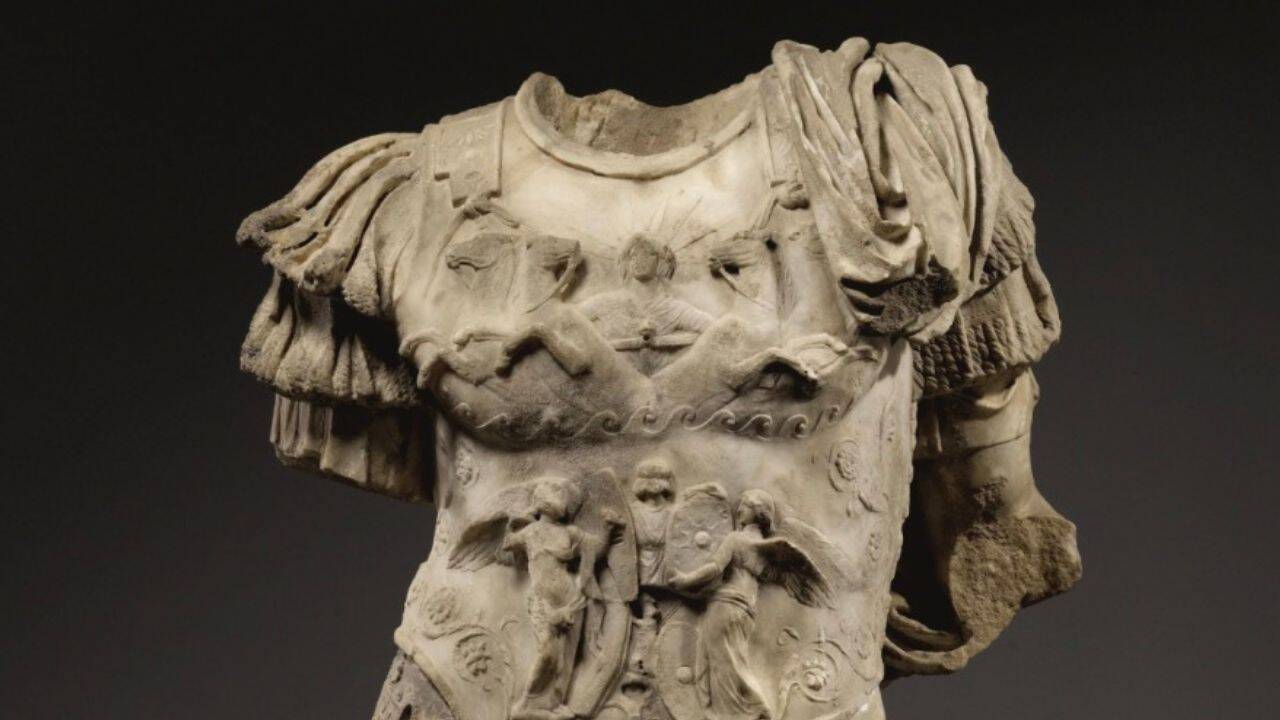
The October 2026 hammer price of $34.26 million for a two-millennium-old Roman imperial marble torso reflects a structural shift in how ultra-high-net-worth capital prices irreproducible cultural assets. Standard art market commentary attributes eight-figure classical antiquity sales to vague notions of rarity, historical prestige, or collector passion. That explanation fails as an analytical model. Thousands of Roman marble fragments reside in museum basements and private storage facilities globally, yet the vast majority trade for five or six figures. Capturing a $34.26 million valuation requires the simultaneous alignment of four distinct economic and legal mechanisms: indisputable imperial attribution, clean post-1970 provenance, institutional-grade aesthetic completeness despite fragmentation, and liquidity hedging against fiat currency debasement.
When these four variables converge, classical antiquities cease to behave like decorative art and begin operating as non-correlated sovereign-grade bearer assets. Understanding how auction houses, private treaty advisors, and family offices underwrite a $34.26 million bid requires dismantling the pricing architecture of the top-tier antiquities market.
The Valuation Architecture of Trophy Antiquities
In financial economics, Veblen goods exhibit upward-sloping demand curves because high prices confer exclusivity. Trophy antiquities go a step further: they represent absolute supply inelasticity. While contemporary blue-chip artists produce dozens of canvases per decade, the supply of documented, legally transferable Roman imperial portraits is permanently fixed at zero net new production.
To price an asset with zero supply elasticity, institutional buyers rely on a multi-factor underwriting matrix rather than comparable sales alone.
Subject Hierarchy and Dynastic Weight
Not all Roman marble carries equal balance-sheet value. The market enforces a strict caste system based on the identity of the subject. Anonymous funerary reliefs sit at the bottom. Mythological figures (Venus, Hercules, Apollo) occupy the middle tier, valued primarily for decorative volume and neoclassical appeal. At the apex sit portraits of ruling emperors—specifically those from the Julio-Claudian, Flavian, or Antonine dynasties. An imperial torso is not merely sculpture; it is state propaganda carved in Parian or Carrara marble, serving as the physical manifestation of Roman geopolitical power. When an attribution links a torso directly to a specific emperor—through iconography, cuirass decoration, or musculature conventions—the buyer pool expands from antiquities specialists to trophy collectors who otherwise buy Post-War paintings or Impressionism.The 1970 UNESCO Bifurcation
The single greatest determinant of liquidity in the antiquities sector is the November 14, 1970 threshold established by the UNESCO Convention on the Means of Prohibiting and Preventing the Illicit Import, Export and Transfer of Ownership of Cultural Property. The market is permanently bifurcated into two asset classes: works with documented ownership histories predating 1970, and works without them. A torso lacking pre-1970 documentation faces severe legal friction, customs seizures, and exclusion from major museum exhibitions, rendering it nearly illiquid at eight-figure price points. Conversely, a marble fragment with an unbroken paper trail stretching back to eighteenth- or nineteenth-century European aristocratic collections carries an enormous compliance premium. Buyers in October 2026 were not just paying for ancient carving; they were paying for legal immunity and future transferability.Condition Versus Fragmentation Economics
Amateur observers frequently question why a headless, limbless torso commands more than an intact Roman sarcophagus. In classical scholarship and high-end collecting, modern restoration is penalized. During the eighteenth and nineteenth centuries, restorers routinely grafted newly carved heads, arms, and legs onto ancient torsos to satisfy neoclassical tastes. Today, those interventions destroy authenticity. An unrestored torso preserves the unadulterated tool marks, surface patina, and anatomical modeling of the original workshop. Collectors prize the "honest fragment" because every square centimeter of marble is demonstrably ancient, eliminating the valuation discount applied to composite or heavily restored works.Scale and Architectural Presence
Valuation scales non-linearly with physical dimensions. Over-life-size imperial statues (typically exceeding 1.8 meters in height without head or plinth) were commissioned for public forums, basilicas, or imperial villas rather than domestic shrines. Their sheer mass signals direct imperial patronage. In private collections, monumental scale anchors architectural spaces in a way smaller busts cannot, justifying capital allocations comparable to prime residential real estate.
The Provenance Risk Discount and Compliance Premium
To understand why $34.26 million represents a rational clearing price rather than irrational exuberance, one must examine the risk-adjusted cost of capital in the antiquities trade. Over the past two decades, aggressive repatriation campaigns led by the Italian Ministry of Culture, Greek authorities, and the Manhattan District Attorney’s Antiquities Trafficking Unit have systematically purged undocumented works from major auction catalogs.
This enforcement pressure created a severe supply shock at the top end of the market. Auction houses—primarily Sotheby’s, Christie’s, and specialized European houses—now deploy rigorous due diligence protocols before accepting high-value consignments. This includes cross-referencing against the Art Loss Register, reviewing archival excavation records, and verifying export licenses.
The operational consequence of this regulatory tightening is a massive transfer of value toward the shrinking pool of "clean" works. Consider the mechanics of this price distortion:
- Elimination of Shadow Supply: Thousands of high-grade antiquities held in private European vaults can no longer be brought to public auction because their mid-twentieth-century acquisition histories lack paper trails. Because this shadow supply cannot enter the market, the effective float of investable masterpieces is artificially compressed.
- Institutional Validation Loops: Major museums, bound by strict acquisition guidelines adopted by the Association of Art Museum Directors (AAMD), cannot purchase objects without post-1970 provenance. When a pristine, fully documented imperial torso surfaces, private collectors know it meets museum acquisition standards. This creates a psychological and financial floor: the buyer knows that high-net-worth peers, and potentially endowed foundations, will compete for the asset upon resale.
- Insurance and Financing Utility: Clean provenance unlocks financial utility. Specialized art lenders—such as Sotheby’s Financial Services, private banks, and boutique credit funds—will underwrite non-recourse or partial-recourse loans against documented antiquities, typically at loan-to-value (LTV) ratios between 40% and 50%. Undocumented antiquities carry an LTV of zero. Therefore, a $34.26 million torso with impeccable paperwork functions as productive collateral, whereas an identical torso without paperwork is dead capital.
Auction Mechanics and Price Discovery at Eight Figures
Public auctions for singular historical artifacts do not follow standard retail pricing models. They operate as ascending-bid English auctions engineered to induce competitive escalation among a tiny cohort of ultra-wealthy bidders.
In an October 2026 evening sale setting, several structural dynamics drive the hammer price past pre-sale estimates:
- Information Asymmetry and Specialist Signaling: Prior to the sale, auction specialists conduct targeted private viewings and distribute condition reports detailing surface crystallography, root marks, and archival citations. When two or more bidders independently verify that the torso is a "once-in-a-generation" market appearance, the pre-sale estimate becomes irrelevant. Estimates are marketing anchors designed to attract initial interest, not ceilings on value.
- Irrevocable Bids and Third-Party Guarantees: To secure a centerpiece consignment of this magnitude, auction houses frequently arrange third-party guarantees. An outside financier agrees to purchase the lot at a predetermined minimum price in exchange for a financing fee or a share of the upside above the guarantee threshold. This mechanism removes downside risk for the consignor and signals institutional confidence to the market before the gavel drops, encouraging rival bidders to stretch their limits.
- The Buyer’s Premium Multiplier: Reported headline prices like $34.26 million reflect the final hammer price plus the auction house’s tiered buyer’s premium. On multi-million-dollar lots, buyer’s premiums typically add between 12% and 15% on top of the hammer price, alongside applicable overhead premiums. Bidders factor this friction cost directly into their maximum bid thresholds, treating the total outlay as the true acquisition basis.
Macro Capital Flows and Alternative Asset Allocation
The timing of a $34.26 million clearance in late 2026 cannot be divorced from broader macroeconomic conditions governing global wealth allocation. Family offices and sovereign-adjacent collectors increasingly view tangible cultural assets as structural hedges against monetary expansion, geopolitical fragmentation, and equity market concentration.
Unlike financial securities, a two-thousand-year-old Roman imperial marble carries zero counterparty risk. It cannot default, it cannot be diluted by corporate issuance, and its cultural legitimacy has survived the collapse of multiple empires, currencies, and political systems. For ultra-high-net-worth individuals holding nine- and ten-figure liquid portfolios, allocating $34.26 million represents a fraction of net worth deployed into an asset class with a multi-century track record of wealth preservation.
Furthermore, the global collector base has expanded geographically. Traditional European and North American buyers now compete directly with principals from the Middle East and East Asia, where the construction of private museums and state-backed cultural districts has created urgent demand for foundational Western classical works. A Roman imperial torso serves as an instant historical anchor for any emerging encyclopedic collection, compressing decades of institutional collection-building into a single transaction.
Operational Limitations and Risks of Antiquities Investment
Treating a $34.26 million antiquity purely as a financial instrument carries substantial operational hazards that institutional investors must discount:
- Illiquidity and Holding Horizons: The transaction cycle for trophy antiquities is measured in decades, not quarters. Bringing a $34.26 million sculpture back to market within five years risks burning the asset—a phenomenon where buyers assume a quick resale indicates hidden defects or provenance doubts, depressing bids below the original purchase price.
- Physical Fragility and Logistics Overhead: Crystalline marble is heavy, brittle, and sensitive to environmental fluctuations and vibration. Transporting an over-life-size torso requires custom engineering, climate-controlled air freight, specialized rigging, and bespoke seismic mounts. Annual holding costs—encompassing fine art all-risk insurance, specialized storage, and conservation monitoring—easily consume 1% to 2% of the asset’s value annually without generating any cash yield.
- Retroactive Legal Exposure: Even rigorous pre-1970 provenance is not an absolute shield against future legal challenges. New archival discoveries—such as seized dealer photographs or recently digitized excavation logs—can suddenly implicate previously clean objects in mid-twentieth-century looting networks, wiping out equity value overnight.
- Attribution Drift: Classical art history is not static. If subsequent peer-reviewed scholarship downgrades an imperial torso from a specific emperor to an anonymous magistrate or a later Severan copy, the market value can contract by 50% or more upon resale.
Strategic Execution for Institutional Collectors and Advisors
Navigating the trophy antiquities market at the eight-figure tier requires disciplined underwriting rather than aesthetic impulse. Family offices, private museums, and art advisory firms evaluating comparable acquisitions must execute four non-negotiable protocols before committing capital:
- Commission Independent Archival Forensics: Never rely solely on the auction house’s published provenance summary. Retain independent provenance researchers to verify original sales receipts, customs stamps, and nineteenth-century collection catalogs at the source archive. Confirm that every transfer of ownership between 1945 and 1970 is corroborated by contemporaneous documentation.
- Conduct Scientific Surface Analysis: Require isotopic marble analysis and microscopic surface examination by an independent conservation scientist prior to bidding. Confirm that the crystal structure, weathering patterns, and tool marks align with the purported quarry origin (such as Paros, Carrara, or Dokimeion) and period, ensuring no modern re-carving has been disguised with artificial patina.
- Underwrite on a Twenty-Year Horizon: Structure the acquisition within a long-term estate planning vehicle, charitable foundation, or museum loan framework. Modeling an exit in under fifteen years exposes the balance sheet to severe buyer’s premium friction—requiring roughly a 25% to 30% appreciation in hammer value simply to break even after transaction and holding costs.
- Target Imperial Iconography Exclusively at the Top Tier: Avoid spending eight figures on decorative mythology or restored composites regardless of scale. Concentrate capital strictly on unrestored, documented imperial portraits and historically significant monuments, as this narrow segment monopolizes institutional demand and retains liquidity across economic cycles.


