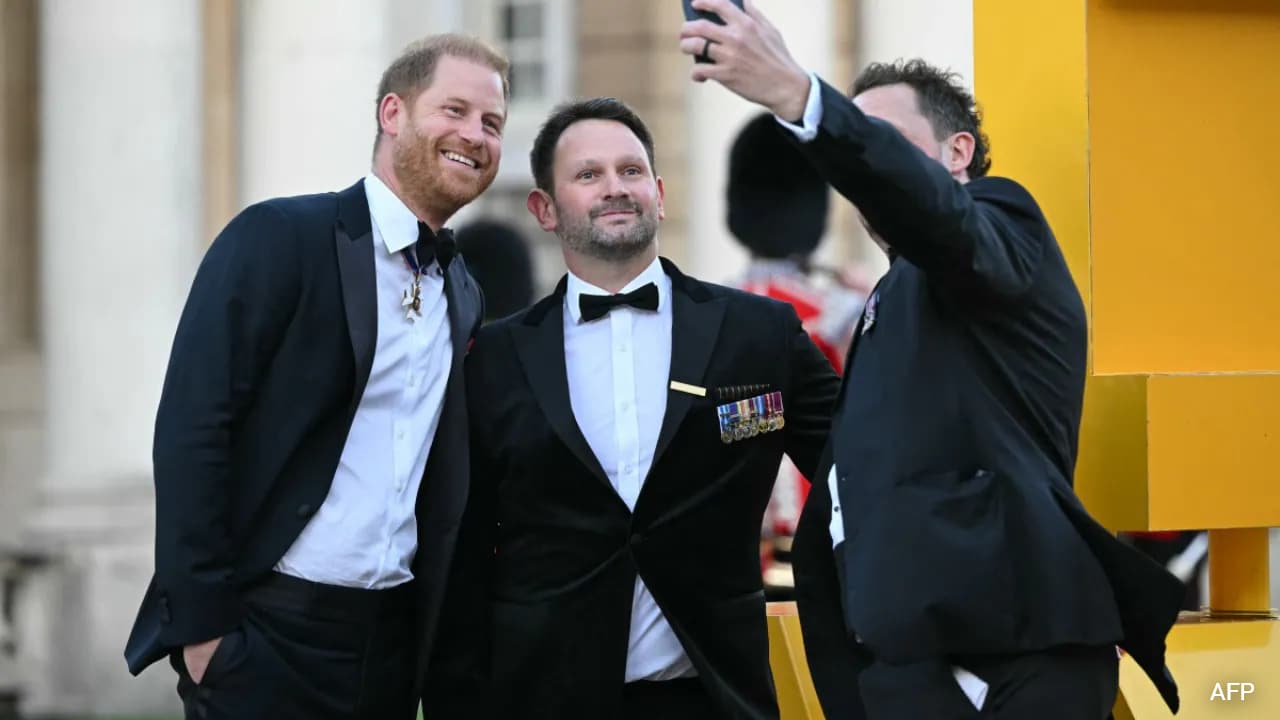
Prince Harry stepped out in central London under a slate-gray autumn sky, marking his most visible return to British soil since relocating his family to California. The appearance, tied to a high-profile charitable initiative supporting seriously ill children, triggered the familiar, well-oiled machinery of both tabloid sensationalism and royal security choreography. For years, the narrative surrounding the Duke of Sussex has been framed as a binary choice: a permanent exile across the Atlantic or an inevitable, messy capitulation back into the Firm. Reality, as is almost always the case when public relations meet dynastic power, is infinitely more transactional and far less cinematic.
The mechanics of a royal return involve months of diplomatic clearance, legal wrangling over taxpayer-funded protection, and precise calendar management. When Harry touches down in the United Kingdom, he does not simply walk through Heathrow like an ordinary citizen. He enters a high-stakes ecosystem where every handshake, micro-expression, and unconfirmed source leak is instantly monetized by media outlets and scrutinized by palace aides. This latest public engagement demonstrates a deliberate strategy: maintaining visibility in British philanthropic spaces while keeping a firm, unyielding boundary between his private life in Montecito and the institution he left behind.
The Architecture of Distance and Duty
Look past the flashbulbs and the orchestrated PR statements, and a stark logistical reality emerges. The separation between Harry and the rest of the royal family is not merely geographic; it is operational. When senior royals execute public engagements, they do so with the implicit backing of the Sovereign Grant and an entrenched civil service apparatus that handles logistics, press pooling, and diplomatic shielding. Harry now operates as an independent entity, funding his own security details, managing his own foundation pipelines, and navigating British bureaucracy without the institutional safety net that once buffered every public move.
This structural shift changes the entire calculus of his appearances. Every trip requires private risk assessments and independent scheduling. It is a grueling way to operate for a man who spent his entire life inside a system where doors opened automatically and schedules were printed months in advance. Yet, this independence grants him a currency the royal family rarely allows its working members: absolute autonomy over his schedule, his message, and his affiliations.
The charity event that brought him back to London was no accident of timing. By anchoring his return to an organization he has championed for nearly two decades, he bypassed the trap of appearing to chase royal relevance. Instead, he leaned into his strongest suit, which is his authentic, long-standing commitment to veteran welfare and pediatric health initiatives. It is a lane the British press struggles to critique effectively without looking petty, which explains the sharp pivot in coverage from his personal grievances to his sartorial choices and facial expressions.
The Security Impasse and Legal Realities
You cannot discuss Prince Harry on British soil without addressing the elephant in the room, which is the ongoing legal battle over his security status. Since stepping back as a working royal, his state-funded protection was stripped away, leaving him to challenge the Executive Committee for the Protection of Royalty and Public Figures (Ravec) in the High Court. This dispute is not merely about bodyguards; it is about status, risk recognition, and institutional acknowledgment.
For Harry, traveling to the UK without guaranteed police protection is framed as an untenable security risk for his family, effectively locking Meghan Markle and their children out of regular visits. For the Home Office and the royal establishment, granting special security dispensation to a non-working royal sets a perilous precedent that the government is entirely unwilling to establish. This stalemate has turned every brief trip into a logistical puzzle box, isolating Harry during his stays and ensuring that his time in his home country is brief, highly guarded, and intensely scrutinized.
The financial and emotional toll of this ongoing standoff is considerable. It ensures that any return to Britain is fraught with tension rather than nostalgia. While commentators love to pontificate about a reconciliation over a cup of tea behind palace walls, the courtroom battles tell a different story. They reveal two sides entrenched in legal positions that leave very little room for emotional sentimentality.
Media Ecologies on Both Sides of the Atlantic
The British tabloid press operates on a continuous loop of outrage and fascination regarding the Sussexes. The moment Harry’s flight touches down, assignment desks light up. Photographers stake out favored hotels, lip-readers are deployed to analyze whispered conversations, and retired royal correspondents dust off their expert commentary to dissect whether a look from a passerby signaled rejection or acceptance.
Yet, the appetite for this content in the UK contrasts sharply with the mood in North America. In the United States, Harry and Meghan are viewed through the lens of entrepreneurial philanthropy, media production, and lifestyle branding. The endless palace drama that dominates British breakfast television barely registers as a blip in mainstream American media cycles. This cultural dichotomy creates a bizarre distortion field. Harry is simultaneously treated as a traitor to tradition in his homeland and a progressive philanthropist abroad.
Navigating these two opposing realities requires a level of media management that few public figures could sustain. Every time Harry steps out in London, he is effectively feeding the very beast he fled across the ocean to escape. He does so because hiding away would cede the narrative entirely to hostile commentators, yet every appearance risks re-igniting the cycle of aggressive media intrusion.
The Broader Impact on the Institution
While Harry focuses on his independent ventures, the wider House of Windsor faces its own existential pressures. With King Charles and the Princess of Wales both navigating health treatments, the working roster of royals has thinned dramatically. The institution is visibly strained, trying to project stability and continuity with a fraction of the personnel it utilized a decade ago.
In this context, rumors of Harry returning to a part-time royal role surface periodically, usually planted by anonymous sources close to the palace or hopeful monarchists. But these rumors ignore the hard boundaries established by the Sandringham Summit. There is no half-in, half-out model available. The institution cannot absorb a member who retains commercial freedoms in the US while representing the Crown in the UK without creating an administrative and ethical nightmare.
Harry knows this. The palace knows this. The public theater of his brief visits is just that—theater. Behind the scenes, the lines are drawn, the legal briefs are filed, and the separation remains absolute.
The Prince’s journey back to London is a masterclass in modern public relations survival. He is navigating a minefield of his own making, shadowed by a press corps that refuses to forgive and an institution that refuses to bend. As he boards his return flight back to California, the British media will momentarily quiet down, waiting for the next flashpoint, the next court date, or the next charitable initiative to drag the cycle back into motion. The machinery of fame grinds on, indifferent to the individuals caught in its gears.