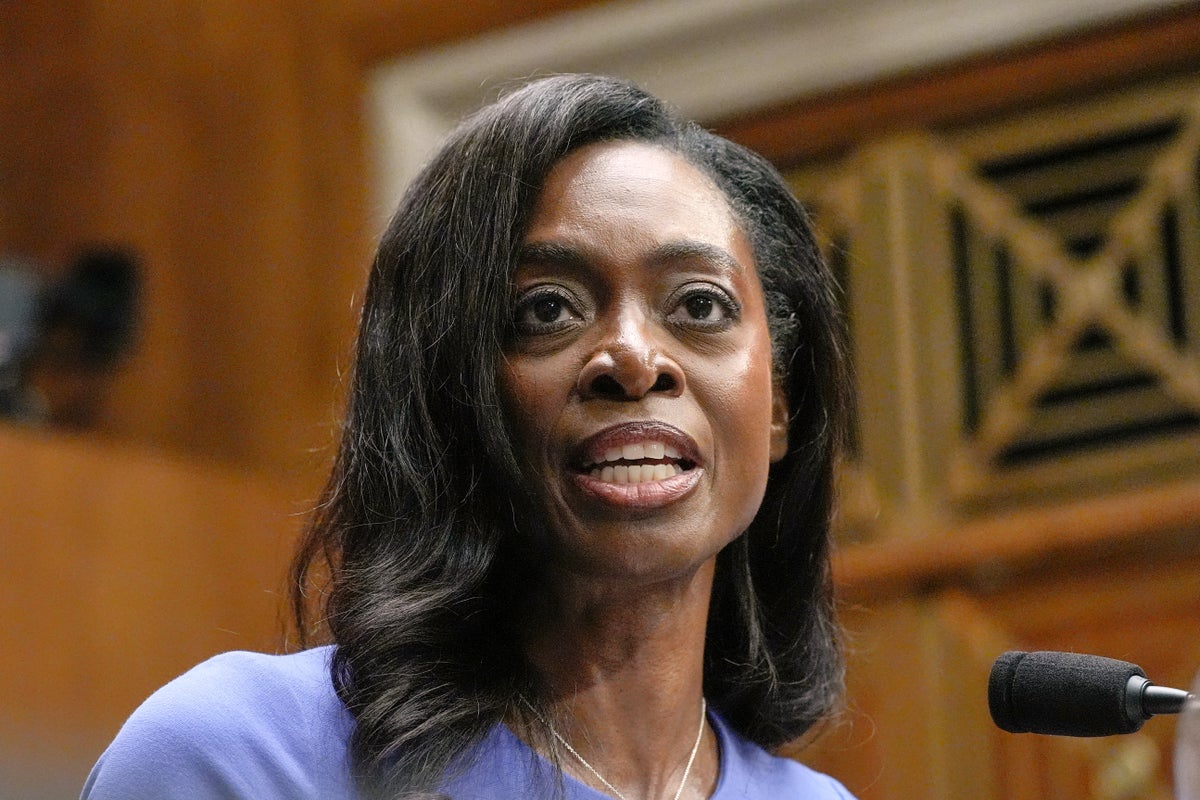
Walk into a Senate confirmation hearing in 2026, and you're bound to hear some carefully choreographed theater. But when Dr. Erica Schwartz stood before the Senate Health, Education, Labor and Pensions (HELP) Committee, the stakes felt incredibly real.
The Centers for Disease Control and Prevention (CDC) is currently a ship without a steady captain, battered by a revolving door of leadership and intense political storms. Schwartz, President Trump’s third nominee to lead the agency in less than two years, looked lawmakers in the eye and delivered a line designed for a headline: "I will never betray the science."
It's a great soundbite. But behind the promise lies a messy, complicated political reality. How do you protect scientific integrity when your immediate boss is Health and Human Services (HHS) Secretary Robert F. Kennedy Jr., a man who has spent years challenging mainstream medical consensus?
The Impossible Balancing Act for Erica Schwartz
If confirmed, Schwartz inherits an agency in deep crisis. Morale is dragging. Talented career scientists have been walking out the door. To fix this, she's promising "radical transparency".
But during the hearing, senators on both sides of the aisle wanted to know what that actually means when push comes to shove.
Republican Senator Bill Cassidy of Louisiana repeatedly pressed Schwartz on whether she would stand up to Kennedy if he tried to override established scientific recommendations. Schwartz’s defense? She danced around the hypotheticals.
- She insisted she would not compromise.
- She argued that Kennedy would allow her to exercise her authority.
- She claimed she didn't believe Trump or Kennedy would ever ask her to implement unscientific policies.
This didn't sit well with Cassidy, who called her "way over-prepped" and clearly frustrated by the lack of direct answers.
And honestly, it’s easy to see why lawmakers are skeptical. The idea that she won't face pressure to bend the science isn't just optimistic—it ignores recent history.
The Ghosts of CDC Nominations Past
To understand why senators are so anxious, you have to look at how we got here. Schwartz is trying to step into a role that has chewed up and spit out her predecessors.
First, there was former Florida Congressman David Weldon. His nomination was abruptly pulled in March 2025 before his hearing even started because he didn't have the votes.
Then came Susan Monarez, the acting director who actually secured confirmation. She lasted less than a single month. Monarez was fired after reportedly clashing with Kennedy over vaccine policies, refusing to act as a rubber stamp for what she viewed as reckless directives. Her exit sparked a wave of resignations among top CDC scientists.
[The CDC Leadership Carousel]
David Weldon (Withdrawn March 2025)
       │
       ▼
Susan Monarez (Fired after one month, late 2025)
       │
       ▼
Erica Schwartz (Nominated April 2026 / Hearing July 2026)
With that backdrop, Schwartz’s claim that she doesn’t expect to be pressured feels disconnected from the reality of the office she's trying to run.
Pleading Ignorance on the Big Issues
One of the most striking moments of the hearing came when Schwartz responded to questions about controversial changes already happening under her nose.
When asked about the CDC’s website, which had been modified to suggest a link between childhood vaccines and autism—a claim completely debunked by global scientific consensus—Schwartz admitted she hadn't even looked at the page. While she agreed that the medical evidence shows no link, she refused to commit to taking the page down. Instead, she said she would "review it with Kennedy".
She also claimed she was unaware of other significant moves, such as:
- The curtailing of CDC programs that promote vaccination and smoking cessation.
- The quiet rollback of mandatory tracking for Cyclospora, a nasty foodborne parasite.
- Internal directives from Kennedy that halted flu vaccine promotion campaigns during active flu seasons.
When New Hampshire Senator Maggie Hassan pointed out that these aren't hypothetical scenarios—they actually happened—Schwartz stayed quiet on whether she would have fought them.
Instead, she offered a classic bureaucratic pivot, suggesting that the CDC has suffered from "mission creep" and needs to focus more narrowly on core infectious disease threats.
What Happens Now?
Despite the tense exchanges, Schwartz is still highly likely to be confirmed. She has a strong resume as a retired Coast Guard rear admiral and former deputy surgeon general. She has a law degree, a master’s in public health, and years of hands-on medical experience. She knows how the federal system works.
If she takes the job, she faces an immediate, massive test.
She will have to manage a relationship with a highly hands-on HHS Secretary who wants to fundamentally rewrite the U.S. childhood immunization schedule. She will have to decide whether to push back when political directives clash with decades of established peer-reviewed research. And she will have to do all of this while trying to convince a skeptical public—and her own demoralized staff—that the CDC’s guidance is still based on data, not politics.
Saying you will "never betray the science" is easy. Proving it under this administration is going to be the hardest job in medicine.