Standing in Aisle Four of a suburban grocery store on a Tuesday evening, holding a twelve-pack of sparkling water in one hand and a mental spreadsheet in the other, you learn the exact difference between an economist’s chart and a human pulse.
The morning news on the car radio had been celebratory. Anchors spoke in brisk, reassuring tones about the Consumer Price Index cooling last month, noting that the year-over-year rate of inflation had eased closer to the Federal Reserve's long-sought target. On paper, the fever was breaking. The patient was recovering. The worst, according to the men and women in tailored suits pointing at downward-sloping lines on studio monitors, was finally behind us.
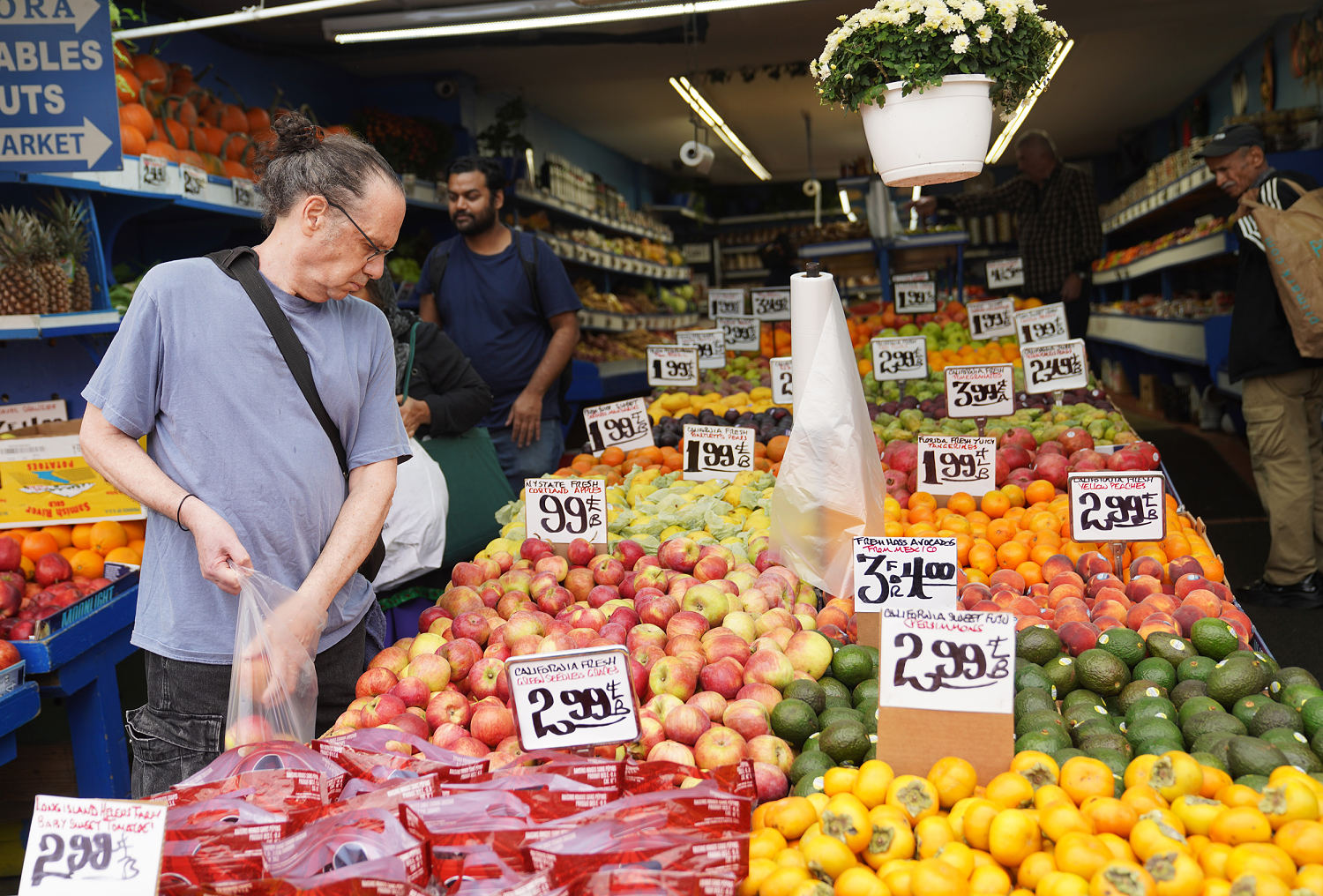
Yet here in Aisle Four, under the hum of fluorescent tubes, the box of sparkling water was six dollars and forty-nine cents. Three years ago, it was three dollars and ninety-nine cents.
Pause.
Look at the price tag again.
That tiny rectangle of laminated paper holds the entire psychological disconnect of the modern economy, exposing why millions of households feel a persistent, throbbing financial headache even while the official fever charts claim the crisis is cooling down.
The Illusion of the Slowing Train
To understand why your bank account still feels bruised when the headlines say you should be relieved, we have to separate two concepts that financial news routinely blurs together: disinflation and deflation.
Think of inflation as a freight train hurtling down a track. For two years, that train was accelerating wildly—hitting speeds of seven, eight, even nine percent annually. Every month, the scenery outside the window blurred faster, and the cost of keeping a roof over your head or eggs in your skillet jumped violently.
When economists announce that inflation cooled last month, they are not telling you the train has reversed direction and is taking you back to the station where groceries were cheap. They are telling you the engineer eased off the throttle. Instead of accelerating at eighty miles an hour, the train is now moving forward at thirty miles an hour.
You are still moving away from where you started. Every single month, prices are still rising—just a little less violently than they did the summer before.
For prices to actually return to what they were before the surge, we would need deflation—the train slamming into reverse. And central bankers guard against broad deflation like a plague, because falling prices usually signal a collapsing economy, mass layoffs, and frozen credit. So the permanent baseline has shifted. The new floor is simply higher, and our paychecks are still scrambling up the ladder trying to reach it.
Meet Elena and the Invisible Math
Consider a hypothetical composite of the American middle class—let us call her Elena. She is thirty-eight, works as a regional logistics coordinator in Ohio, and earns seventy-two thousand dollars a year. On paper, Elena is doing fine. She received a four percent merit raise last spring, a bump her manager framed as generous given corporate belt-tightening.
Elena does not read Bureau of Labor Statistics reports over her morning coffee, though she feels their contents in her bones. She knows her auto insurance renewal jumped nineteen percent without a single speeding ticket on her record. She knows her property taxes crept up after the county reassessed home values, and her electric bill carries a delivery surcharge that was not there two autumns ago.
Let us look at the quiet arithmetic governing Elena’s kitchen table:
- The Sticky Necessities: While the price of used cars or television sets might dip slightly when supply chains unclog, the things Elena cannot skip—shelter, car insurance, medical copays, and basic groceries—are what economists call sticky. Once a landlord raises rent or an insurer adjusts actuarial tables for costlier auto repairs, those numbers rarely retreat.
- The Shrinkflation Tax: Last month, Elena noticed her favorite brand of coffee grounds came in a twenty-four-ounce canister instead of twenty-seven ounces, while the sticker price stayed identical. The government’s inflation basket adjusts for weight changes, yet Elena still runs out of coffee four days earlier every month.
- The Interest Rate Vise: Because the Federal Reserve kept borrowing costs elevated to cool that runaway train, the balance on Elena’s credit card—a remnant from a surprise transmission repair—now compounds at twenty-four percent interest.
When Elena hears that inflation cooled by two-tenths of a percentage point last month, the statistic feels like an insult. A slower rate of climb does nothing to heal the altitude sickness she already has.
Why Our Brains Refuse to Adjust
There is a deep, evolutionary reason this hurts so much, and it has nothing to do with spreadsheets. Behavioral economists call it reference dependence. Human beings do not evaluate prices in an abstract vacuum; we anchor our sense of fairness to a memory.
If you spent a decade paying twelve dollars for a casual lunch sandwich and chips, that number is etched into your nervous system as the rightful order of the universe. When the cashier asks for nineteen dollars and fifty cents—plus a prompt on the swivel screen asking for a twenty percent tip—your brain registers a small betrayal. Even if your hourly wage rose proportionally over the last five years, the pain of losing money at the register hits roughly twice as hard as the pleasure of seeing a slightly larger direct deposit on Friday morning.
We also experience inflation asymmetrically because we do not buy the "average" basket of goods.
A retiree on a fixed pension who already owns their home outright experiences a radically different economy than a twenty-eight-year-old renter trying to save a down payment while paying off student loans. A family with three teenagers consuming four gallons of milk a week feels food inflation in their gut every seventy-two hours, whereas a single tech worker dining out less frequently might barely notice the price of dairy. When official reports aggregate millions of lives into a single neat decimal point, the lived reality of the people at the sharp end gets erased.
The History Rhymes in Quiet Ways
We have been down this exact psychological road before, though the costumes were different.
In the early 1980s, after the brutal stagflation of the 1970s finally began to yield to aggressive interest rate hikes, public sentiment remained sour long after the charts turned favorable. Newspapers ran endless columns puzzled by why consumer confidence lagged behind improving macroeconomic data. Poll after poll showed families convinced they were falling behind even as real wages began to recover.
It took years—not months—for the collective memory of old prices to fade and for wage growth to quietly compound enough to restore a sense of breathing room. Humans need time to recalibrate their internal price tags. Until that recalibration happens, every trip to the hardware store, every restaurant menu, and every utility bill feels like a silent negotiation you are losing.
I remember sitting at my own desk late last winter, staring at a homeowner's insurance renewal notice that had climbed nearly four hundred dollars in twelve months. I had not filed a claim. My house had not changed. Nothing in my physical life had improved to justify the extra outflow, yet the money had to come from somewhere—which meant quietly canceling a weekend trip we had been talking about since October. Nobody goes bankrupt over four hundred dollars, and no economist tracks a canceled weekend trip in the quarterly GDP print. Still, that small, unrecorded surrender is what inflation actually looks like inside a living room.
Navigating the High Plateau
If prices are not going back to 2019, and waiting for Washington or the Federal Reserve to rescue our grocery budgets is a fool’s errand, the only rational move is to change how we operate on this new, higher plateau.
Start by auditing the silent leaks rather than torturing yourself over small daily joys. Skipping a four-dollar coffee will not offset a thirty percent spike in auto insurance, yet most people punish themselves over small treats while letting recurring bills auto-draft unchallenged. Call your insurers every twelve months and force them to compete for your business. Shop your wireless plan. Cancel the overlapping streaming subscriptions that quietly crept from eight dollars to sixteen dollars while you were busy working.
Next, stop leaving cash sitting idle in legacy bank accounts paying fractions of a percent. If high interest rates are hurting you as a borrower, make them pay you as a saver. Moving an emergency fund into a high-yield savings account or short-term Treasury bills turns the Federal Reserve's medicine into a modest shield against rising costs.
Finally, rethink brand loyalty. For the past two years, major consumer packaged goods companies leaned heavily on pricing power—raising sticker prices faster than their own ingredient costs rose because shoppers kept buying out of habit. Switching to store-brand staples for pantry basics, paper goods, and over-the-counter medications immediately claws back fifteen to twenty-five percent of a grocery bill without sacrificing quality. When millions of shoppers walk past the name brand, corporate pricing power evaporates overnight.
The Weight of the Receipt
The economists are not lying to you when they say inflation is cooling. Their math is sound, their models are calibrated, and the frantic surge that defined the post-pandemic era really has lost its momentum.
But data lives in the aggregate, while human beings live one transaction at a time. Until paychecks meaningfully outpace the cumulative ground lost over the last four years, that tension between the headline and the household will remain.
Back in Aisle Four, you finally set the sparkling water into the cart, next to the store-brand oats and the carton of eggs you checked twice to make sure none were cracked. At the register, the machine beeps, the total flashes on the little green screen, and you tap your card against the glass—already calculating in your head what will have to wait until next Friday.