Two glasses of water sit on a polished mahogany table in Washington, catching the fluorescent hum of a briefing room where men in dark suits measure the fate of millions in talking points.
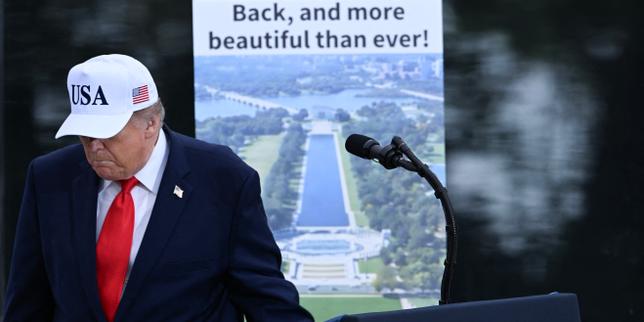
"They want to make a deal more than ever," Donald Trump tells the microphones, his voice carrying the practiced cadence of a real estate developer who knows when the seller across the desk is running out of cash. Half a world away, in the fluorescent-lit aisles of a neighborhood pharmacy in Tehran, the fluorescent buzz sounds entirely different.
It sounds like a refrigerator running empty.
Consider a hypothetical pharmacist named Reza—not a diplomat, not a revolutionary guard commander, just a forty-two-year-old father in northern Tehran trying to keep insulin in stock. When Washington headlines reduce decades of geopolitical friction to a single quote about who wants a deal more, the human arithmetic disappears. Yet Reza lives inside that arithmetic every morning. He watches the Iranian rial slide against the dollar like water slipping through open fingers. A box of imported heart medication that cost a fraction of a teacher's monthly wage five years ago now requires families to sell gold wedding bands or borrow from cousins in Toronto.
When diplomats talk about "maximum pressure," Reza feels it in the weight of an empty cardboard box on his shelf.
The Anatomy of a Cornered Room
To understand why the phrase "more than ever" lands with such heavy, complicated resonance right now, you have to strip away the theater of press conferences and look at the cold machinery of statecraft.
Think of international sanctions not as a lightning bolt, but as a slow leak in a submarine. Nothing explodes on day one. The lights stay on; the crew still argues about who is in charge of the helm. Then, month by month, the oxygen thins. Spare parts for oil refineries stop arriving. Foreign banks quietly close accounts rather than risk losing access to the American financial system. Inflation ceases to be an economic statistic on the evening news and becomes the reason a grandmother skips dinner so her grandson can buy schoolbooks.
This is the invisible architecture behind the headlines.
For years, the standoff between Washington and Tehran has operated on a brutal, predictable rhythm. Washington tightens the economic vise, betting that domestic exhaustion will force Tehran to abandon its nuclear ambitions and regional proxy networks. Tehran responds with calibrated defiance—enriching uranium closer to weapons-grade thresholds, backing armed factions from Lebanon to Yemen, and projecting an image of unbreakable endurance to its own population.
Both sides claim time is on their side. Neither side can afford to blink first in front of its own hardliners.
I have spent years watching how ordinary people absorb the shockwaves of decisions made in rooms they will never enter, and the most striking truth about geopolitical standoffs is how quiet they sound at street level. There are no dramatic orchestral swells when a currency collapses. There is only the quiet recalculation at the grocery store counter, the silent deletion of a vacation plan, the sudden hesitation before buying a winter coat. By the time a leader in Washington announces that the other side is eager to negotiate, the pressure has usually been grinding down ordinary lives for years.
Why "Wanting a Deal" Means Two Different Things
Here is where most political coverage stumbles into a trap. When an American president says Iran wants a deal, listeners in Ohio or Florida naturally hear a simple story of leverage working as intended. You squeeze an adversary until the pain outweighs their pride, and they come to the table ready to sign.
In Tehran, "wanting a deal" translates into a completely different calculus.
Imagine two people trapped inside a burning house, arguing over who owns the key to the front door. One wants to kick the door down immediately; the other insists on negotiating the terms of the lease before turning the lock. That is the daily reality inside Iran's fractured political establishment. On one side sit pragmatists and technocrats who look at youth unemployment, decaying infrastructure, and an isolated banking sector, and realize the country cannot survive another decade of economic quarantine. On the other side sit ideological hardliners who view any concession to Washington not as a compromise, but as the beginning of the end of the Islamic Republic itself.
When Trump declares that Iran wants an agreement more than ever, he is speaking directly to that internal fracture—and simultaneously making it harder for Tehran to admit he might be right.
Pride is a currency in the Middle East, often traded at a higher value than oil. A leadership that has spent forty-five years defining its legitimacy through resistance to American hegemony cannot simply walk into a room in Geneva or Muscat and look desperate. Even if the central bank vaults are strained, even if blackouts flicker across major cities during summer heatwaves, the choreography of any potential negotiation has to look like mutual respect rather than surrender.
The Ghost of 2015
You cannot understand the hesitation in Washington or the suspicion in Tehran without looking at the ghost sitting in the corner of every negotiating room: the 2015 nuclear accord.
For a brief window nearly a decade ago, the world watched diplomats shake hands in Vienna over the Joint Comprehensive Plan of Action. Under that agreement, Iran dismantled large portions of its nuclear infrastructure, shipped out most of its enriched uranium, and submitted to the most intrusive international inspections ever devised. In exchange, crippling economic sanctions were lifted. For a few fleeting months, European trade delegations landed in Tehran, and young Iranians dared to believe their country was rejoining the global economy.
Then, in 2018, the United States walked away from the table, reimposing sweeping sanctions under the banner of a tougher strategy.
Whether you view that exit as a necessary correction of a flawed deal or a catastrophic breach of diplomatic trust, its practical consequence today is undeniable. It shattered the baseline currency of diplomacy: predictability. If you are an Iranian negotiator today—or a European banker trying to decide whether to finance a legitimate medical shipment—you are no longer just reading the text of a treaty. You are trying to guess what the next American election cycle will do to that text four years from now.
Trust, once broken between nations, does not grow back like grass. It has to be bolted together out of iron guarantees that neither side wants to give.
The Stakes Nobody Puts in a Press Release
While pundits debate the exact wording of Trump’s latest remarks and speculate on whether back-channel messages are already flying through Oman or Qatar, the real clock ticking in the background has nothing to do with election cycles or cable news panels.
It is measured in centrifuges and isotopes.
Nuclear proliferation is a notoriously difficult concept to feel in your gut because it happens behind concrete walls, measured in percentages of uranium-235 that sound like abstract chemistry homework. Let us make it concrete. Think of enriching uranium like climbing a steep mountain. Getting from raw ore to twenty percent enrichment takes enormous effort, heavy machinery, and years of work. Getting from twenty percent to sixty percent is much faster. And stepping from sixty percent to the ninety percent threshold required for a nuclear weapon is not a marathon—it is a short sprint across a flat ridge.
Iran has spent the years since the collapse of the 2015 deal mastering that climb. Its scientists now possess knowledge that cannot be bombed away or unlearned through a treaty. Even if every centrifuge were unplugged tomorrow, the intellectual blueprint remains inside the heads of Iranian engineers.
At the same time, the broader Middle East has transformed into a tinderbox where a single miscalculation can ignite three borders at once. Proxy conflicts in Gaza, Lebanon, Iraq, and the Red Sea have demonstrated how quickly localized skirmishes can threaten global shipping lanes and draw superpowers toward direct confrontation. When Washington weighs its "next move," the menu of options is brutally narrow:
- A renewed diplomatic push, demanding far stricter limits on ballistic missiles and regional proxies alongside nuclear constraints—terms Tehran has historically rejected as existential threats to its defense.
- Escalated economic and covert pressure, risking an unpredictable regional war or pushing Iran’s leadership to decide that only a nuclear deterrent can guarantee their survival.
- A fragile, interim freeze, trading modest sanctions relief for a cap on enrichment—a band-aid that buys time without curing the underlying hostility.
None of these paths offer a clean victory. Every single one carries the risk of misreading the other side's breaking point.
The Human Ledger
It is easy, from thousands of miles away, to treat foreign policy like a high-stakes poker game. We watch the raises, the bluffs, the televised bravado, and we root for our side to hold the better hand. I catch myself doing it too, scanning wire reports for signs of weakness or tactical brilliance as if nations were chess pieces rather than collections of breathing human beings.
Then I remember what happens when the chips actually fall.
In Washington, a stalled negotiation means a tense briefing at the State Department and another round of Sunday morning talk show debates. In northern Tehran, in our hypothetical pharmacist Reza’s shop, a stalled negotiation means telling an elderly woman that the blood thinner she needs will not arrive until next month, if at all. It means watching bright twenty-somethings pack their suitcases for Berlin, Istanbul, or Vancouver because they can no longer imagine a future inside the country that raised them.
Wait. Think about that brain drain for a second.
When sanctions and isolation drag on for decades, they do not merely punish a government; they hollow out the very middle class most capable of moderating that government from within. The engineers, doctors, artists, and teachers leave. What remains behind is an apparatus of security forces and state-connected monopolies that actually profit from the black markets created by sanctions. Ironically, the longer the siege lasts, the stronger the most hardline elements inside the besieged walls often become.
This is the central paradox haunting both Washington and Tehran as they circle each other once again.
Donald Trump thrives on the art of the dramatic breakthrough—the sudden pivot from fiery threats to historic handshakes, the belief that strong leaders can cut through decades of bureaucratic paralysis in a single room. Iran’s leadership, battered by economic discontent at home and shifting alliances abroad, knows that endless confrontation carries a mounting price tag it can barely pay. Both sides see an opening. Both sides fear walking into a trap.
The Quiet Before the Move
Walk through any major capital late at night—past the guarded gates of the White House along Pennsylvania Avenue, or beneath the snow-dusted silhouette of the Alborz Mountains overlooking Tehran—and you realize how fragile peace actually is. It is never a permanent monument. It is a daily, exhausting negotiation between fear and necessity.
Right now, cables are being drafted in secure rooms. Intelligence analysts are parsing satellite imagery of underground facilities while economists track shadow oil tankers crossing the Persian Gulf with their transponders switched off. Somewhere, an intermediary in a neutral city is carrying an unwritten message from one capital to another, testing whether the words spoken to cameras match the reality behind closed doors.
History rarely announces its turning points with trumpet blasts. Usually, it begins with two adversaries staring across a table, realizing that the cost of standing still has finally grown heavier than the risk of stepping forward.
Back in his small pharmacy in Tehran, Reza locks the front door at nine o'clock, pulls down the metal security shutter, and checks the exchange rate on his phone one last time before walking home through the chill night air, waiting to see whether tomorrow's headlines will finally let him breathe.