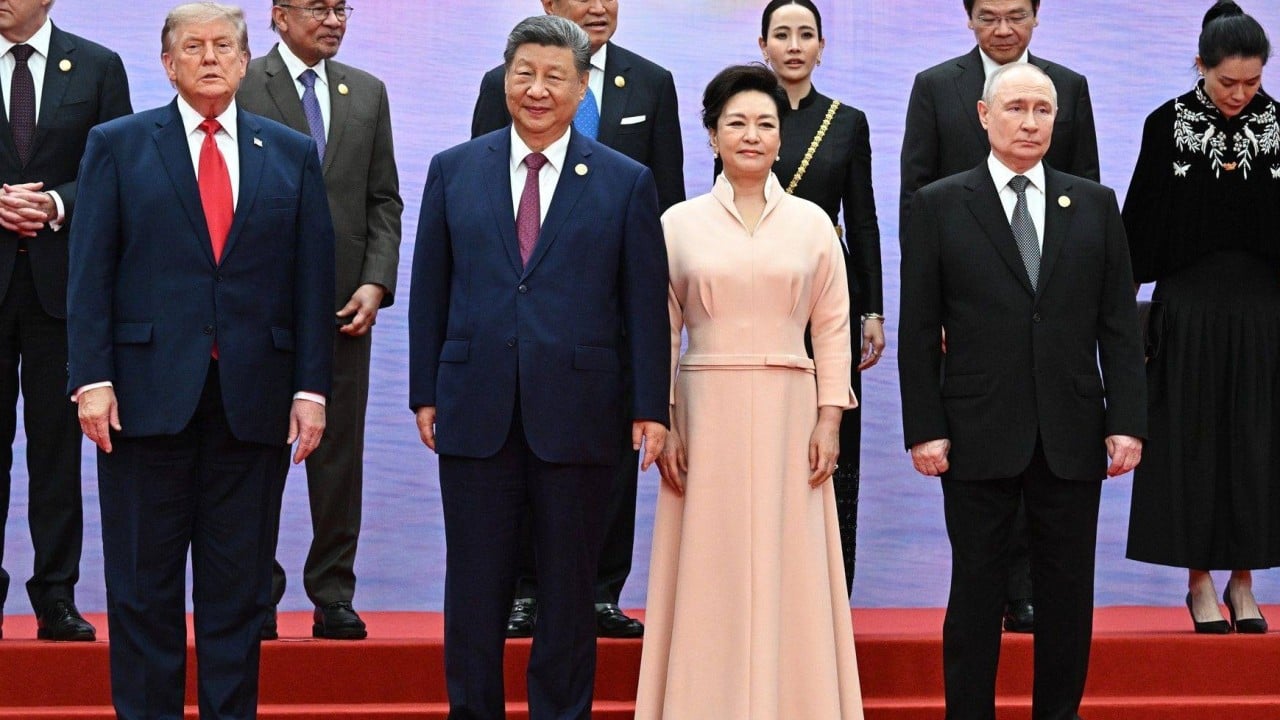
Diplomacy rarely happens at the podium. It happens in the pauses between speeches, in the sudden drop of a shoulder when a camera turns away, and, occasionally, in the unexpected choice of a melody drifting across a banquet hall in southern China.
In November 2026, the world’s cameras converged on Shenzhen for the Asia-Pacific Economic Cooperation summit. For days, the headlines had been written in the cold, heavy ink of trade tariffs, semiconductor supply chains, and maritime boundaries. Economic ministers spoke in percentages. Security advisors spoke in contingencies. Every syllable was weighed, vetted by committees, and stripped of human warmth before it ever reached a microphone.
Then Peng Liyuan stepped into the room, and the temperature changed.
To understand what happened in Shenzhen—and why the details that slipped past the evening news broadcasts matter far more than the communiqués—you have to look past the silk tailoring and the practiced choreography of statecraft. You have to listen to the music.
The Architecture of Soft Power
Consider a hypothetical viewer sitting in a cramped apartment in Kowloon, or a mid-level trade negotiator nursing lukewarm tea in a hotel lobby three blocks from the Shenzhen convention center. Both are exhausted by the relentless friction of geopolitics. Both have spent months reading analyses that treat borders as brick walls and cultural identity as a zero-sum game.
When Peng, a celebrated soprano long before she became China’s First Lady, chose to weave classic English standards alongside beloved Cantonese ballads into the cultural programming of the Shenzhen APEC gathering, she was not merely curating dinner entertainment. She was executing a masterclass in emotional architecture.
State visits are notoriously sterile affairs. Having spent years covering international summits from cramped press risers, I can tell you that the physical reality of diplomacy is mostly fluorescent lighting, simultaneous translation headsets that pinch your ears, and the smell of stale coffee. You watch leaders shake hands for forty-five seconds while shutters click like hail on a tin roof, and you wonder if anyone in the room remembers what it feels like to simply be a neighbor.
Shenzhen, by its very geography, makes that question impossible to ignore. Standing on the northern bank of the Sham Chun River, you can practically toss a stone into Hong Kong. Forty-five years ago, Shenzhen was a cluster of quiet fishing villages and terraced farms. Today, it is a forest of glass towers and algorithmic ambition, the engine room of China’s tech economy. Yet beneath the hyper-modern concrete, its linguistic and cultural DNA remains deeply tied to the Pearl River Delta—to Cantonese, the expressive, nine-toned dialect of Hong Kong, Macau, and Guangdong.
Why Cantonese? Why Now?
To grasp the weight of a Cantonese classic sung at a national-level diplomatic showcase, you have to understand what the language represents to the millions who speak it. Mandarin is the language of the state, of administration, of northern grandeur. Cantonese is the language of the street, the family dinner table, the late-night cha chaan teng, and the golden age of Cantopop that once swept across East Asia like a warm monsoon.
In recent years, debates over linguistic preservation and regional identity in southern China have carried a quiet, persistent charge. For many in Hong Kong and across the Cantonese diaspora, the dialect is more than a means of communication; it is a vessel of memory, humor, and fierce local pride.
By anchoring a major APEC cultural moment in Cantonese classics—songs like "Below the Lion Rock" or the sweeping, nostalgic melodies of the 1980s and 90s—the programming did something that a thousand policy papers could never achieve. It signaled belonging.
Think of it like this: if official statecraft is a formal contract signed in triplicate, singing in a local dialect is an invitation into the kitchen. You don't sing someone's childhood lullabies or their parents' favorite radio hits unless you want them to know you see them—not as a demographic, not as a jurisdiction, but as kin.
The English Counterpoint
Yet the genius of the Shenzhen details lay in the pairing. It was not an inward-looking celebration of regional heritage alone; it was a duet between the local and the global.
Alongside the Cantonese standards came timeless English classics—melodies drawn from the mid-twentieth-century songbook, numbers like "Moon River" or "What a Wonderful World" that belong to no single passport because they have been hummed in every airport lounge and living room from San Francisco to Singapore.
Why pair an English standard with a Cantonese ballad in the middle of a high-stakes Pacific Rim summit?
Because diplomacy, at its core, is the art of creating a shared reference point before you argue over the fine print. When a visiting delegation from Ottawa, Tokyo, or Lima hears a familiar English melody rendered with classical vocal precision by a Chinese host, a subtle psychological shift occurs. The defensive posture softens. The room stops feeling like an arena and starts feeling like a parlor.
I remember watching a similar moment unfold years ago at a smaller bilateral forum in Geneva. Negotiations over agricultural quotas had deadlocked for thirty-six hours. Tempers were frayed; delegates were refusing to make eye contact in the hallways. During a late-evening reception, an amateur pianist from one delegation sat down and began playing a folk tune that, by pure coincidence, shared a melody with a popular ballad from the opposing country. Within ten minutes, two deputy ministers who had spent the afternoon trading veiled threats were standing beside the piano, arguing good-naturedly over which version had the better lyrics. The quotas were signed by noon the next day.
Music does not solve trade deficits. It does not redraw maritime maps. What it does is restore the baseline of mutual recognition required for two people to sit at the same table without reaching for their armor.
The Details Behind the Curtain
If you watched only the sixty-second highlight reels on international news networks, you missed the subtleties that made the Shenzhen appearances so deliberate.
First, there was the staging. Rather than towering above an audience on a distant proscenium stage—the traditional posture of Soviet-style state galas—the performances were scaled for intimacy. The accompaniment favored warm, acoustic textures: strings, piano, and traditional Chinese instruments like the erhu and guzheng blended so subtly that neither tradition overpowered the other.
Second, look at the vocal approach itself. Peng Liyuan was trained in the minzu (national folk) style—a technique known for its bright, penetrating clarity and heroic projection. Yet in her renditions of both the Cantonese numbers and the English standards, she dialed back the operatic grandeur. She leaned into phrasing, breath, and conversational warmth. In Cantonese, where shifting the pitch of a single syllable can change "mother" to "horse," singing with emotional nuance rather than rigid conservatory volume requires extraordinary control. It requires listening to the text as poetry rather than propaganda.
Third, consider the guest list and the audience dynamics. Seated in those rooms were not just heads of state, but spouses, business leaders from the Greater Bay Area, young tech entrepreneurs from Shenzhen, and cultural figures from Hong Kong. When a classic Cantonese chorus swelled through the hall, the reaction wasn't the polite, rhythmic applause of a diplomatic corps. It was the immediate, unscripted recognition of people hearing the soundtrack of their own lives echoed back to them at the highest level of state hospitality.
The Skeptic's Question
Of course, it is fair—even necessary—to ask: Is this just theater?
When power dynamics are real and economic rivalries are sharp, does a well-sung ballad change anything on the ground? A skeptical observer might argue that cultural diplomacy is merely velvet draped over iron, a pleasant distraction designed to soften headlines while hard policies remain unmoved.
That doubt is valid. History is littered with summits filled with champagne toasts and violin concertos that collapsed into acrimony before the planes even cleared the tarmac. Culture cannot paper over genuine structural conflicts.
Still, dismissing soft power as mere decoration misunderstands how human beings actually make decisions. Nations are not abstract algorithms; they are led by people who carry fatigue, pride, suspicion, and memory into every negotiating room. When the atmosphere surrounding a summit is purely transactional—when every interaction is framed as a test of strength—compromise becomes politically impossible. Nobody wants to be the leader who blinked first in a staring contest.
Cultural gestures create an off-ramp from that rigidity. They allow hosts to project confidence without aggression, and guests to accept hospitality without capitulation. By speaking in the dual registers of Cantonese intimacy and English universality, the Shenzhen program sent a calibrated message to two very different audiences at once. To the Greater Bay Area, it said: Your heritage is central to our story. To the Pacific Rim, it said: We know your songs, we speak your idioms, and we are comfortable in the wider world.
The Echo After the Lights Dim
Long after the motorcades have cleared the wide boulevards of Futian District and the temporary security checkpoints have been dismantled, the official communiqués of APEC 2026 will sit in digital archives, read mostly by historians and trade lawyers.
What lingers in the public imagination is rarely a paragraph from Annex B of a trade framework. It is a human detail. It is the sight of a room full of strangers falling quiet as a familiar melody rises over the clink of porcelain, reminding everyone present that beneath the titles, the flags, and the competing interests, they still know the words to the same song.