Silence.
In the sterile, glass-walled conference rooms where international trade policy is hammered out, silence is rarely peaceful; it is the heavy, pressurized atmosphere that precedes a shift in tectonic plates, the kind of quiet where a single misplaced comma in a shipping manifest can bankrupt a mid-sized logistics firm overnight or trigger an emergency diplomatic cable across twelve time zones.
When reports surfaced that Singapore and the United States had agreed to continue discussions regarding the Megaspeed case, the headlines read like sedatives. Dry. Bureaucratic. The sort of five-second news blurb you scroll past while waiting for your morning coffee to cool, assuming it belongs strictly to the spreadsheets of customs brokers and the midnight memos of corporate attorneys.
That assumption is a mistake.
Beneath the polite diplomatic phrasing of "continuing discussions" lies one of the most consequential friction points of the modern era—a high-stakes tug-of-war over who controls the physical architecture of artificial intelligence, and what happens to a small, hyper-connected nation caught between two superpowers who no longer trust each other with the keys to the future.
To understand why two governments are quietly negotiating over a single corporate entity, you have to step away from the press releases and stand on a humid dock in Southeast Asia at three in the morning.
The Weight of a Server Rack
Consider a hypothetical scenario to make the abstract concrete. Picture a customs compliance officer named Marcus, working the graveyard shift in a fluorescent-lit office overlooking the container terminals of Tuas Port in Singapore. On his screen sits a manifest for forty pallets of high-density enterprise servers, bound for a data center lease in Johor, just across the causeway in Malaysia.
On paper, everything looks routine. The invoices are stamped. The shell companies have clean registrations. The declared value runs into the tens of millions of dollars, standard fare for a region experiencing an unprecedented boom in cloud infrastructure.
Yet Marcus pauses. His cursor hovers over a specific component code buried three pages deep in the technical appendix.
Inside those aluminum chassis sit graphics processing units—advanced AI accelerators designed in California, fabricated in Taiwan, assembled into server blades, and routed through Singapore’s frictionless financial and logistics ecosystem. Under strict United States export controls, those specific chips are restricted from reaching certain end-users in mainland China, due to fears they could be used to train frontier military models or power next-generation surveillance networks.
Marcus faces an impossible question that no customs form can answer. Once those servers cross the border, or once their computing power is rented out remotely via fiber-optic cables, who actually sits at the keyboard?
Is it a regional e-commerce startup training a recommendation engine for Southeast Asian shoppers? Or is it a proxy entity quietly funneling compute cycles back to a restricted laboratory in Beijing?
This is not a theoretical parlor game. It is the exact, nerve-wracking reality sitting at the center of the Megaspeed investigation.
When Singaporean authorities and U.S. officials sit across from one another to discuss Megaspeed, they are not merely auditing an enterprise. They are trying to solve the defining riddle of twenty-first-century geopolitics: how do you police an invisible resource when its physical vessel looks identical to standard commercial hardware?
A Port Built on Frictionless Trust
I have spent years watching how global supply chains respond to regulatory shocks, and there is a distinct physical sensation that accompanies a sudden tightening of the rules. It feels like the air being sucked out of a room. Deals that took eighteen months to structure freeze in eighteen minutes. Venture capital term sheets vanish from inboxes. Engineers who thought they were building commercial cloud infrastructure suddenly find themselves answering questions from lawyers trained in national security law.
To appreciate why Singapore’s involvement in the Megaspeed discussions carries such weight, you have to understand what Singapore actually is.
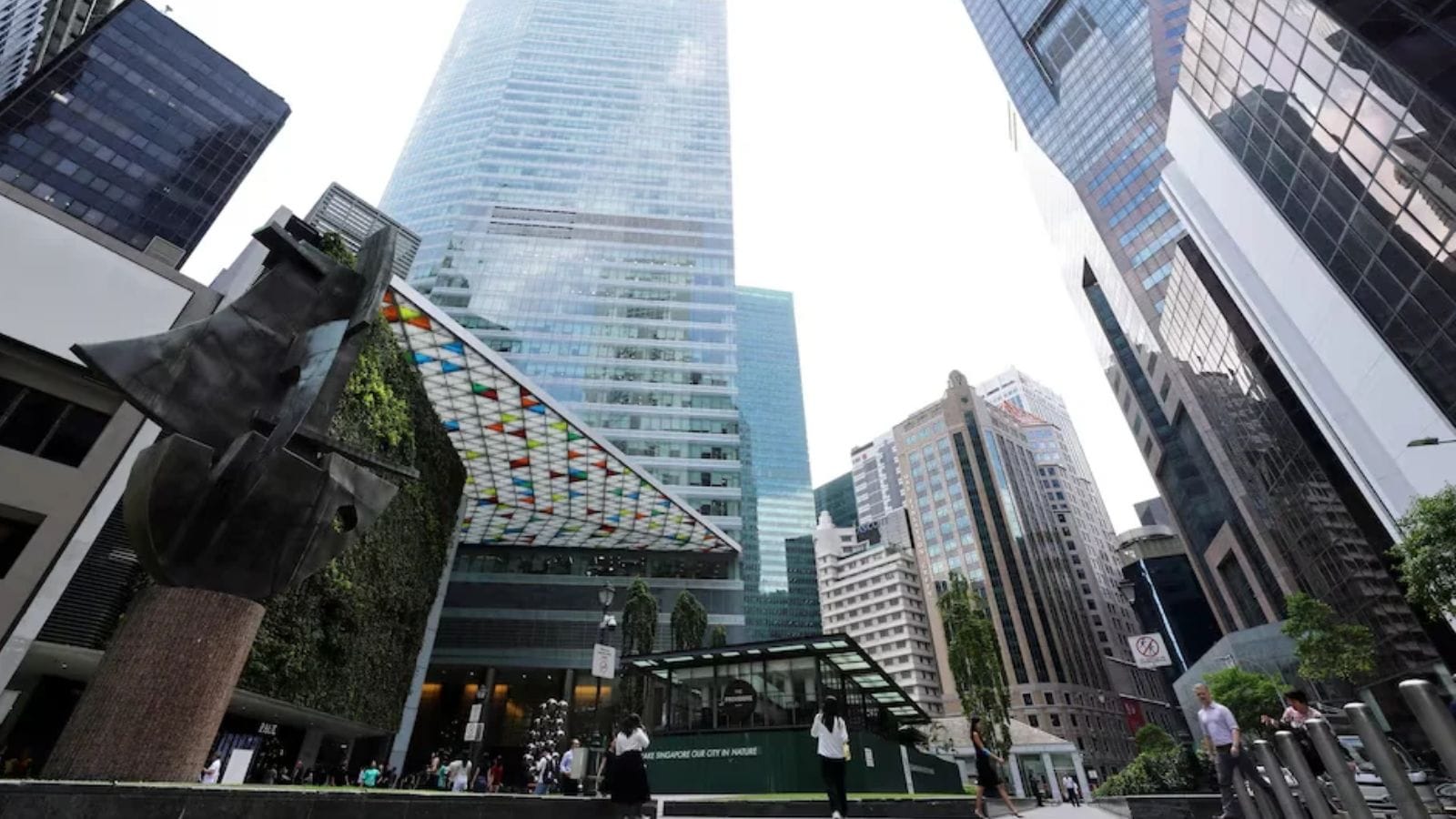
For decades, the city-state thrived by perfecting the art of being the ultimate neutral switchboard. Lacking natural resources, oil, or vast tracts of land, Singapore built an empire on reliability, rule of law, and speed. If you wanted to move capital, refined petroleum, or high-end electronics between East and West without corruption or delay, you routed it through Singapore. Trust was its primary export.
Then came the AI boom, and with it, a sudden, violent change in the weather.
As Washington tightened its export controls—updating regulations in October 2022, October 2023, and continuously refining them through subsequent enforcement actions—the rules of global commerce underwent a quiet revolution. The United States decided that advanced computing power was no longer just a commercial commodity like soybeans or steel. It was a strategic asset, akin to enriched uranium.
Suddenly, being a frictionless hub became a liability.
When Nvidia’s financial filings revealed that a staggering percentage of its revenue was being billed to entities in Singapore—far exceeding the island’s own domestic consumption capacity—alarm bells rang in Washington. Billing, of course, is not the same as physical delivery; multinational corporations routinely centralize procurement in Singapore for tax and legal efficiency before shipping hardware to data centers in the United States, Europe, or elsewhere in Asia.
Still, the numbers invited scrutiny. Where was all that silicon actually going?
Enter Megaspeed, a company operating at the intersection of cloud infrastructure, server deployment, and cross-border hardware distribution in the region. As questions mounted regarding whether restricted high-end chips were flowing through Singapore-linked entities into unauthorized hands, the case became a litmus test. Would Singapore actively enforce restrictions authored in Washington, even when doing so threatened its own reputation as a neutral, business-friendly haven? Or would regulatory gray zones allow a backdoor to remain wide open?
The Anatomy of a Modern Chokepoint
Let us strip away the legal jargon and look at the mechanics of the problem through a simple analogy.
Imagine you own the only bridge connecting two halves of a bustling metropolis. For years, your entire business model depended on keeping traffic moving as fast as possible. You didn't ask drivers where they came from, what was in their trunks, or where they were going; you simply collected the toll and waved them through. That efficiency made your bridge the economic heart of the city.
Now, imagine the mayor of the western district marches into your tollbooth and hands you a thick binder of rules. You are still allowed to let sedans, delivery vans, and tourist buses cross. However, if a truck is carrying a specific type of high-grade industrial battery, you must stop it, verify the buyer's identity, inspect the ultimate destination warehouse, and ensure the battery will never be resold to anyone living in the eastern district. If you fail to catch even one contraband truck, the western district threatens to cut off your bridge's electricity and ban its citizens from using your road.
You are no longer a toll collector. You have been drafted into becoming a border guard for someone else’s feud.
That is the exact position Singapore occupies right now.
The Megaspeed case—and the decision by Singapore and the U.S. to keep talking rather than issuing public ultimatums—reveals how delicate this balancing act has become. If Singaporean regulators appear too lax, Washington can deploy extraterritorial sanctions, restricting Singapore-based firms from buying American technology altogether. For a nation whose economy depends on multinational tech giants setting up regional headquarters on its soil, being blacklisted by the U.S. Commerce Department would be an existential catastrophe.
Conversely, if Singapore acts too aggressively, seizing shipments on thin suspicion or bowing visibly to every American demand, it risks alienating China—its largest trading partner—and signaling to global capital that Singapore is no longer an independent arbiter, but an extension of American regulatory reach.
So, they talk.
They meet behind closed doors. They compare customs logs against corporate registries. They trace serial numbers on motherboards and scrutinize the beneficial ownership of newly minted cloud startups. The agreement to "continue discussions" is diplomatic code for a grinding, granular negotiation over evidentiary standards: What constitutes proof of diversion? How much due diligence must a Singaporean logistics provider perform before a shipment leaves the port? And where does Singapore’s domestic law end and American export control begin?
What Happens When the Rules Blur
It is easy to view this through the cold lens of macroeconomics, where nations are chess pieces and companies are pawns. Yet the real tremors are felt by people whose names never appear in trade journals.
I think of the founders I have spoken with in Southeast Asia over the past two years—engineers who left comfortable jobs at major tech firms to build legitimate AI data centers in Kuala Lumpur, Batam, and Singapore. Eighteen months ago, raising capital for a regional GPU cluster was straightforward. Banks understood the math: buy the hardware, secure power and cooling, rent the compute capacity to enterprise clients, collect predictable returns.
Today, those same founders spend half their week with compliance consultants.
A single inquiry from a prospective client with an unfamiliar corporate structure now triggers weeks of forensic background checks. Financial institutions, terrified of running afoul of U.S. secondary sanctions, have grown deeply conservative, delaying credit lines for legitimate infrastructure projects simply because the underlying hardware sits on a watch list.
I will admit something that policy analysts rarely confess: even for those of us who track these regulations closely, the rules have become dizzyingly opaque. The technical thresholds governing interconnect bandwidth, processing performance, and memory capacity shift with every regulatory update. A chip configuration that was completely legal to export on a Tuesday morning can become a restricted national security item by Wednesday afternoon.
When the law moves faster than supply chains can adapt, ambiguity thrives. And in the cracks of that ambiguity, two very different kinds of actors emerge.
The first is the bad-faith operator—the shell company registered in a gleaming downtown tower with no real employees, set up specifically to acquire restricted servers and quietly move them across borders before regulators connect the dots.
The second is the legitimate business owner who wakes up to find their shipments frozen, their bank accounts flagged, and their company name whispered in diplomatic briefings simply because their supply chain brushed up against a gray zone.
Because the Megaspeed discussions remain largely behind closed doors, the market is left reading tea leaves. Every leak, every brief statement confirming that talks are ongoing, sends a ripple through boardrooms from Jurong to Silicon Valley. Investors are not just waiting to see what happens to one company; they are waiting to see what the new rules of survival look like for everyone else.
The Myth of the Clean Line
History offers a sobering reminder whenever superpowers try to contain a transformative technology through export controls.
In the 1980s, during the height of the Cold War, the United States and its allies relied on a strict multilateral framework known as COCOM to prevent sensitive computing and manufacturing equipment from reaching the Soviet Union. In 1987, a scandal erupted when it was revealed that a subsidiary of Toshiba Machine had illegally sold advanced multi-axis milling machines to Moscow—equipment that allowed Soviet submarines to manufacture quieter propellers, making them vastly harder for the U.S. Navy to track.
The fallout was fierce. American lawmakers smashed Toshiba products on the steps of the Capitol. Executives resigned. Export rules were overhauled.
Yet there was a crucial difference between 1987 and today. A multi-axis milling machine weighs dozens of tons. You cannot hide it in a suitcase, and you cannot access its capabilities over an encrypted fiber-optic cable from three thousand miles away.
Modern AI compute is fundamentally different. It is modular, portable, and, once plugged into a power grid, completely borderless.
Even if Singapore and the United States construct an airtight inspection regime at every port and airport—verifying every crate of servers that lands at Changi or Tuas—the hardware itself is only half the equation. Once a server rack is installed in a legitimate, fully compliant data center in Southeast Asia, its processing power becomes a stream of photons moving through undersea cables.
How do you inspect a packet of data to see if the math inside it was requested by a benign biomedical researcher or a sanctioned defense contractor? You cannot open a shipping container to find out. You have to rely on cloud providers to police their own customers—essentially asking private corporations to act as intelligence agencies.
This is why the conversations between Singapore and Washington are stretching on. They are not merely looking backward at past shipments tied to the Megaspeed case; they are trying to invent a framework for real-time digital governance that does not yet exist.
Beyond the Headline
When a news wire pushes out a terse update noting that Singapore and the U.S. have agreed to continue discussions on Megaspeed, it is tempting to see stasis. Nothing was resolved today. No dramatic fines were announced. No treaties were signed.
Look closer, and you see the exact opposite of stasis.
The fact that both governments are publicly acknowledging ongoing dialogue signals a deliberate effort to keep the dispute anchored in institutional cooperation rather than public confrontation. Washington needs Singapore’s active partnership; without the cooperation of Asia’s premier financial and logistics hub, U.S. export controls in the region become little more than wishful thinking written on paper in D.C. Meanwhile, Singapore needs Washington’s trust; its entire economic model rests on remaining integrated into Western technological and financial ecosystems while maintaining peaceful trade across Asia.
Neither side can afford to walk away from the table, because walking away breaks the very system both rely on.
For the engineers building the next generation of digital infrastructure, for the compliance officers staring at manifests in the middle of the night, and for the nations trying to preserve their sovereignty in an era of technological cold war, the outcome of these quiet meetings will dictate the boundaries of what is possible for the next decade.
Somewhere in a windowless room, a lawyer is sliding a revised draft of an information-sharing protocol across a polished mahogany table, while five thousand miles away, another cargo ship slips quietly into the Malacca Strait, its steel containers stacked six high against the night sky.