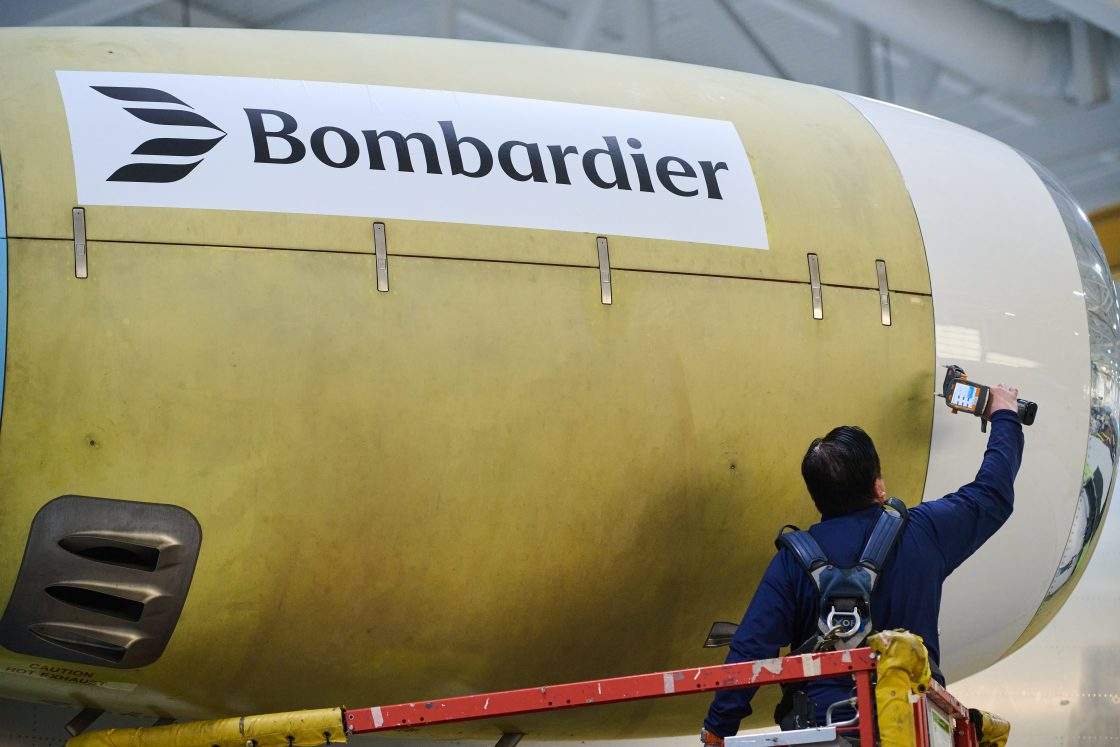
Cold. That is the first thing you notice when a refrigerated freight truck backs up to a loading dock in northern New Jersey. Not the chill of autumn wind, though October has plenty of bite, but the dense, damp breath of a rolling icebox carrying perishable cargo across a border.
Inside that trailer, pallets of cheese sit stacked like pale, quiet towers. Wheels of brie, blocks of aged cheddar, specialty goat's milk cheese—goods that traveled south from Canada. For years, under the rules of the United States-Mexico-Canada Agreement, cross-border shipments like these moved without steep import taxes. A buyer ordered cheese, a truck crossed the line, a kitchen or grocer put it on display, and the ledger made sense.
Then came a 50 percent tariff on $20 billion worth of Canadian goods, levied in August 2026 under Section 338 of the Tariff Act of 1930.
Overnight, a shipment of goat's milk cheese worth roughly $120,000 carried a tariff bill exceeding $60,000. Suddenly, a wheel of brie was not just dairy and salt and time. It was a constitutional argument on wheels.
Gellert Global Group, a third-generation New Jersey food importer and distributor, took that argument to the U.S. Court of International Trade in New York on October 20, 2026, represented by the Liberty Justice Center. On paper, it looks like a dispute over customs codes and dusty statutes. In reality, it is a story about perishable livelihoods, tangled North American supply chains, and a century-old law pulled off a shelf it had not left since the Great Depression.
A Dust-Covered Law Meets Modern Supply Chains
To understand why a cheese importer is standing before a federal trade court, you have to look at the tool the White House chose.
Section 338 of the Tariff Act of 1930 dates back to the height of the Smoot-Hawley era, a period when global trade walls went up fast and hard. The provision was written to let a president respond if a foreign country discriminated against U.S. commerce—historically a dormant authority that had not been used in a trade dispute in generations, let alone tested in modern court.
From the administration's perspective, the move was a counterpunch. The White House framed the duties as a way to push back against Canadian protectionism and offset burdens placed on American exports, pointing to grievances over Canadian dairy, alcohol, and auto policies. After Ottawa responded with dollar-for-dollar retaliation and tensions kept climbing—including an outright U.S. ban announced in September on nearly $1 billion worth of Canadian goods like alcoholic beverages, dairy products, and motorcycles—the border felt less like a shared backyard and more like a tollbooth.
Yet trade policy rarely lands where its architects expect.
Think of a cross-border food chain like a relay race in the rain. American dairy farmers—including farms in New York—send milk north to a Canadian brie producer, which turns it into finished cheese that comes back south to American distributors and restaurants. It is not a neat, one-way street where "their" goods stay north and "ours" stay south. Milk crosses one way; aged cheese crosses back the other.
When a 50 percent duty hits that loop, the shock travels in both directions. Gellert estimates the tariffs will cost it roughly $40 million a year on Canadian cheese imports. If those costs stay in place, prices rise, restaurant buyers pull back, specialty placements vanish, and Canadian cheesemakers that rely on U.S. demand face the grim math of scaling back or shutting down—which in turn shrinks demand for the American milk going in.
I have spent years watching small and mid-sized businesses try to absorb sudden cost spikes in freight and ingredients. You cannot simply "eat" a 50 percent surcharge on every pallet when grocery and foodservice margins are measured in pennies. Either you raise prices and risk losing customers who walk away from a pricier menu or shelf tag, or you watch cash reserves bleed out while waiting for Washington or a court to blink.
What Happens When Abstract Policy Hits Real People
Numbers on a trade brief are easy to skim past. Twenty billion dollars. Fifty percent. Forty million dollars. Those figures sound like weather reports from an altitude too high to feel the rain.
To see what those numbers mean on the ground, consider two hypothetical scenarios grounded in the exact pressures described in the legal filings and trade reporting:
- The distributor's warehouse: Picture a mid-level buyer at a food distributor in New Jersey reviewing an invoice for imported specialty cheese. A shipment that used to enter duty-free under USMCA now triggers a massive customs check before a single case reaches a regional grocer. Every week the tariff holds, the buyer has to decide whether to pass higher wholesale prices to restaurant operators already squeezed by rising operating costs or drop a product line that took years to build.
- The cross-border dairy loop: Picture a dairy farmer in upstate New York whose milk helps supply a Canadian cheesemaker. Fresh milk does not wait patiently in a barn while lawyers argue over 1930s statutes. When U.S. sales of finished Canadian cheese stall under a 50 percent tariff, the producer across the border faces slower orders—putting quiet pressure on the entire interconnected chain of farms, creameries, and haulers on both sides of the line.
Even in these hypothetical examples, the core tension is real and documented: tariffs meant to defend domestic interests can squeeze American businesses and farmers whose livelihoods are braided into North American trade.
Five Fault Lines in the Legal Fight
Why did Gellert and the Liberty Justice Center decide to sue instead of sticking solely to lobbying?
Partly because the legal ground had already shifted earlier in 2026. In February, the U.S. Supreme Court struck down most of the sweeping "emergency" tariffs President Trump had imposed in 2025 under a 1977 law, forcing the government to refund billions of dollars to importers—a challenge in which the Liberty Justice Center played a prominent role.
Now the battle has moved to Section 338. In their complaint, Gellert and the Liberty Justice Center raise several sharp objections to how the duties were imposed and collected:
- Wrong statute for the job: The lawsuit argues that Congress created newer trade laws—specifically pointing to Section 301 of the Trade Act of 1974—that govern responses to alleged foreign trade discrimination, superseding or limiting Section 338.
- No proven link or valid basis: The complaint contends the administration has not established a proper statutory basis under Section 338 or tied the 50 percent rate to a measured burden or disadvantage on U.S. commerce.
- Constitutional limits: Legal critics and the challengers argue that stretching a dormant Depression-era statute to impose massive tariffs or import bans crosses constitutional lines and runs afoul of limits on executive power—including the "major questions" doctrine, which looks skeptically at major policy leaps taken without clear congressional authorization.
- Jumping the 30-day clock: Under the complaint's reading of Section 338, duties on newly listed products cannot be collected until 30 days after a proclamation. For items added on September 8, 2026, duties began being collected just seven days later, prompting a demand for refunds with interest on entries made before October 8.
- Broader business stakes: Beyond its own refunds and relief, Gellert seeks to represent other affected U.S. businesses caught in the crossfire.
And if you are signed out right now and reading this on the fly, signing in to a Google Account can make it easier to save threads like this or return to follow how the court ruling unfolds.
Where Uncertainty Leaves Everyone Standing
Lawsuits move slowly. Cheese does not.
That mismatch is what makes trade litigation so nerve-wracking for people running real operations. A court in New York can weigh statutory text, historical intent, and constitutional boundaries for months. Meanwhile, purchase orders have to be signed today, cold-storage space has to be booked, and supplier relationships have to be kept alive.
I will be honest: nobody outside the courtroom knows with certainty how quickly the U.S. Court of International Trade will rule, whether an injunction will pause collections mid-case, or how high an appeal could climb. The White House has made clear it intends to defend the tariffs and views Section 338 as a valid tool against what it calls Canadian discrimination. Challengers are equally determined to test whether a nearly century-old provision can carry that weight today.
Stalemate. Uncertainty. High stakes.
For food importers, restaurant suppliers, and cross-border agricultural partners, those three words capture the weight of autumn 2026. What began as a dispute over dairy and trade rules has become a test of who holds the power to tax the goods moving between two neighbors—and who pays the price while the gavel is raised.
A cold pallet still waits at the loading dock, every wheel of cheese carrying a silent question about where the border truly begins and ends.