The fluorescent lights in the Southern District of New York hum at a frequency you only notice at two in the morning.
Ask anyone who has spent a decade of their life inside the glass-and-granite fortress of St. Andrew’s Plaza in Lower Manhattan. By midnight, the tourists have cleared out of Foley Square, the food carts have rattled away down Centre Street, and the only people left in the building are the career prosecutors—men and women with cold coffee on their desks, eyes stinging from thousands of pages of grand jury transcripts, and an almost stubborn belief that the law is a shield meant to protect the powerless from the untouchable.
Maurene Comey knew that hum intimately.
For ten years, she walked those corridors. She sat across from survivors whose voices shook as they recounted horrors committed behind the locked doors of private islands and Manhattan townhouses. She built the cases against Jeffrey Epstein and Ghislaine Maxwell, brick by agonizing brick, turning whispers of elite impunity into federal indictments that rattled the most powerful boardrooms in the world.
Then, on a summer afternoon in July 2025, the shield broke.
There was no formal hearing. No warning. No performance review suggesting she had faltered in her duty. Instead, a terse, bureaucratic notice arrived from the upper echelons of the Trump administration's Justice Department, stripping her of her badge, her access, and a decade of institutional memory. Just like that, one of the most consequential prosecutors in the country was shown the door.
The official explanation was wrapped in the bloodless vocabulary of Washington bureaucracy—a citation of Article II presidential authority, a shrug of executive prerogative. Yet in the hallways of the courthouse, and increasingly on the floors of Congress, a far darker question began to take root. Was this an administrative reshuffling, or was it a surgical strike aimed at the very person who knew where all the Epstein bodies were buried?
The Anatomy of an Unlawful Firing
To understand why a federal judge’s ruling this week has sent shockwaves through the legal establishment, you first have to strip away the political noise and look at the architecture of the American civil service.
Think of the Department of Justice like a massive suspension bridge. At the very top sit the political appointees—the towers built by whichever president occupies the White House, designed to sway with the winds of democratic elections and policy priorities. Beneath them, however, are the thousands of steel cables that actually hold the roadway up: the career prosecutors, FBI agents, and civil servants. Those cables are anchored in bedrock by laws passed over a century ago, specifically designed to ensure that the people investigating crimes cannot be fired simply because their work makes a politician uncomfortable—or because of who their father happens to be.
Maurene Comey is the daughter of James Comey, the former FBI director whose public clashes with Donald Trump have become the stuff of modern political folklore. For years, that surname hung over Maurene like a lightning rod, even as judges, defense attorneys, and colleagues across the political spectrum praised her courtroom discipline as fierce, meticulous, and fiercely independent.
When the Trump administration terminated her in July 2025 without cause, they weren't just firing an individual; they were testing whether those steel cables could be snapped with a single executive signature.
This week, U.S. District Judge Vernon S. Broderick delivered his answer. It was an unambiguous, resounding no.
In a blistering opinion that read less like a dry procedural order and more like a constitutional alarm bell, Judge Broderick ruled that the administration had acted unlawfully. The Justice Department had bypassed the statutory protections guaranteed to career civil servants under the Civil Service Reform Act, stripping Comey of her due process rights and violating the very rules that separate a professional justice system from a personal spoils system.
Silence.
That is what followed in the administration's initial hours after the ruling dropped—a stunned pause before the familiar machinery of appeals and deflection whirred back to life. Because Judge Broderick hadn't merely handed a single prosecutor her career back; he had exposed the vulnerability of an entire shadow campaign to hollow out the institutions of accountability from the inside.
The Ghost in the Vault
If the story ended with a wrongful termination lawsuit, it would be troubling enough. We have seen political purges before, and we have watched courts slowly, painfully stitch the administrative state back together.
But this firing didn't happen in a vacuum. It happened at the exact intersection of two explosive realities: the lingering, unresolved trauma of the Jeffrey Epstein investigation, and a sudden, ferocious demand from House Democrats to follow the paper trail.
Consider what happens next when you remove the lead prosecutor on the most sensitive sex-trafficking case in modern American history.
I have covered federal courts long enough to know that an indictment is only the tip of an iceberg. Beneath the surface of every major prosecution sits a mountain of raw intelligence—bank subpoenas, flight logs, encrypted hard drives, immunity proffers, and witness interviews that never made it into open court because a defendant died in a jail cell before a jury could ever be sworn in. When Jeffrey Epstein was found dead in the Metropolitan Correctional Center in August 2019, the criminal case against him died with him. The secrets inside the Justice Department’s vaults did not.
Someone has to be the custodian of those vaults. Someone has to know how the pieces fit together when new leads surface, when civil litigants subpoena federal records, or when survivors come forward years later seeking answers about the men who enabled Epstein’s empire.
Maurene Comey was that custodian.
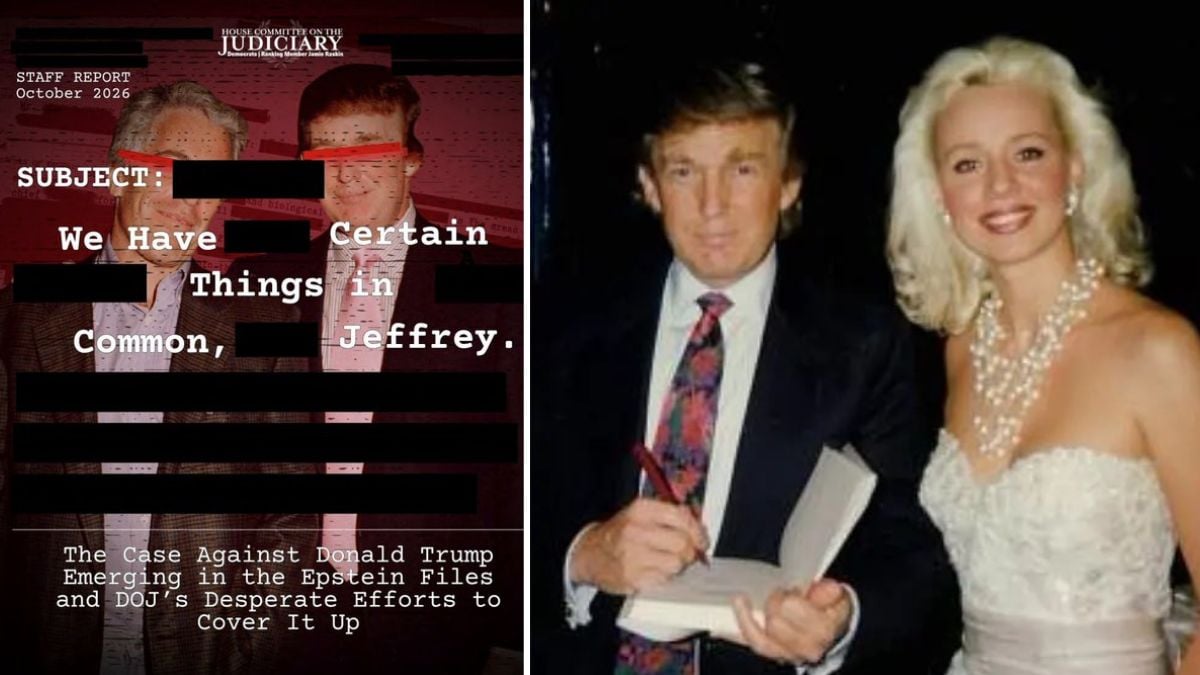
Within hours of Judge Broderick’s ruling, Representative Jamie Raskin and a coalition of House Democrats seized on the timing of her ouster, launching an aggressive push for a formal congressional investigation into whether Comey’s firing was tied to her work on the Epstein and Maxwell cases—and more specifically, to the unresolved questions surrounding Donald Trump’s past social ties to Epstein and the administration's handling of the remaining Epstein files.
The suspicion is not born out of thin air. During his 2024 campaign, Trump repeatedly hedged on whether he would declassify the remaining Epstein documents, suggesting in interviews that while he might release other federal files, the Epstein records contained "a lot of phony stuff" that could unfairly damage reputations. Once back in office, the administration promised transparency, orchestrated a theatrical rollout of binders to friendly influencers, and then abruptly slammed the door shut, declaring the matter closed while thousands of pages remained under lock and key.
And right in the middle of that pivot, the woman who actually prosecuted the case was quietly erased from the payroll.
The Hypothetical Witness in Room 402
To feel the true weight of what happens when a career prosecutor is purged under a cloud of political suspicion, step away from the headlines and consider a hypothetical scenario.
Imagine a woman—let’s call her Elena—who was seventeen years old when she was recruited into Jeffrey Epstein’s orbit in Palm Beach twenty years ago. For two decades, Elena carried that secret like a stone in her chest. She watched powerful men attend charity galas, pose on magazine covers, and laugh off rumors while she struggled to hold down a job or trust anyone who got too close.
In 2021, watching Ghislaine Maxwell finally face a jury in Manhattan, Elena found the courage to pick up the phone. She sat in a small, windowless conference room in Lower Manhattan—Room 402—and told her story to a prosecutor who didn't flinch, didn't judge, and didn't treat her like a political pawn. That prosecutor promised her one thing: The institutions of this country are bigger than the men who hurt you. Your truth is safe here.
Now put yourself in Elena’s shoes in the summer of 2025. You turn on the evening news and see that the very prosecutor who sat across from you—the woman holding the notes from your worst memories—has been summarily fired by the political appointees of a president whose name appears in the very flight logs and address books tied to your case.
What goes through your mind?
You don't think about Article II executive authority. You don't care about the nuances of the Civil Service Reform Act. You think one thing, and one thing only: They got to her. And now they have my file.
That is the invisible casualty of a politicized Justice Department. You cannot measure it in budget spreadsheets or appellate briefs. It is measured in the silence of the next survivor who decides not to make that phone call, the next whistleblower who shreds a document instead of bringing it to the FBI, and the slow, corrosive rot of public trust that turns a nation of laws into a rumor mill of cynical suspicion.
The Pattern Behind the Purge
Honestly, it is tempting to look at all of this and feel overwhelmed—to wonder whether we are watching a genuine constitutional crisis or simply another round of Washington bloodsport where both sides weaponize the language of morality for partisan gain. Even seasoned legal observers admit that proving why an administration fired a specific employee is notoriously difficult when executive privilege is invoked like a blanket over every internal email.
Yet history has a sharp memory for patterns, and the pattern here is unmistakable.
Look back at the Watergate era, during the infamous Saturday Night Massacre of October 1973, when President Richard Nixon ordered the firing of Special Prosecutor Archibald Cox because Cox refused to back down from demanding the White House tapes. Nixon’s advisers believed that removing the investigator would stop the investigation. Instead, the firing itself became the undeniable proof of consciousness of guilt—the moment the public realized the cover-up was worse than the crime.
Or look at the quieter, more systemic purges of the modern era, where the strategy isn't a single dramatic firing on a Saturday night, but a thousand quiet removals on Friday afternoons. When an administration targets prosecutors who worked on politically sensitive cases—whether it is the January 6th Capitol attack, public corruption probes, or the Epstein trafficking network—the message sent to every remaining attorney in the building is crystal clear: Keep your head down. Pick safe targets. Do not touch the third rail.
You don't need to fire all ten thousand prosecutors to bend the Justice Department to your will. You only need to fire three or four of the bravest ones in full view of everyone else.
That is why House Democrats are demanding more than just Maurene Comey’s reinstatement. In their letters to the Justice Department’s Inspector General and the Attorney General, lawmakers are demanding every internal memo, every text message, and every directive exchanged between the White House and Main Justice leading up to July 2025. They want to know who initiated the termination, whether the Epstein investigation was ever discussed in those conversations, and who currently controls access to the unredacted evidence gathered during the Maxwell prosecution.
What Survives the Storm
Judge Broderick’s ruling is a victory, though an incomplete one. Reinstating a prosecutor on paper does not automatically restore the momentum of investigations stalled in the dark, nor does it force an unwilling administration to open the vault on the Epstein files without a protracted, bitter fight through the appellate courts.
Still, something vital happened in that Manhattan courtroom this week.
For months, the prevailing mood among those watching the dismantling of institutional guardrails has been one of fatalism—a quiet surrender to the idea that raw political power can simply rewrite the rules whenever the truth gets too close. Judge Broderick reminded the country that the law is not a suggestion, and that the men and women who dedicate their lives to enforcing it are not disposable servants of the powerful.
Somewhere in Lower Manhattan tonight, long after the crowds have left Foley Square, the fluorescent lights on the upper floors of St. Andrew’s Plaza are still humming. Stacks of bankers' boxes still sit along the walls, bound in red tape, waiting for someone with the patience, the memory, and the nerve to open them again.