Seven dollars and forty-two cents.
That is the exact price of an iced oat milk brown sugar shaken espresso with cold foam on a Tuesday morning in a college town, a transaction that happens millions of times a day with the frictionless tap of a smartphone screen and the gentle, mechanical hiss of a steam wand. To the bleary-eyed sophomore standing in line before an eight-o'clock organic chemistry lecture, that green mermaid cup is a lifeline, a small, predictable comfort bought with money from a part-time campus job or a strained financial aid refund. Yet behind the polished espresso bar, where the air smells sharply of burnt arabica beans and commercial sanitizer, the person sliding that plastic cup across the counter is calculating a very different set of numbers.
They are calculating how many hours they need to pick up to cover a sudden spike in rent, how to survive on twenty-two scheduled hours when they were promised thirty-five, and why a multibillion-dollar coffee empire has spent years stalling at the bargaining table rather than signing a first contract.
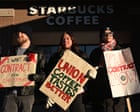
Across dozens of university campuses from Massachusetts to California, something unusual has started to happen to that morning routine. Students are walking past the glowing green signs, thermos flasks tucked into their backpacks, joining picket lines in the drizzle alongside the baristas who used to memorize their orders. When college students rally in support of Starbucks baristas urging a boycott over a prolonged contract impasse, the story is far bigger than a campus protest or a temporary dip in quarterly foot traffic. It is a collision between two generations raised on the same promises of hustle and upward mobility, suddenly realizing the math no longer works for either of them.
The Invisible Math Behind the Counter
To understand why a twenty-year-old philosophy major would willingly give up their favorite study spot and stand in the cold holding a cardboard sign, you first have to understand what happens when labor negotiations turn into a war of attrition.
Consider a hypothetical barista—let us call her Maya, though her story mirrors thousands of documented accounts from unionized stores across the United States. Maya works at a high-volume store two blocks from a major state university. During midterms, the mobile order printer never stops spitting out white paper tickets. She works the espresso bar with wrists aching from repetitive motion, fielding mobile orders, drive-thru timers, and impatient customers, all while management tracks every second it takes for a drink to leave the counter. On paper, Starbucks touts competitive hourly wages and benefits packages, including tuition coverage through Arizona State University. In practice, however, eligibility for healthcare and tuition benefits hinges on maintaining a strict minimum threshold of worked hours—typically twenty hours a week averaged over a six-month audit period.
Drop below that threshold by even a fraction of an hour because a manager trims labor budgets during a slow summer month, and the safety net vanishes.
This is the quiet anxiety that sparked the historic unionization wave beginning in Buffalo, New York, in late 2021. Since that first store voted to join Starbucks Workers United, more than four hundred company-owned locations across the country have voted to unionize, representing over ten thousand workers. Yet voting to form a union is only the opening chapter. Under federal labor law, winning an election compels an employer to bargain in good faith toward a collective bargaining agreement, but it sets no strict deadline for when that contract must be finished.
For years, those negotiations remained locked in a bitter stalemate. Workers alleged hundreds of unfair labor practices, ranging from unilateral changes to store hours and dress codes to the firing of union organizers and the withholding of wage increases and credit card tipping features that were granted to non-union stores. Corporate leadership maintained it was committed to bargaining while simultaneously challenging the structure of negotiation sessions, insisting on in-person meetings without hybrid video participation—a logistical hurdle that brought talks to a grinding halt for months. Even after both sides announced a breakthrough framework in early 2024 to resolve litigation and establish a path toward foundational contracts, progress at the bargaining table has moved in fits and starts, leaving baristas without the finalized, legally binding protections they voted for years ago.
Why Campuses Became the Front Line
If you have ever spent time on a modern college campus, you know that the campus coffee shop is the unofficial town square. It is where study groups cram for finals, where first dates nervously stir sugar packets, and where exhausted teaching assistants grade stacks of freshman essays. Because Starbucks embedded itself so deeply into university life—often operating licensed stores inside student unions alongside corporate locations right across the street—students did not view baristas as distant corporate employees. They saw them as peers. Many of them were peers, taking the same lecture classes by day and steaming milk by night.
When you watch your lab partner get sent home early because labor algorithms decided the afternoon rush was fifteen minutes shorter than projected, corporate talking points lose their shine.
History shows us that student-labor alliances are rarely accidental. From the anti-sweatshop campus movements of the late 1990s to the dining hall worker strikes of the 2010s, universities function as pressure cookers for economic awareness. Students occupy a unique position in the consumer economy: they have limited disposable income, high social connectivity, and an acute sensitivity to institutional hypocrisy. When a brand markets itself aggressively on progressive values—sustainability, inclusivity, community connection—while simultaneously battling its own workforce over basic scheduling stability and living wages, young consumers notice the gap between the slogan and the paycheck.
I still remember the first time I walked past a campus coffee shop during a strike a few years back, clutching a half-empty reusable mug and feeling an unexpected jolt of guilt. Inside, a handful of bewildered managers in street clothes were struggling to operate the espresso machines, peering at recipe cards while a line of confused customers backed up toward the door. Outside, five baristas and a dozen students stood near the curb, laughing over a portable speaker and handing out flyers explaining why they were asking people to buy their coffee down the street at an independent bakery. What struck me wasn't anger; it was the sheer clarity of the choice they were presenting. Nobody was shouting at customers. They were simply asking a question that lingered long after you walked away: What is the true cost of convenience?
Anatomy of a Contract Impasse
People often ask why a union contract takes so long to finalize, assuming that negotiations are simply a tug-of-war over a few extra dollars an hour. In reality, a first contract is an architectural blueprint for power in the workplace.
Think of an employment relationship without a union as a house built entirely out of dry erase boards. The rules—your schedule, your starting pay, your break times, the reasons you can be disciplined—can be wiped clean and rewritten by management at any moment, with zero advance notice. A union contract replaces those dry erase boards with concrete walls. Every clause has to be negotiated word by word, covering everything from minimum guaranteed hours and predictable scheduling two weeks in advance to grievance procedures that prevent arbitrary firing.
For a massive retail corporation accustomed to unilateral control over labor costs, surrendering that flexibility is terrifying. Labor is one of the few expenses a store manager can adjust on a weekly basis when coffee bean prices fluctuate or consumer spending cools. If a contract guarantees minimum staffing levels or restricts sudden schedule cuts, the company loses its easiest lever for protecting profit margins.
That tension explains why an impasse drags on even when both sides claim they want a deal. The company wants to preserve operational agility; the workers want survival stability. When bargaining stalls over core economic proposals—wages, healthcare access, guaranteed hours—workers are left with very few tools to shift the balance of power. Walking off the job for a one-day strike raises awareness, but a sustained consumer boycott hits the only metric that consistently commands executive attention: same-store sales.
The Boycott Equation
Does a student-led boycott actually hurt a global giant with tens of thousands of locations worldwide?
On a purely global balance sheet, a single campus boycott looks like a rounding error. Yet retail economics do not operate in averages; they operate at the margins. High-volume college locations are among the most profitable stores in any fast-casual network, relying on rapid customer acquisition to turn eighteen-year-olds into lifelong daily habit buyers. If a freshman spends four years grabbing an iced latte every morning on the walk to the library, that habit often follows them into their first corporate office job for the next three decades.
When student governments pass resolutions urging universities to sever licensing agreements, or when campus clubs organize "coffee-free" weeks and redirect students to local cafes, they interrupt that habit-formation pipeline at its most critical stage. They transform a routine purchase into a public statement. Suddenly, walking across campus holding a distinctive green-and-white cup carries social friction. Friends ask questions. Dorm group chats share links to strike funds. Even students who rarely follow labor news begin to wonder why their favorite barista disappeared from the morning shift.
Of course, boycotts are messy, imperfect instruments, and anyone who tells you otherwise is selling an overly tidy story. Some students worry that boycotting a store will only reduce customer traffic further, giving managers an excuse to cut barista hours even more drastically. It is a fair concern, one that organizers themselves have debated fiercely in late-night planning meetings. That is precisely why union baristas emphasize targeted, strategic pressure rather than permanent abandonment—urging customers to withhold their dollars specifically during designated boycott windows, during active strikes, or until a fair contract is ratified, while flooding stores with vocal support the moment workers return to the counter.
What Happens When the Picket Signs Come Down
Step back from the noise of megaphones and corporate press releases, and you find a quieter, more unsettling truth about the modern service economy. For decades, service jobs—making coffee, stocking shelves, delivering packages—were dismissed as "starter jobs," temporary stepping stones meant for teenagers earning gas money before moving on to real careers.
That world no longer exists.
Today, millions of adults with college degrees, mounting student debt, and families to support rely on retail and food service work as their primary livelihood. Meanwhile, the college students rallying beside them are staring down a job market where entry-level salaries barely keep pace with rent, healthcare, and loan repayments. When students stand on a sidewalk in solidarity with baristas, they are not engaging in detached charity. They are looking into a mirror. They recognize that the fight over predictable schedules, fair wages, and a voice at work is the exact same fight waiting for them the moment they toss their graduation caps into the air.
Tomorrow morning, the espresso machines will still hum at six o'clock. Steam will still curl toward the ceiling, milk pitchers will still clatter against stainless steel counters, and millions of hands will still reach out for a warm paper cup before the day begins. The difference is that fewer people are drinking without looking at who is pouring—and once a generation learns to see the human hands behind the counter, it never quite forgets what they are worth.