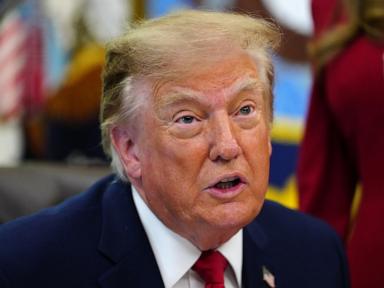
Two words.
That is all it took for a room full of seasoned reporters to suddenly stop breathing, for global intelligence desks to quietly pull up satellite feeds, and for ordinary people scrolling through their morning feeds to feel that familiar, cold knot tighten at the base of their stomachs.
"We hope not."
When President Donald Trump stood before cameras and offered that brief, almost casual response to a question about whether a reported plague outbreak in Russia was actually a biological weapon, he wasn't delivering a formal intelligence briefing. He wasn't reading from a declassified dossier prepared by the Pentagon or the Centers for Disease Control. He was doing what leaders often do when pushed against the wall of the unknown—offering a gut reaction wrapped in diplomatic caution, signaling that while the United States did not believe the pathogen was engineered for war, nobody in power could afford to sound entirely certain.
And that, right there, is the real story. Not the headline. Not the soundbite. It is the quiet, suffocating space between what governments actually know and what they hope is true.
The Anatomy of a Whisper
To understand why those three syllables landed like a stone in dark water, you have to step away from the podium and look at what happens in the hours before a statement like that ever reaches a microphone.
Consider a hypothetical scenario, grounded entirely in how modern bio-surveillance actually works. Picture an analyst sitting in a windowless room outside Washington, D.C., at three in the morning. On her screen isn't a Hollywood map with flashing red skulls. It is a spreadsheet. Columns of hospital admission rates from a regional clinic thousands of miles away. Unusual spikes in respiratory or systemic fever codes. Shipping manifests for antibiotics. A sudden silence on local social media channels where nurses usually complain about double shifts.
Disease doesn't announce itself with a siren. It arrives as statistical noise.
In the case of the Russian outbreak that sparked the press conference question, the baseline facts available to the public were sparse, filtered through state media, regional health notices, and cautious international observers. Historically, Russia—like the United States, China, and parts of Central Asia—still sees occasional, naturally occurring cases of Yersinia pestis, the bacterium responsible for bubonic and pneumonic plague. It lives quietly in wild rodent populations across vast stretches of steppe and mountain terrain. Every few years, a hunter, a herder, or a hiker crosses paths with an infected flea, and a local health department scrambles to isolate the patient, trace contacts, and distribute streptomycin or doxycycline before the bacteria can jump from person to person.
Nature is already terrifying enough without human help.
Yet whenever the word plague surfaces anywhere near a major geopolitical power, history immediately hijacks the room. You cannot separate the biology from the memory. During the Cold War, the Soviet Union operated Biopreparat, a massive, clandestine biological weapons program that employed tens of thousands of scientists and weaponized tons of anthrax, smallpox, and yes, antibiotic-resistant strains of plague. Even decades after the fall of the Soviet Union, the physical infrastructure, the institutional memory, and the mutual suspicion between Moscow and Washington never fully dissolved. They simply went underground, waiting for a spark.
Why "We Hope Not" Hits Harder Than a Denial
If you have ever sat in a hospital waiting room while a doctor tells you they are running "one more test just to rule something out," you already know the emotional mechanics of Trump's remark.
Certainty, even grim certainty, gives the human mind something solid to grip. Ambiguity leaves you suspended in midair.
When U.S. officials state that they do not believe an outbreak is a biological weapon, they are relying on specific forensic signatures. An engineered or intentionally released pathogen leaves fingerprints. Natural outbreaks tend to radiate outward from a clear ecological source—a rural village, a contaminated food supply, a seasonal vector—and genetic sequencing usually shows gradual, expected mutations branching off known wild strains. A weaponized release, by contrast, often appears simultaneously across multiple urban nodes, affects demographics that make no ecological sense, or exhibits genetic modifications designed to defeat standard vaccines and antibiotics.
Early in any outbreak, however, foreign intelligence agencies rarely have clean tissue samples sitting in a domestic lab. They have fragments. Intercepted communications, satellite imagery of unusual ambulance traffic, public health bulletins scrubbed halfway through the day, and diplomatic cables hedged with caveats.
So when a president says, "We hope not," he is inadvertently pulling back the curtain on the hardest truth in modern biosecurity: early detection is almost always an exercise in educated guessing.
I remember the first time I covered a localized infectious disease scare years ago, standing outside a regional health department in the rain while officials tried to explain why three unrelated patients had shown up with identical, unexplained symptoms within forty-eight hours. The air smelled like wet asphalt and stale coffee. Nobody inside that building was panicking, yet nobody could look the cameras in the eye and offer a 100 percent guarantee. Watch a public health director's hands during a press conference sometime. When the data is clean, their hands rest flat on the lectern. When the data is incomplete, their fingers tap a silent, anxious rhythm against the wood.
The Invisible Stakes Behind the Headline
The danger of a moment like this doesn't just live in a petri dish. It lives in how human beings react to fear.
Think about what happens the second the phrase Russian bioweapon enters the global bloodstream. Within minutes, two completely separate epidemics begin spreading side by side. The first is biological, moving at the speed of human contact and incubation periods. The second is informational, moving at the speed of fiber-optic cables and algorithmic outrage.
Look at the chain reaction:
- Geopolitical escalation: Accusations or even insinuations of biological warfare violate the 1972 Biological Weapons Convention, an international treaty signed by both the United States and Russia. Once that threshold is crossed in public discourse, diplomatic channels freeze precisely when transparency is needed most.
- Public health paralysis: In a real outbreak, speed saves lives. Countries need to share genetic sequences, clinical protocols, and contact-tracing data within hours. The moment an outbreak is framed as a national security threat rather than a medical emergency, every lab report becomes a state secret.
- Domestic anxiety: Ordinary people don't read epidemiological journals. They read headlines. They remember lockdown orders, empty pharmacy shelves, and conflicting guidance from experts who were learning in real time. A single unverified rumor about an engineered plague can trigger panic buying, overwhelm emergency rooms with worried-well patients, and erode trust in public institutions before a single case ever crosses an ocean.
This is the trap that leaders and journalists walk into over and over again. We treat biological threats like military skirmishes—us versus them, attacker versus defender—when microbes don't recognize borders, flags, or treaties. A pathogen released in anger or by accident in one hemisphere is always one international flight away from becoming everyone's problem.
Learning to Read the Signals Without Losing Your Mind
So where does that leave someone sitting at their kitchen table, reading a news alert on their phone and wondering whether they should be worried?
It leaves you needing a better filter than political soundbites.
When evaluating any breaking report about a mysterious outbreak abroad, seasoned epidemiologists and intelligence veterans look past the rhetoric and ask four grounded questions. First, is the pathogen spreading in a way that matches its known biology? Plague, for instance, is caused by a bacterium, not a virus. Unlike airborne respiratory viruses that can sweep through an airport terminal undetected, bacterial plague is treatable with common, widely stockpiled antibiotics if caught early. Second, are neighboring countries seeing spillover? A genuine biological event of scale rarely stays neatly inside one nation's press releases; border clinics, independent labs, and World Health Organization monitors begin picking up echoes within days.
Third, what is the source of the claim? Was the alarm raised by peer-reviewed clinicians and verified field data, or by partisan commentators, anonymous social media accounts, and off-the-cuff answers during a gaggle on an airport tarmac? And fourth, how are medical systems responding on the ground? Watch what governments do, not what they say. Massive deployments of mobile field hospitals, sudden border closures, or emergency pharmaceutical airlifts tell a very different story than routine local quarantine protocols.
Right now, the evidence points toward caution rather than catastrophe. U.S. assessment holding that the outbreak is natural aligns with centuries of epidemiological precedent in the region, where the land itself has harbored the bacteria since long before modern borders were drawn.
Still, the chill left behind by those three words doesn't entirely go away.
Because deep down, we know that the line between a natural spillover and a man-made disaster has grown thinner with every passing decade. Laboratories are more advanced. Dual-use research—science meant to cure diseases that could also be twisted to weaponize them—happens in dozens of countries around the world. And in an era where trust between superpowers sits near historic lows, every fever spike carries the weight of a potential accusation.
Late at night, long after the press corps packs up its tripods and the cable news chyrons move on to the next scandal, the lights stay on in those windowless monitoring rooms. Analysts keep refreshing their screens, watching columns of numbers tick upward by ones and twos, listening to the quiet hum of servers doing the only thing standing between a rumor and a reckoning.
Waiting for the data to speak louder than hope.


