Two men sit in windowless rooms ten thousand miles apart.
One is in Fort Meade, Maryland, staring at the faint blue glow of three curved monitors while the hum of industrial air conditioning vibrates through the soles of his sneakers. The other is in Beijing’s Haidian District, sipping lukewarm green tea out of a glass jar, scrolling through intercepted packets of encrypted metadata that used to belong to an American defense contractor. Neither man wears a trench coat. Neither carries a Walther PPK. They look like accountants, act like software engineers, and spend twelve hours a day quietly picking the pockets of the other’s nation.
For decades, the polite fiction of international diplomacy required world leaders to pretend those two men did not exist. When caught, governments offered rehearsed outrage. They summoned ambassadors. They issued sternly worded press releases expressing "deep concern" over "unacceptable violations of sovereignty."
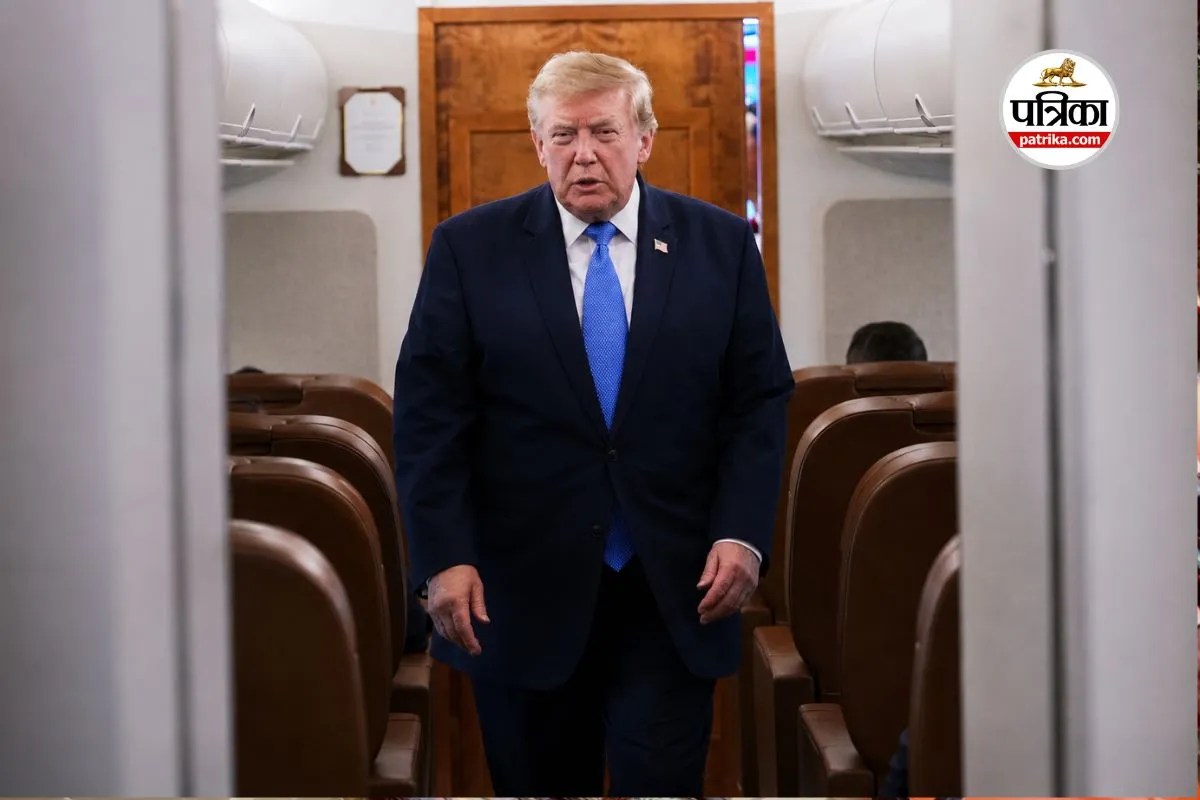
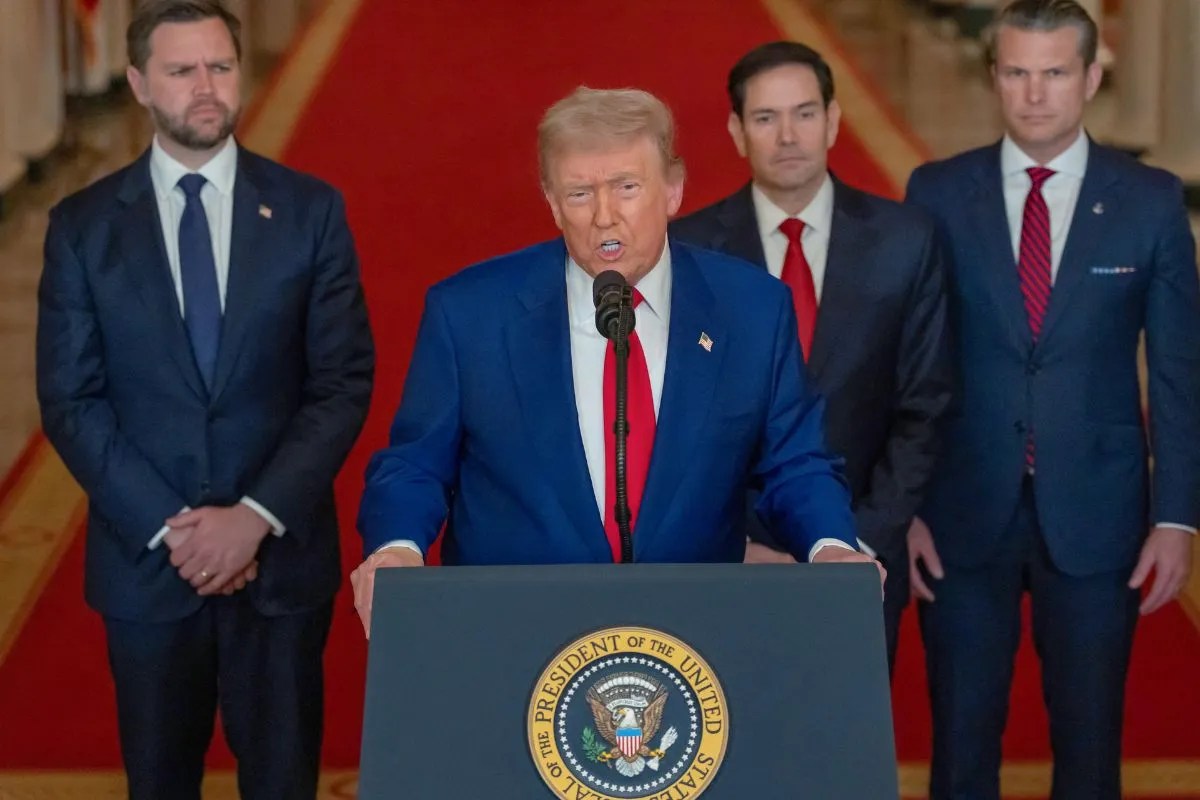
Then Donald Trump stepped up to a bank of microphones and shattered the script in a single breath.
"China spies on us, and we spy on China," Trump told reporters, shrugging off a fresh wave of intelligence headlines with the casual candor of a businessman discussing rival real estate developers. In the exact same breath, he flatly dismissed circulating reports alleging covert intelligence entanglement involving Iran, brushing the narrative aside as unsubstantiated noise.
Washington’s foreign policy establishment gasped. Beijing’s state media bristled. Yet millions of ordinary people watching the clip on their phones felt a strange, sudden jolt of recognition.
Finally, someone had said the quiet part out loud.
The Architecture of an Open Secret
To understand why a single sentence from Donald Trump sent tremors through diplomatic circles, you have to understand the theater of modern statecraft.
Think of global espionage like two neighbors who both secretly aim security cameras at each other’s backyards. Every Sunday at the neighborhood barbecue, they shake hands, compliment each other’s lawns, and swear up and down that they respect each other's privacy. If one neighbor accidentally spots the other’s lens glinting behind a hedge, the unwritten rule demands theatrical shock. You must act betrayed. You must demand an apology. You can never, under any circumstances, look your neighbor in the eye and say, "Look, I have three cameras pointed at your kitchen window, and I know you have two pointed at my garage, so let’s stop pretending."
That theatrical shock is the currency of traditional diplomacy. It gives leaders room to maneuver, sanction, or posture without admitting their own hands are dirty.
By stating plainly that the United States and China both spy on one another, Trump stripped away the moral pageantry that usually surrounds intelligence leaks. He reframed espionage not as an unthinkable betrayal of trust, but as the baseline operating cost of great-power competition.
Consider what happens next when the mask drops. When a leader admits that mutual surveillance is simply how the game is played, the outrage machine loses its fuel. Suddenly, the public isn't looking at a morality play of heroes and villains; they are looking at a high-stakes chess match where both players have already memorized the other’s opening moves.
What the Headlines Missed About the Iran Denial
While pundits spent hours dissecting Trump’s blunt assessment of US-China intelligence operations, the second half of his remarks carried arguably greater weight for global stability—and far more confusion for anyone trying to separate signal from static.
Alongside his comments on Beijing, Trump flatly rejected emerging reports concerning Iran—reports that threatened to complicate already fragile calculations in the Middle East.
To appreciate the gravity of that denial, put yourself in the shoes of an analyst sitting inside a secure briefing room in Washington at three in the morning. Every day, thousands of fragments of intelligence arrive across secure terminals: satellite imagery of a desert compound, a grainy intercept from a regional port, a rumor whispered to a foreign intelligence service in Vienna or Doha. Some of those fragments are gold. Many are deliberate disinformation planted by adversaries hoping to bait Washington into a costly overreaction.
Remember the lead-up to the 2003 invasion of Iraq. Remember how unverified intelligence reports—leaked to the press, amplified by anonymous officials, and repeated until they felt like gospel—locked the United States onto a trajectory that reshaped the Middle East for a generation.
I still remember the heavy, suffocating certainty of those news cycles. Every television ticker screamed with anonymous leaks. Anyone who asked to see the raw proof was treated as naive. We learned the hard way that an intelligence rumor, once printed on the front page of a major newspaper, takes on a life of its own. Politicians feel pressured to react to the headline rather than the underlying truth.
That historical scar explains why Trump’s immediate, public dismissal of the Iran report matters so much. Whether a leader rejects an intelligence narrative because the underlying evidence is flawed, because the leak was politically motivated, or because public validation would force an unwanted military escalation, the act of shutting down the rumor early prevents a media snowball from turning into a geopolitical avalanche.
The Invisible Stakes in Your Living Room
It is easy to read about spies in Washington, Beijing, and Tehran and treat the whole affair like a thriller novel—something distant, cinematic, and utterly disconnected from the price of groceries or the safety of your family.
That distance is an illusion.
Let’s walk through a hypothetical scenario to make the invisible visible. Imagine a mid-sized manufacturing town in Ohio—let’s call it Millbrook—where four hundred people work at a plant producing specialized industrial turbines. For fifteen years, that factory has been the heartbeat of the town. It pays for Little League uniforms, keeps the local diner packed on Friday nights, and sends kids to state college without crushing debt.
Three years ago, an unknown intrusion quietly bypassed the company’s outdated firewall. No alarms rang. No ransomware note appeared on the CEO’s screen. Instead, gigabytes of proprietary engineering blueprints—the exact metallurgical tolerances that took Millbrook’s engineers two decades of trial and error to perfect—were silently siphoned across the Pacific.
Eighteen months later, a state-backed competitor overseas begins undercutting Millbrook’s bids by forty percent, offering the exact same turbine design at a price no American factory paying fair wages can match. Within two years, Millbrook lays off half its floor staff. The diner closes on Tuesdays. Homes stay on the market for eight months instead of eight days.
Nobody in Millbrook ever hears the word "espionage." They just feel the slow, cold bleed of a town losing its livelihood.
This is the reality behind the dry diplomatic phrasing of "intellectual property theft" and "cyber intelligence." Modern espionage is rarely about stealing nuclear launch codes anymore. According to estimates from the Commission on the Theft of American Intellectual Property, illicit acquisition of trade secrets costs the U.S. economy hundreds of billions of dollars every single year. That translates directly into lost wages, shuttered plants, and vanished innovation.
At the same time, American intelligence agencies—from the CIA to the National Security Agency—run massive, sophisticated collection networks aimed squarely at Beijing’s military modernization, supply chain vulnerabilities, and leadership deliberations. Washington needs to know if a crisis in the Taiwan Strait is weeks away or years away. It needs to know whether foreign telecom hardware carries hidden backdoors.
Both sides are looking. Both sides know the other is looking.
Why Candor Terrifies the Establishment
If everyone in Washington and Beijing already knows that mutual espionage is a permanent fixture of the twenty-first century, why did Trump’s statement provoke such visceral discomfort among career diplomats?
Because ambiguity is a security blanket.
In traditional diplomacy, keeping things unsaid allows nations to cooperate on trade in the morning while hacking each other’s ministries at night. As long as neither side formally acknowledges the spying, neither side is forced to defend it to voters or explain why they haven't stopped it.
When Trump said out loud that both nations spy on each other, he forced an uncomfortable reckoning. He asked the public to grow up and look at international relations without training wheels.
Think about the emotional reaction that produces. Part of us wants to believe that our side only acts out of pure, defensive necessity, while the other side acts out of pure malice. Accepting that great powers routinely engage in the exact same covert behaviors—just with different goals and different rules of engagement—requires a level of moral adulthood that cable news panels rarely reward.
Yet there is something oddly clarifying about stripping away the pretense. When you stop pretending the other guy isn't trying to read your playbook, you stop leaving your playbook unlocked on the kitchen table. You invest in better locks. You harden your infrastructure. You negotiate from a place of clear-eyed realism rather than shocked indignation.
The Fog of the Intelligence Wars
Still, honesty about the existence of espionage does not make navigating the intelligence world any less treacherous. In fact, it highlights just how confusing—and genuinely frightening—this terrain has become for ordinary citizens trying to figure out what is actually true.
Look at the mechanics of a modern intelligence controversy. A report surfaces, citing unnamed sources familiar with classified assessments, claiming Iran is pursuing a specific covert action or capability. Within minutes, social media amplifies the claim into certainty. Commentators demand immediate retaliation. Opponents accuse the administration of weakness.
Then the President steps forward and says, in essence: That report is false. We reject it.
Who do you believe?
If you feel a knot of skepticism in your stomach right now, you are not alone. Every thinking citizen carries the weight of past official denials that later unraveled, right alongside memories of sensational intelligence leaks that turned out to be completely fabricated. Living in an era of shadow warfare means accepting that the public rarely gets to see the raw intercepts. We are asked to judge the credibility of the messenger while the evidence stays locked inside a Sensitive Compartmented Information Facility.
What we can evaluate, however, is incentive and pattern.
Historically, when an administration publicly and forcefully rejects an intelligence leak involving a volatile flashpoint like Iran, it is signaling two things simultaneously. First, it is telling foreign adversaries that Washington will not be stampeded into a conflict by leaked fragments or third-party manipulation. Second, it is drawing a hard boundary around executive authority—reminding intelligence agencies and media outlets alike that anonymous leaks do not set American foreign policy.
The Unspoken Rules of the Shadow Game
Throughout the Cold War, Washington and Moscow operated under a grim, unspoken code. Spies were caught, traded on foggy bridges in Berlin at dawn, and rarely discussed in polite company. Both superpowers understood that espionage, paradoxically, often prevented catastrophic wars. Knowing what your adversary was actually building meant you didn't have to panic over worst-case fantasies.
The rivalry between the United States and China operates under far murkier conditions. Unlike the Soviet Union, which had almost zero economic overlap with the West, the American and Chinese economies are braided together so tightly that pulling one thread vibrates across the entire global market. The smartphone in your pocket, the rare-earth magnets in wind turbines, the active ingredients in generic antibiotics—all of them cross borders where intelligence services constantly probe for leverage.
In that environment, pretending that espionage is an anomaly rather than an ongoing reality is worse than naive; it is dangerous.
By pairing a blunt admission about US-China spying with a firm rejection of unverified claims regarding Iran, Trump demonstrated a sharp instinct for separating structural reality from manufactured crisis. One is a permanent condition to be managed with eyes wide open; the other is a spark near dry brush that has to be stamped out before it catches wind.
The Glow Behind the Curtain
Late tonight, long after the evening news broadcasts have moved on to weather forecasts and sports highlights, those two men in Fort Meade and Haidian will still be at their desks.
The air conditioning will still hum. Lines of encrypted code will still flash across dark screens, silent as ghosts crossing an ocean floor. Neither government will issue a press release about what happens in those rooms before sunrise, and neither side will stop looking for an edge before the sun comes up again.
The game never paused, and the rules never changed—only the pretense that nobody was playing finally went dark.