The kitchen table at 6:15 AM holds a specific kind of silence. It is not the peaceful hush of midnight, nor the eager quiet before an alarm. It is the heavy, expectant pause of a Tuesday morning when the coffee maker gurgles its final drop and the bills are stacked next to a manila folder.
Meet Marcus. (Note: Marcus is a hypothetical composite character representing common experiences in the current labor market, constructed to illustrate broader economic trends.) Marcus is forty-two years old. For fourteen years, his badge opened the glass doors of a mid-sized logistics firm. Last month, his badge stopped working. The lock didn't click. The light stayed red.
When Marcus sat down at that kitchen table with his wife, Elena, they weren't thinking about macroeconomic indices. They weren't pondering Federal Reserve interest rate hikes or quarterly productivity metrics. They were thinking about mortgages, grocery bills, and the sheer, dizzying vertigo of standing at the edge of the unknown.
Across the country, millions of kitchen tables share this exact texture right now.
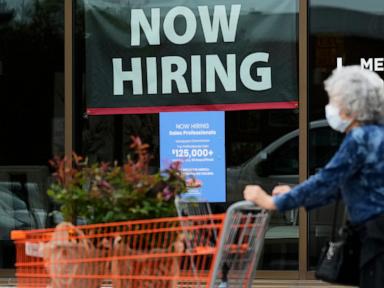
Recent economic reports note that US unemployment claims have risen slightly, ticking upward in a way that catches the attention of statisticians. Yet, financial analysts quickly append a reassuring caveat. The numbers remain at a healthy level. Historically speaking, the labor market is still strong. Job openings exist. The foundations are sound.
Statistics offer cold comfort when you are Marcus.
Numbers are averages. People are individuals. And the gap between an aggregate economic indicator and a lived reality is often vast, filled with whispered anxieties and quiet recalibrations.
To understand what a "healthy" rising unemployment rate actually means, we have to look past the spreadsheet and examine the mechanics of how people earn a living.
The Anatomy of a Shift
Why do claims tick upward when the economy is ostensibly stable?
Consider what happens next in a cooling cycle. Companies do not always collapse overnight. Instead, they pivot. They tighten belts. They automate processes that once required human hands. They pause hiring, leaving a graduating college class staring at a wall of ghost job postings—positions advertised online not because a company desperately needs someone today, but to collect resumes or project perpetual growth.
Marcus experienced this slow-motion friction. For months, his department's budget shrank. Software licenses weren't renewed. Contractors were let go. Then came the meeting behind closed glass doors with a human resources representative holding a folder.
When people search for updates on unemployment claims, they are usually looking for a simple binary answer. Is the sky falling, or is everything fine?
The truth refuses to be binary.
The baseline data tells us that initial jobless claims have hovered in a historically low band compared to catastrophic recessions like 2008 or 2020. Layoffs are not widespread across every sector. Healthcare, hospitality, and certain engineering fields continue to absorb displaced talent. If you look at the macro view, the engine is still turning.
Yet, friction is real. The time it takes to find a new role has lengthened. A worker who loses a job today might not walk into an identical salary tomorrow. They face a market where employers can afford to be extraordinarily selective, sorting through hundreds of applicants for a single remote role, filtering resumes through automated algorithms that scan for specific keywords before a human eye ever glances at a page.
The Invisible Stakes
We tend to measure economic health in gross domestic product and job creation numbers, but these metrics miss the emotional toll of transition.
When claims rise—even modestly—it signals a cooling of power. For the past few years, employees held a rare advantage. Workers could pivot easily, demand remote flexibility, and secure higher wages through job-hopping. That era has shifted. Employers are regaining leverage.
For Marcus, this shift meant sending out seventy-two resumes and receiving three automated rejection emails and sixty-nine absolute silences. The silence is the hardest part. It treats a human life like a dropped packet on a congested internet network—lost in transmission, unaccounted for, silent.
Economists call this frictional unemployment and structural adjustment. Marcus calls it checking his email at 3:00 AM, wondering if his skills have somehow expired overnight.
This is where the macro story meets the micro story. A healthy level of unemployment in a national ledger can simultaneously feel like a personal crisis for thousands of families navigating corporate restructurings. The two facts do not cancel each other out. They exist at the same time.
Navigating the Transition
How do individuals adapt when the macro indicators say one thing, but their bank account says another?
The first step is understanding the terrain. A rising claims trend does not mean the door is locked forever; it means the threshold is heavier. Job seekers today are finding that traditional application portals are black holes. Success increasingly relies on direct human networks, lateral skill translation, and community support systems.
Marcus eventually found his footing not by firing off generic applications into digital portals, but by reaching out to a former colleague who had transitioned into renewable energy logistics. His core competency—managing supply chains—was desperately needed there, even if the industry vocabulary had changed.
He had to learn to speak a new dialect of his own profession.
This is the hidden undercurrent of the modern labor market. Change is constant, but the speed of adaptation required by workers is accelerating. When unemployment claims tick up, it is often the canary in the coal mine, showing us where industries are dying off and where new ones are struggling to be born.
The Balance Sheet of Human Resilience
We return to the kitchen table.
The coffee is gone now. The manila folder is closed, its contents sorted into neat piles: letters from state agencies, resume drafts, networking contacts scribbled on a legal pad.
The numbers on the morning news ticker will continue to fluctuate. Analysts will debate whether the Federal Reserve should cut interest rates or hold them steady. Pundits will argue over whether a soft landing is guaranteed or merely a hopeful illusion.
These debates matter, but they are abstract architecture.
The real economy lives in the courage of ordinary people opening envelopes, updating resumes after a decade away from the job hunt, and walking back out the front door to face a market that owes them nothing, yet demands everything they have to give.
The claims rise. The numbers shift. The morning light hits the kitchen floor, indifferent to the math, but illuminating the path ahead anyway.