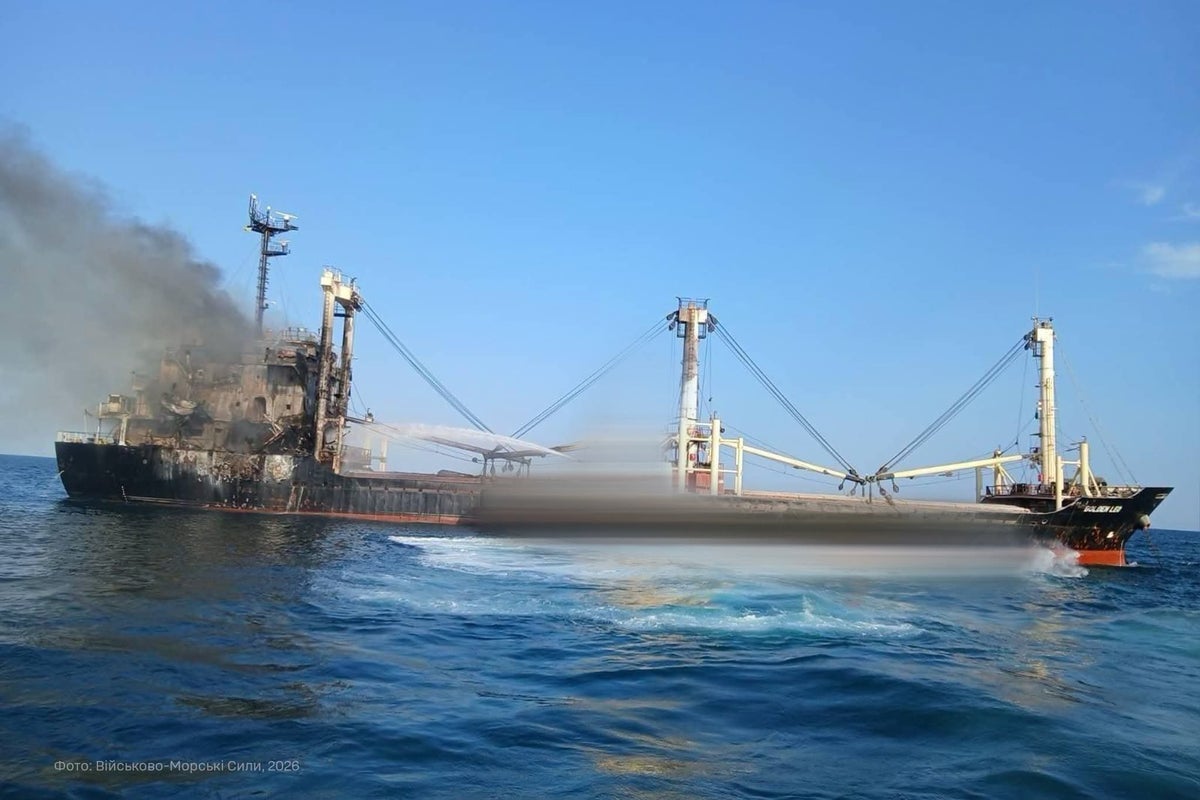
India just sent a sharp diplomatic message to Moscow, calling in Russian Chargé d'Affaires Vladimir Ladanov to register an official protest. The move came after four Indian seafarers were killed when missiles struck a commercial vessel departing Ukraine's port of Odesa on July 19.
This isn't just another headline about Black Sea conflict friction. It's the first time Indian mariners have lost their lives in the Russia-Ukraine war, putting New Delhi's delicate balance with Moscow under unprecedented pressure.
Here's the full reality of what went down off the coast of Odesa and why this diplomatic friction matters far beyond the Black Sea.
What Happened To The MV Golden Leo Off Odesa
On the evening of July 19, the Guinea-Bissau-flagged cargo ship MV Golden Leo cleared the Ukrainian port of Odesa with a full cargo of grain. Onboard was a 17-member multinational crew, including five Indian nationals and several Syrian sailors, alongside a Ukrainian maritime pilot.
According to Ukrainian military officials, Russian forces launched three cruise missiles that struck the merchant vessel while it was navigating the designated maritime corridor. The Ministry of External Affairs confirmed that four Indian crew members died in the strike. A fifth Indian sailor suffered critical injuries and remains in intensive care.
The attack claimed ten lives total, making it one of the deadliest single incidents for commercial shipping in the Black Sea this year. Ukraine's Air Force reported that rescue operations dragged on through the night, saving eight crew members from the damaged vessel.
Moscow's defense ministry offered a predictably stark defense. Russian officials claimed their strikes targeted Ukrainian port infrastructure and commercial cargo ships allegedly carrying military supplies. But the MV Golden Leo was loaded with grain, bound for international markets.
Why New Delhi Had To Draw A Line
India has spent years maintaining a pragmatic neutrality regarding the Russia-Ukraine conflict. New Delhi has repeatedly urged peace through diplomacy while continuing trade relations with Moscow. But when civilian lives are lost at sea, neutrality hits a hard wall.
When Ministry of External Affairs officials summoned Chargé d'Affaires Vladimir Ladanov to South Block in New Delhi, they didn't mince words. The government expressed "grave concerns" and "unequivocal condemnation" regarding the strike.
"The targeting of commercial shipping and the resulting loss of innocent civilian lives are unacceptable and must be avoided," the Ministry of External Affairs stated, asking Ladanov to convey India's formal protest directly to Moscow.
India isn't just advocating for its own citizens here. The nation is a global powerhouse in maritime workforce supply.
- Over 320,000 active Indian seafarers work on commercial merchant ships worldwide.
- Indian crew members make up nearly 10 percent of global seafaring personnel.
- Merchant vessels routinely cross high-risk transit zones in the Black Sea, Red Sea, and Strait of Hormuz.
When shipping lanes turn into war zones, Indian workers carry the burden. Allowing attacks on civilian grain ships to go unchallenged sets a dangerous precedent for tens of thousands of sailors working in active transit corridors.
The Human Impact Behind The Diplomatic Statements
Beyond international relations and state department statements lie immediate, tragic human stories.
Among the four Indian sailors killed was a young officer from Kerala who was engaged to be married in two months. He had taken the contract on the MV Golden Leo to save up for his upcoming wedding and buy a house for his parents.
The ship was operated by a Mumbai-based crewing company. Diplomatic officials in Kyiv and New Delhi spent the days following the attack verifying identities, coordinating emergency medical care for the survivor, and arranging the repatriation of the deceased crew members back home.
This tragedy marks a grim milestone. While commercial vessels have taken collateral damage in the Black Sea since 2022, Indian merchant sailors had managed to avoid fatalities in this specific theater until now.
Broader Risks Facing Commercial Shipping Lines
This strike highlights the growing danger for merchant shipping in eastern Europe. Ever since the breakdown of formal grain corridor agreements, commercial ships trading out of Odesa rely on a narrow coastal maritime route guarded by Ukrainian air defenses.
Russian missile and drone strikes on port facilities in Odesa, Chornomorsk, and Pivdennyi have escalated sharply. When civilian vessels cross these waters, crew members face severe hazards every single day.
Maritime insurance rates for Black Sea transit have skyrocketed following the MV Golden Leo incident. Shipping lines operating out of regional ports are now re-evaluating whether the financial returns justify risking their crews in active strike zones.
Industry groups and maritime unions have called for stronger international enforcement of freedom of navigation laws. Civilian merchant ships carrying agricultural products are protected under international maritime law, regardless of the conflict zone they operate in.
Where Maritime Safety Goes From Here
If you manage shipping operations or work in the maritime logistics sector, this incident demands immediate practical adjustments:
- Review risk assessment protocols for crew assignments on ships operating near active war zones in the Black Sea.
- Ensure all merchant vessels passing through conflict corridors maintain active emergency communications and tracking systems synced with international maritime safety organizations.
- Pressure flag state authorities and crewing agencies to provide transparent real-time security disclosures to seafarers before they sign contracts for high-risk routes.
- Monitor official advisories from the Directorate General of Shipping and the Ministry of External Affairs regarding emerging hazard zones.
New Delhi's direct diplomatic protest signals that even long-standing bilateral partnerships won't shield foreign military actions when innocent merchant sailors lose their lives. Protecting civilian crew members on international waters remains an absolute necessity.