The United Arab Emirates is quietly rewriting its national security blueprint. In the immediate aftermath of recent, devastating aerial exchanges across the Middle East, Abu Dhabi reached a unsettling conclusion. The multi-billion-dollar American air defense umbrella that has guarded the Gulf for decades is no longer a guaranteed insurance policy against modern, swarming warfare.
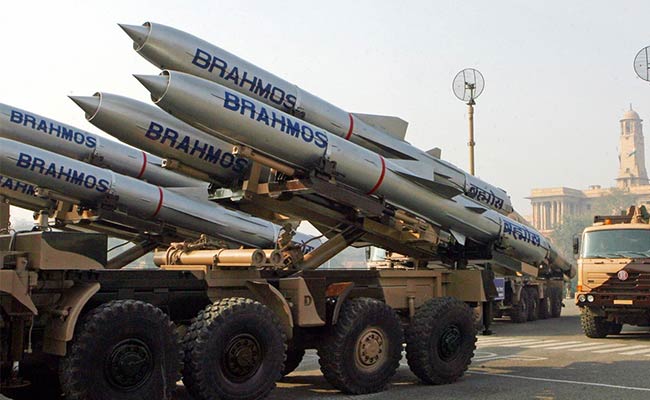
This realization explains why the UAE has bypassed its traditional Western suppliers to engage in fast-tracked negotiations with New Delhi. Abu Dhabi wants to acquire two of India's most critical military assets: the BrahMos supersonic cruise missile and the Akashteer automated air defense command and control network.
This is not a minor procurement shift. It represents a fundamental recalibration of how a major Gulf power intends to protect its airspace and project power over the world's most vulnerable energy chokepoints. For India, the prospective multi-billion-dollar deal cements its transition from a historic arms importer to an aggressive, global defense exporter. For the UAE, it is an admission that the nature of threats in the region has fundamentally outpaced the static defense doctrines of the past.
The Limits of the American Umbrella
For decades, Gulf defense strategy was simple. You bought American hardware, plugged it into a Western-coordinated network, and relied on the sheer technological superiority of Patriot and THAAD batteries to keep the skies clear.
Recent conflicts shattered that complacency. Swarms of low-cost loitering munitions, ballistic missiles, and low-altitude cruise missiles successfully penetrated some of the most heavily defended airspaces in the region. The financial asymmetry of these engagements is unsustainable. Firing a three-million-dollar interceptor to down a twenty-thousand-dollar drone is a losing mathematical equation.
More importantly, traditional air defense architectures are designed around centralized, slower-moving threat profiles. When dozens of targets converge simultaneously from multiple vectors, the sheer data volume can blind conventional command systems. The UAE realized it did not just need more interceptors. It needed an automated nervous system capable of sorting through battlefield chaos in milliseconds, alongside a credible, terrifying counter-strike option that could hold hostile launch sites at bay.
Bridging the Mismatched Battery Crisis
This is where the Akashteer system enters the equation. Developed by India's state-run Bharat Electronics Limited alongside the Indian Army, Akashteer is not an interceptor missile. It is an automated command and control network.
The UAE military inventory is an expensive jigsaw puzzle of global hardware. They operate American Patriots, Russian short-range Pantsir systems, and South Korean surface-to-air platforms. Making these disparate systems talk to one another during a saturation attack is a logistical nightmare.
Akashteer solves this exact vulnerability by processing real-time battlefield data from a myriad of radars, digital sensors, and observation platforms into a single operational picture.
The system gained immense credibility following its deployment in India's recent border frictions, where it successfully coordinated the tracking and neutralization of dense drone swarms. By implementing Akashteer, Abu Dhabi can automate threat prioritization. The system detects an incoming threat, calculates its trajectory, and instantly assigns the most cost-effective weapon to destroy it without human delay. It eliminates duplication of effort, ensuring two multi-million-dollar batteries do not target the same low-value drone while a supersonic cruise missile slips through elsewhere.
The Maritime Fist in the Strait of Hormuz
While Akashteer provides the defensive shield, the BrahMos missile gives the UAE something it has long lacked: a high-speed offensive deterrent.
Jointly developed by India and Russia, the BrahMos is widely considered the fastest operational supersonic cruise missile in existence. Traveling at speeds up to Mach 3, it flies just meters above the ground or sea surface, making radar detection nearly impossible until the final seconds before impact.
The strategic geography of the UAE dictates this purchase. A significant portion of global energy exports travels through the narrow Strait of Hormuz. In any regional escalation, the UAE's offshore energy platforms, coastal desalinization plants, and commercial shipping lanes are immediate targets.
The Math of Supersonic Interception
To understand why the UAE wants the BrahMos, look at the reaction times available to an adversary naval vessel or coastal defense battery.
| Missile Type | Speed | Time to Target at 290km | Reaction Window for Enemy Radars |
|---|---|---|---|
| Standard Subsonic Cruise | Mach 0.8 | Approx. 18 minutes | High (Ample time for electronic countermeasures) |
| BrahMos Supersonic | Mach 3.0 | Approx. 5 minutes | Extremely Low (Often under 60 seconds after horizon detection) |
A conventional, subsonic cruise missile gives an enemy ship time to deploy electronic jamming, fire chaff, or ready its point-defense guns. A BrahMos battery fired from the UAE coastline or an Emirati naval vessel cuts that defensive window to almost nothing. The kinetic energy generated by a 300-kilogram warhead moving at three times the speed of sound is enough to split a modern destroyer in half, even without detonating its explosive payload. It changes the calculus for any hostile navy operating in the Gulf.
Navigating the Washington and Moscow Diplomatic Minefield
Procuring the BrahMos is not without severe geopolitical friction. Because the missile is a joint venture with Russia, India cannot export it to a third party without explicit clearance from Moscow.
Under normal circumstances, Washington would look upon a major Middle Eastern ally buying weapons with Russian lineage with extreme displeasure. The Countering America's Adversaries Through Sanctions Act hangs over many global arms transactions.
Yet, the UAE is navigating this minefield with calculated precision. Abu Dhabi's ties with Moscow have deepened over recent years, driven by shared interests in energy markets and capital investments. Sources within the negotiation pipeline indicate that Russian clearance is a formality that has already been quietly resolved.
From the American perspective, the transaction is tough to swallow but difficult to block. India is a primary security partner for the United States in the Indo-Pacific. Washington cannot afford to sanction New Delhi or alienate Abu Dhabi at a time when it is attempting to counter Chinese influence across global trade routes. Furthermore, buying from India gives the UAE strategic autonomy without the diplomatic fallout of buying directly from Beijing or Moscow. It is an elegant geopolitical hedge.
The Riyadh Rivalry and the New Export Standard
The timing of these negotiations matches a broader, intense competition between Abu Dhabi and Riyadh for regional leadership. As Saudi Arabia expands its domestic defense industrial base and strengthens historical security ties with Pakistan, the UAE is determined to anchor its own security architecture through independent global alliances.
By turning to India, the UAE achieves several goals simultaneously. It diversifies its arms supply away from Western capitals that frequently threaten to freeze weapon sales over human rights or regional policy disputes. It anchors a deep strategic relationship with New Delhi, a nation that shares a vital interest in keeping Western Indian Ocean sea lanes open.
This deal represents the maturation of India's domestic defense industry. For decades, New Delhi was the world's most reliable buyer of foreign hardware. Now, backed by surging domestic production numbers that reached record highs in the 2025-2026 fiscal year, India is entering the elite club of tier-one arms exporters.
The sale of coastal defense systems to the Philippines in recent years proved India could deliver hardware. Selling integrated command networks and supersonic strike missiles to the hyper-wealthy, technologically demanding UAE proves that Indian defense systems can compete with anything built in the West. Abu Dhabi is not buying Indian weapons because they are affordable alternatives. They are buying them because the current security realities of the Gulf require a level of speed, automation, and lethality that Western defense contractors are simply failing to deliver in time.


