The Department of Justice is facing a fierce internal insurrection over a newly revealed $1.8 billion initiative that has pushed the fracture lines of the conservative movement into plain view. Formally designated as a mechanism to compensate citizens who claim they were targeted by politically motivated federal prosecutions, the Anti Weaponization Fund has instead triggered a high-stakes civil war. The primary reason for this explosive breakdown is not just the massive fiscal layout, but the explicit reality that the fund could provide financial payouts to individuals convicted of violent offenses during the January 6 Capitol riot.
By framing federal law enforcement as an inherently corrupt apparatus requiring a multi-billion-dollar taxpayer-funded corrective, the administration has crossed a line that traditional conservatives are unwilling to defend. This is no longer an abstract debate about bureaucratic overreach. It is a direct legislative and judicial battle over the definition of law and order, and it has forced the most dramatic break between Donald Trump and his former vice president to date.
The Breaking Point for Mike Pence
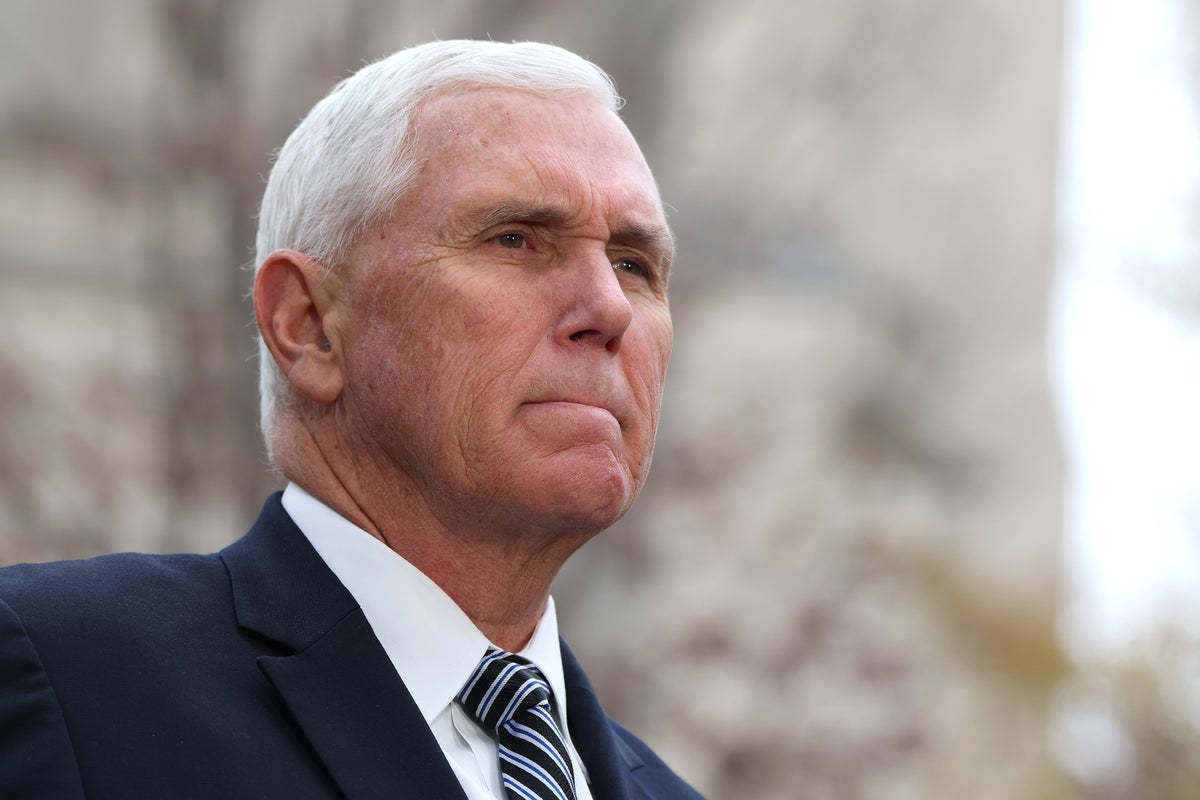
For years, Mike Pence maintained a calculated, cautious distance from the most incendiary rhetoric of the post-2020 Republican party. That calculated distance dissolved completely when the mechanics of the $1.8 billion fund came to light. Appearing on NBC’s Meet the Press, Pence delivered an uncharacteristically blunt denunciation of the policy, branding the prospect of taxpayer dollars flowing to individuals who stormed the Capitol as deeply offensive.
The grievance is intensely personal. On January 6, 2021, Pence was forced to flee the Senate chamber as a crowd breached the perimeter, with some rioters erecting a makeshift gallows outside and chanting for his execution. To hear that the very individuals who participated in an event that put his life and family at risk could now be eligible for federal restitution was a bridge too far.
"The weaponization fund is a bad idea from the start, and I would encourage the administration just to drop it," Pence stated, noting that the treasury should not be utilized to reward individuals who assaulted police officers or vandalized the Capitol.
Pence’s rejection of the initiative reflects a broader, institutionalist panic within the GOP. It signals to donors, suburban voters, and moderate lawmakers that the party's traditional commitment to backing law enforcement cannot coexist with a fund designed to financially vindicate those who attacked federal officers. Pence argued that the Justice Department already possesses the requisite legal authority to settle legitimate cases of government overreach on an individual basis, rendering a dedicated $1.8 billion war chest entirely unnecessary.
Inside the Mechanics of the Fund
To understand why this initiative has provoked such an intense backlash, one must look at how the money is managed. The $1.8 billion fund operates under an highly unusual structure within the executive branch. Rather than navigating the standard, rigorous congressional appropriations pipeline, the administration has attempted to establish the fund through sweeping executive authority, utilizing a five-member commission to review applications and distribute payouts.
According to statements from the Justice Department, anyone who believes they were subjected to unfair, politically motivated prosecution by the federal government under previous administrations can apply for compensation. While acting officials have insisted that an applicant’s record of violent behavior will be taken into serious consideration during the vetting process, the open-ended nature of the criteria has alarmed constitutional experts.
The legal ambiguity is vast. Critics point out that because the administration has already extended pardons to hundreds of January 6 defendants, these individuals could argue that their criminal records have been wiped clean, making them prime candidates for financial restitution. The criteria for what constitutes an "unfair prosecution" remain entirely arbitrary, leaving the five upcoming commissioners with unprecedented latitude to hand out checks with virtually zero legislative oversight.
The Bipartisan Rebellion on Capitol Hill
The blowback inside Washington was immediate, destabilizing the administration’s broader legislative agenda. In the Senate, Republican leadership was forced to abruptly scrap a critical vote on an immigration and border security funding package. The delay occurred after a closed-door briefing with senior Justice Department officials left Republican senators deeply unnerved by the lack of structural guardrails surrounding the fund.
The resistance is not confined to predictable opposition from Democrats. A growing coalition of House and Senate Republicans is actively working to dismantle the initiative before a single dollar is disbursed.
- Senator Bill Cassidy expressed immediate skepticism, stating that if a policy does not feel fundamentally right, the government should not be pursuing it. Cassidy is notably one of the lawmakers who has previously faced primary opposition from the executive branch.
- Representative Brian Fitzpatrick, a Pennsylvania Republican and former FBI agent, has teamed up with Democratic Representative Tom Suozzi to co-sponsor a legislative framework designed to completely eliminate the fund.
- The Law Enforcement Coalition, representing various capital and federal police associations, has actively lobbied lawmakers, arguing that compensating rioters degrades the sacrifices made by officers who sustained permanent injuries protecting the legislature.
This internal rebellion has created visible friction within the party hierarchy. When questioned about whether executive control over congressional Republicans was slipping, the administration offered a rare admission of uncertainty, acknowledging that the shifting dynamics within the Senate were difficult to predict. The friction is exacerbated by simultaneous disputes over other unconventional spending requests, including an insistence on a billion-dollar security upgrade for a dedicated White House ballroom.
The Judicial Emergency
As Capitol Hill wrestles with the political fallout, the battle has rapidly shifted to the federal court system. A group of police officers who defended the Capitol building on January 6 filed a sweeping lawsuit to halt the implementation of the program entirely. Their legal counsel argues that the executive branch lacks the constitutional authority to create an arbitrary multi-billion-dollar compensation pool without explicit authorization and appropriation from Congress.
The legal challenge scored its first significant victory when a federal judge issued a temporary injunction, halting the launch of the fund. The judicial freeze has created an awkward holding pattern for the administration’s legal team.
+--------------------------------------------------------+
|             ANTI-WEAPONIZATION FUND TIMELINE          |
+--------------------------------------------------------+
|                                                        |
|  [ DOJ Announces $1.8B Fund ]                          |
|             │                                          |
|             ▼                                          |
|  [ Bipartisan Congressional Backlash ]                |
|             │                                          |
|             ▼                                          |
|  [ Capitol Police Officers File Lawsuit ]              |
|             │                                          |
|             ▼                                          |
|  [ Federal Judge Issues Temporary Injunction ] ★ CURRENT|
|                                                        |
+--------------------------------------------------------+
Lawyers representing the administration have attempted to downplay the initiative as a simple corrective measure designed to restore faith in a justice system they claim was weaponized by political opponents. However, outside legal experts suggest the administration faces an uphill battle. The Constitution gives Congress the sole power of the purse, and attempting to divert nearly two billion dollars toward an unprecedented political compensation scheme without a clear statutory mandate threatens to violate core separation of powers principles.
The Long Term Costs of Political Payouts
The broader implications of the Anti Weaponization Fund extend far beyond the current news cycle. By attempting to codify a system where the state compensates individuals who disrupted a constitutional process, the administration risks setting a dangerous precedent. If a future administration decides to set up a parallel fund to compensate left-wing activists arrested during urban unrest, the entire federal justice system dissolves into a cyclical, multi-billion-dollar partisan payout game.
This initiative strips away the traditional conservative defense of institutional stability and replaces it with a system of financial patronage. It forces taxpayers to fund the vindication of actions that the justice system originally deemed criminal. The unfolding crisis demonstrates that when an administration attempts to rewrite the rules of federal accountability to reward its base, the institutional guardrails of the American republic will fight back, regardless of party loyalty.