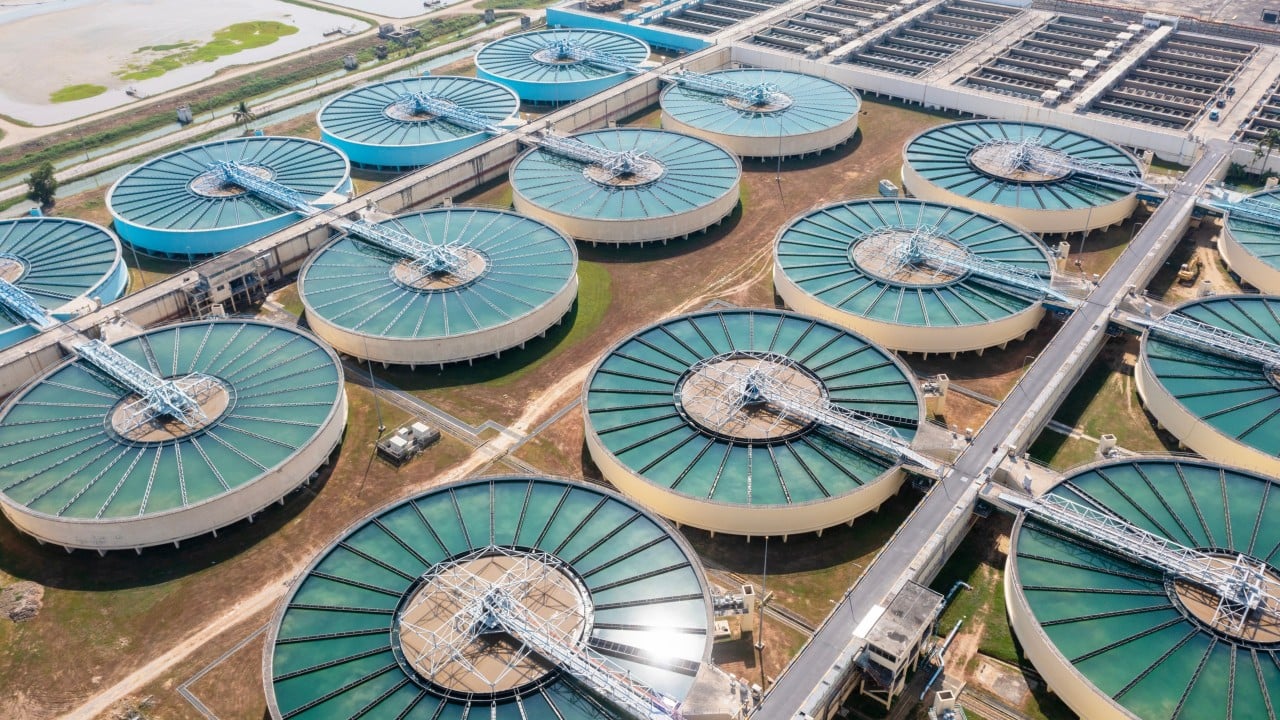
Fresh water is the ultimate finite resource, and China just found a way to commoditize it. While the international community remains fixated on microchips and electric vehicle tariffs, a quiet shift in industrial manufacturing has fundamentally altered the economics of turning seawater into drinking water. For decades, desalination was the exclusive playground of wealthy Gulf nations and highly specialized Western conglomerates. It was too expensive, too energy-intensive, and too difficult to scale for the developing world.
That reality is gone. Chinese engineering firms have aggressively optimized the production of reverse osmosis membranes and energy recovery devices, undercutting traditional Western and Japanese suppliers by massive margins. This is not just a story about cheaper industrial equipment. It is a calculated restructuring of global resource dependency.
The Industrial Mechanics of the Price Drop
To understand why this matters, you have to look at the actual physics of a desalination plant. Traditional thermal desalination—boiling water and collecting the steam—is an energy hog. Modern plants rely on reverse osmosis, forcing seawater through semi-permeable membranes at extreme pressure to separate the salt from the pure water.
Historically, the cost of these membranes and the high-pressure pumps required to run them dictated the price of water. Companies like DuPont in the United States and Toray in Japan held a virtual monopoly on the advanced polymer chemistry needed to manufacture durable membranes. They charged a premium, and the total capital expenditure for new plants reflected that market dominance.
[Image of reverse osmosis desalination process]
Chinese state-backed enterprises approached this problem the same way they approached solar panels and lithium-ion batteries. They didn't reinvent the science. They standardized the manufacturing process, scaled it to an absurd degree, and integrated the supply chain vertically.
By manufacturing the polysulfone support layers and polyamide active layers entirely within domestic industrial clusters, Chinese firms like Vontron have driven down the cost of replacement membranes. Concurrently, Chinese foundries began churning out massive, high-efficiency energy recovery devices. These units capture the hydraulic energy from the concentrated brine waste stream and transfer it back to the incoming seawater, reducing total electricity consumption. When you slash the cost of the membranes and the energy recovery hardware simultaneously, the price per cubic meter of produced water plummets.
The Hidden Costs of Ultra Cheap Water
A dramatic drop in capital expenditure sounds like an unalloyed win for a thirsty planet. The reality on the ground is far more complicated, and significantly more fragile.
When engineering costs are compressed to the absolute minimum, something has to give. In this case, the vulnerability lies in operational longevity and environmental externalities. Western industry veterans point out that while a Chinese-built reverse osmosis system might cost 40% less upfront, its long-term degradation rate is a major unknown variable.
- Membrane Fouling: Cheaper membranes often suffer from faster biological fouling, requiring more frequent chemical washdowns with harsh acids and bases.
- Brine Disposal Inefficiencies: The hyper-saline brine pumped back into the ocean is a ecological hazard. Western regulations mandate highly complex, multi-port diffusers to mix this brine rapidly with ocean currents to avoid suffocating marine life. To hit ultra-low price points, cheaper project designs often skimp on these advanced dispersion systems, creating toxic "dead zones" of high-salinity water along coastlines.
- Energy Grid Dependency: No matter how efficient the recovery devices are, reverse osmosis still requires massive amounts of electricity. In many developing nations where these cheap plants are being deployed, that electricity comes from low-grade coal or heavy fuel oil, trading a local water crisis for a localized air quality and global climate crisis.
Moving the Geopolitical Needle
The implications of cheap desalination extend far beyond municipal utility budgets. Water security is national security, and Beijing is acutely aware of this leverage.
Through infrastructure initiatives, China is positioning itself as the sole guarantor of water stability for arid nations across Central Asia, North Africa, and the Middle East. When a government cannot provide clean water to its citizens, it faces civil unrest. By offering turn-key, dirt-cheap desalination infrastructure bundled with state-backed financing, China isn't just selling machinery. It is buying long-term political alignment.
Consider a hypothetical example: a cash-strapped nation in the Horn of Africa needs to supply a growing coastal city but cannot afford a multi-billion-dollar Western-engineered facility. A Chinese consortium steps in, offering a plant at half the price, financed by a state-controlled bank, built by Chinese laborers, and maintained via long-term servicing contracts using proprietary Chinese components. The host nation secures its water, but its critical infrastructure is now permanently tethered to Beijing.
This creates a profound dilemma for Western policymakers. They can either watch whole regions depend on Chinese technology for their most basic survival need, or they must subsidize their own domestic manufacturers to compete in a race to the bottom on price—a race they are structurally unequipped to win.
The Broader Regulatory Blindspot
The rush toward cheap desalination highlights a massive gap in international infrastructure standards. Currently, there is no global governing body that enforces strict environmental or structural benchmarks for municipal water plants. Individual nations set their own rules, which are frequently bypassed or weakened in the name of political expediency and immediate cost savings.
This lack of oversight extends to the supply chains themselves. The production of the advanced plastics required for reverse osmosis membranes creates significant chemical waste. By outsourcing the environmental footprint of membrane production to industrial zones with relaxed environmental enforcement, the global water industry is essentially laundering its ecological impact.
Western firms are attempting to counter this shift by pivoting toward digital optimization and predictive maintenance software. They argue that proprietary AI algorithms can monitor a plant's performance in real-time, adjusting pressures and chemical dosing to extend the life of more expensive components, ultimately beating cheap hardware on total lifecycle cost. It is an elegant argument, but an incredibly tough sell to a finance minister staring at a massive budget deficit today.
The global water crisis will not wait for the market to find an equilibrium. As aquifers dry up and climate patterns become increasingly erratic, the demand for desalinated water will skyrocket exponentially. The nations that control the plumbing of this new world will wield unprecedented power over human survival, and right now, the keys to that plumbing are being manufactured in Chinese factories at a price no one else can match.