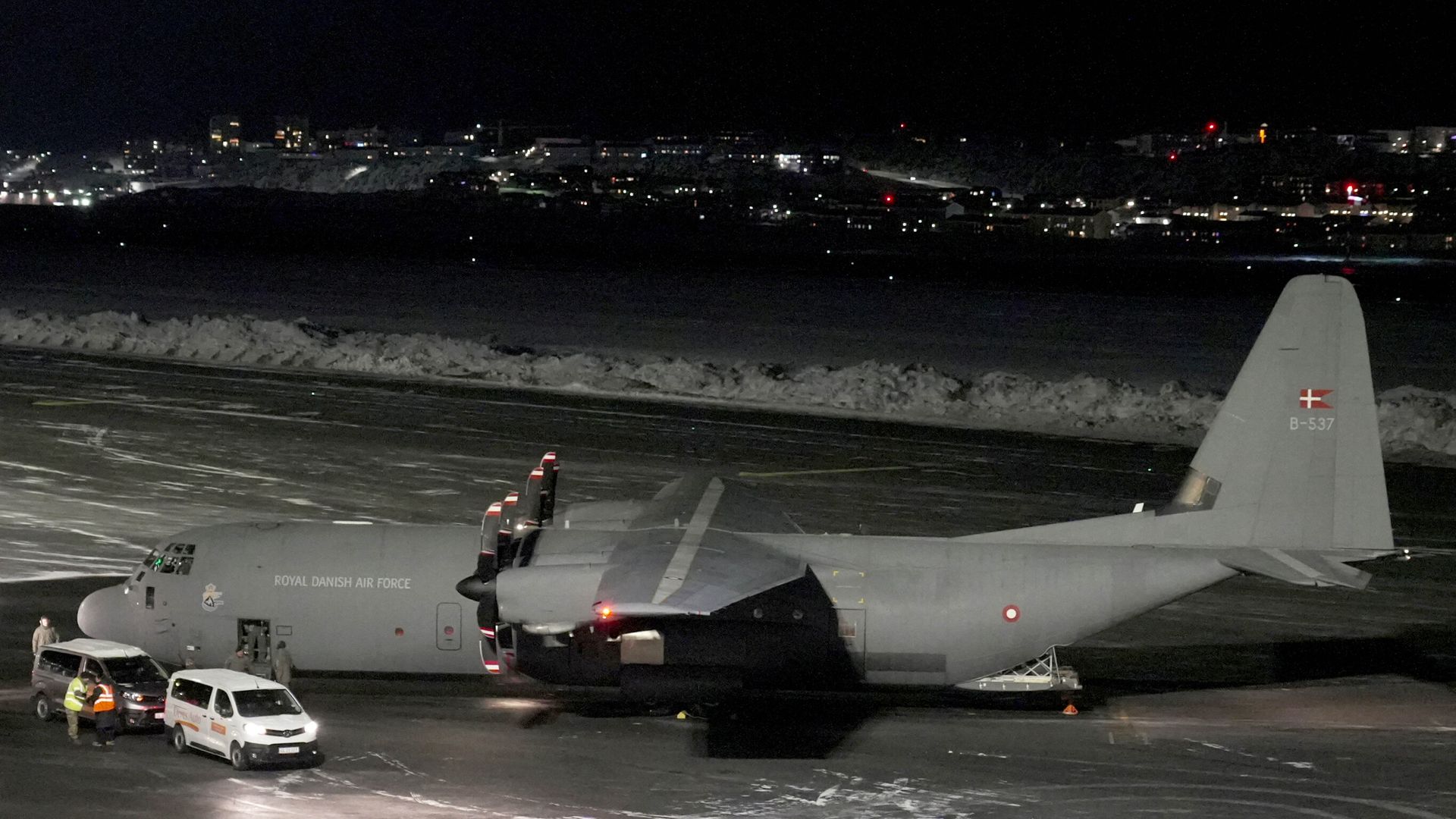
In the first week of January 2026, a transport plane departed from Denmark, banking toward the frozen expanse of the North Atlantic. On board were crates of high-grade explosives and specialized medical supplies, including hundreds of units of typed blood. Their destination was not a training range or a humanitarian mission. The cargo was destined for the runways of Nuuk and Kangerlussuaq. The objective was simple, harrowing, and entirely unprecedented in the history of the NATO alliance: to ensure that if the United States military attempted a forced annexation of Greenland, they would find nowhere to land.
This was not a drill. It was a desperate "scorched earth" contingency triggered by a direct threat to Danish sovereignty. While the public viewed President Donald Trump’s renewed interest in Greenland as a bizarre real estate obsession, the Danish Defence Intelligence Service (FE) recognized a shift from rhetoric to tactical preparation. By early 2026, Washington’s "Greenland Crisis" had evolved from a diplomatic spat into a genuine military standoff between the world’s superpower and one of its oldest allies. You might also find this connected article interesting: The $2 Billion Pause and the High Stakes of Silence.
The January Panic
The tipping point arrived on January 3, 2026, following a U.S. military action in Venezuela. The very next day, Trump explicitly stated that the United States needed Greenland "very badly" and refused to rule out taking it "the hard way." For Copenhagen, the phrase "the hard way" was the signal to stop talking and start mining.
Danish Prime Minister Mette Frederiksen, usually measured in her public pronouncements, pivoted to a war footing within forty-eight hours. The deployment of explosives to the island’s primary air hubs was designed to create a "denial of access" scenario. If the U.S. Air Force attempted to seize these strategic nodes—essential for any large-scale occupation—Danish engineers were prepared to crater the asphalt, rendering the fields useless for heavy transport. As highlighted in detailed articles by BBC News, the implications are significant.
The presence of blood bags was perhaps the most chilling detail. It signaled that the Danish government expected, and was preparing for, a kinetic exchange. This wasn't about posturing. It was about the cold math of casualties.
Why the Arctic Became a Powder Keg
To understand why Denmark would even consider blowing up its own infrastructure, one must look at the "Golden Dome" project. The Trump administration’s push for a comprehensive anti-ballistic missile system relies on Arctic geography. Greenland is the ultimate "high ground." It offers the shortest flight path for intercepting missiles coming over the pole from Russia or China.
Furthermore, the administration’s focus on "critical minerals" has turned the island’s untapped rare earth deposits into a matter of urgent national security. From Washington’s perspective, Denmark is a well-meaning but militarily incapable landlord of a property the U.S. needs to win the next century.
The Danes, however, view it differently. For them, Greenland is an integral, autonomous part of the Kingdom. Ceding it under duress would not just be a loss of territory; it would be the formal end of the post-WWII international order.
The Strategy of Multinational Entanglement
Copenhagen knew it could not win a head-to-head fight against the United States. No one can. Instead, they executed a strategy of "multinational entanglement."
When the Danish elite soldiers arrived in Nuuk, they weren't alone. They were accompanied by a small but symbolic "advance command" of French, German, Norwegian, and Swedish personnel. By placing various European flags on the ground, Denmark raised the stakes for any U.S. intervention. An American strike would not just be an attack on a small Nordic nation; it would be a strike against a coalition of Europe’s most powerful economies.
- Danish Special Forces (Jægerkorpset): Tasked with the actual demolition of critical infrastructure.
- French Naval Support: A vessel was dispatched toward the North Atlantic to provide radar coverage and a symbolic "tripwire."
- Intelligence Counter-Offensive: The Danish Security and Intelligence Service (PET) began monitoring "influencers" and agents linked to the U.S. who were accused of trying to stir secessionist sentiment among the Inuit population.
This was a high-stakes game of chicken played with live detonators.
The Failure of the NATO Shield
The most enduring scar from this crisis is the realization that Article 5 is no longer a guarantee of safety. When a NATO member feels the need to wire its own runways to stop another NATO member from invading, the alliance is effectively dead in all but name.
The Danish Defence Intelligence Service’s decision to list the United States as a "threat to national security" for the first time in history marks a permanent shift in European geopolitical thought. Even as tensions have cooled following the 2026 Davos "framework," the trust has evaporated.
The explosives were eventually moved to secure storage, but they remain on the island. The blood bags have been rotated, not returned. Copenhagen has learned that in the new Arctic, sovereignty is only as real as the charges you are willing to set under your own feet.
The message to the world is clear. If you want the Arctic, you will have to take it from the rubble.