You’re buckled in. The tray table is stowed. You’ve endured the safety demonstration for the thousandth time. Then, the pilot’s voice crackles over the intercom with news that sounds like a bad joke: the plane is too heavy to fly.
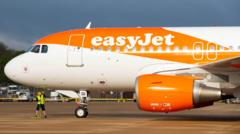
It happened on an EasyJet flight from Arrecife, Lanzarote, to Liverpool John Lennon Airport. This wasn't some theoretical physics problem or a minor paperwork error. It was a hot day in the Canary Islands, and the aircraft simply couldn't get off the ground safely. The airline had to ask 19 passengers to volunteer to get off. They offered €500 each to stay behind.
If you think this is just about some extra suitcases in the hold, you’re mistaken. Aviation weight limits aren't just about what the scale says. It's a complex dance between temperature, runway length, and air density. When these factors clash, the plane stays on the tarmac. It’s frustrating, but it’s the only way to keep you alive.
The Physics of Thin Air and Heavy Metal
Most people think of air as nothing. To a pilot, air is a fluid. It has thickness. It has "grip." For a plane to take off, the wings need to move through that air fast enough to create lift. On a cold, crisp day at sea level, the air is dense. It’s packed with molecules that provide plenty of lift and help the engines burn fuel efficiently.
Heat changes everything. When the temperature spikes—as it often does in Lanzarote—the air molecules spread out. This "thin" air is much less supportive. Think of it like trying to swim in water versus trying to swim in soap bubbles. You have to move much faster to stay afloat in the bubbles.
For an Airbus A320, thin air means it needs a much longer runway to hit the speed required for lift. If the runway isn't long enough to reach that higher speed, the only variable left to change is the weight. You have to ditch the mass.
Why Lanzarote is a Nightmare for Pilots
Lanzarote’s Arrecife Airport is a notorious spot for these issues. It isn't just the heat. The runway there is relatively short for a fully loaded narrow-body jet heading back to the UK. To make matters worse, there are hills at the end of the runway.
A plane doesn't just need to get off the ground. It needs to be able to climb steeply enough to clear obstacles even if one engine fails right at the moment of takeoff. This is a non-negotiable safety margin required by the Civil Aviation Authority (CAA) and EASA. On that specific EasyJet flight, the combination of a short runway, a tailwind, and high temperatures meant the "performance limited takeoff weight" was lower than the actual weight of the plane.
The Myth of the Overweight Passenger
Let's clear something up. Airlines don't weigh you. They don't weigh your carry-on most of the time either. Instead, they use "standard weights."
The European Union Aviation Safety Agency (EASA) sets these averages. For an adult on a holiday flight, they might assume a weight of roughly 84kg to 88kg, which includes their clothing and carry-on items. They also have set weights for checked bags, usually around 13kg to 15kg.
Sometimes these averages fail. If a flight is packed with a rugby team or a group of powerlifters, the plane is actually much heavier than the paperwork suggests. But in the Lanzarote case, it wasn't about people being "too big." It was about the atmospheric conditions shifting so much that the standard weights—which worked fine when the flight was planned—suddenly became too much for the hot, thin air to handle.
How Airlines Choose Who Stays Behind
Nobody likes being told they can't fly. Airlines generally try to avoid the "United Express 3411" scenario where passengers are dragged off. It's bad for PR. It's bad for the soul.
EasyJet handled this by asking for volunteers. This is the industry standard. They start with a carrot, not a stick. They offered cash. They offered a hotel. They offered a flight the next day.
What happens if nobody volunteers? Usually, the airline looks at who paid the least for their ticket or who checked in last. Frequent flyers and those with high-tier status are almost always safe. Families are rarely split up. But if you’re a solo traveler on a budget fare who checked in at the very last second, you’re the prime candidate for an involuntary bump.
The Hidden Weight Factors
It isn't just people and bags. Here are three things taking up weight that you never see.
- Contingency Fuel: Planes don't just carry enough fuel to get from A to B. They carry enough to get to B, circle for 30 minutes, fly to an alternate airport, and then circle some more. On a long flight from the Canaries to Liverpool, that’s a lot of weight.
- The Catering: Those overpriced ham and cheese toasties and cans of soda add hundreds of kilograms to the manifest.
- Hardware and Water: Potable water for the sinks and the weight of the actual seats and internal fittings are part of the "dry operating weight."
In extreme cases, airlines will actually offload bags before they offload people. It’s cheaper for them to fly your suitcase to you the next day than it is to pay for your hotel and a €500 compensation voucher. If they're offloading people, the situation is dire.
Grounding the Big Jet Engines
Modern jet engines like the CFM56 or the LEAP-1A on newer EasyJet Neos are engineering marvels. They’re incredibly powerful. But even they have limits.
When it's hot, the air entering the engine is less dense. This means the engine can't produce as much thrust as it would on a cool day. It’s a double whammy. You have less lift from the wings and less shove from the engines.
Pilots use a tablet called an Electronic Flight Bag (EFB) to calculate these numbers. They plug in the temperature, the wind direction, and the runway condition. The tablet spits out a "V1" speed—the speed after which you are committed to taking off because you don't have enough runway left to stop. If the EFB says the plane is too heavy to reach V1 and then rotate safely before the pavement ends, the plane doesn't move. Period.
What You Should Do if Your Flight is Too Heavy
If you find yourself in this situation, don't panic. You actually have a bit of leverage.
First, know your rights. Under UK261 or EU261 regulations, if you are bumped from a flight involuntarily, you are entitled to significant compensation based on the distance of the flight. For a flight from Lanzarote to Liverpool, that's usually €400 or more.
Second, if you're a volunteer, negotiate. The airline starts with a base offer. If nobody bites, they’ll often raise it. I've seen offers go from €200 to €800 in the span of twenty minutes. If you aren't in a rush to get home, taking the volunteer deal can basically pay for your entire holiday.
Third, check your bags. If you have essential medication or keys in your checked luggage and they're talking about offloading bags, speak up immediately. Once those bags are off, getting them back can be a multi-day logistical nightmare.
The EasyJet incident in Lanzarote was a perfect storm of geography and meteorology. It’s a reminder that despite all our technology, we are still very much at the mercy of the atmosphere.
Next time you see a gate agent looking stressed on a hot day, maybe check your calendar. You might just be able to turn a travel delay into a profitable extra day in the sun. If you’re ever asked to volunteer, make sure you get the offer in writing before you step off that plane. Get your hotel voucher, get your meal tickets, and ensure your new flight is confirmed. Don't leave the airport until you have a confirmed seat on the next available flight.