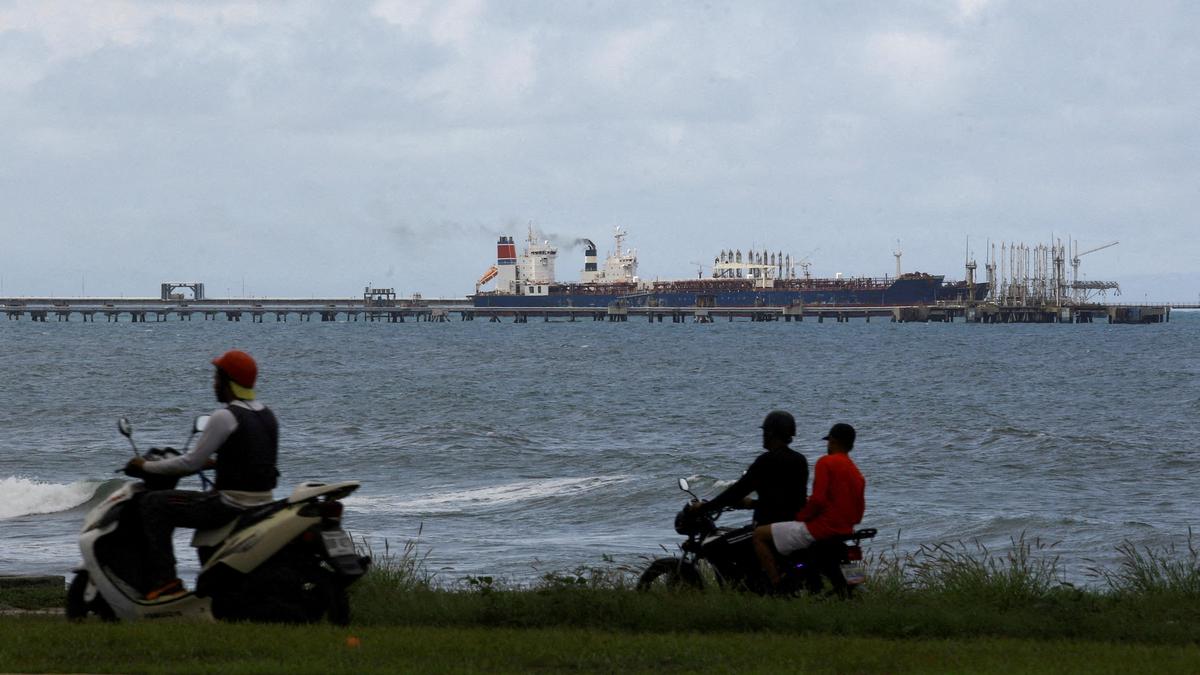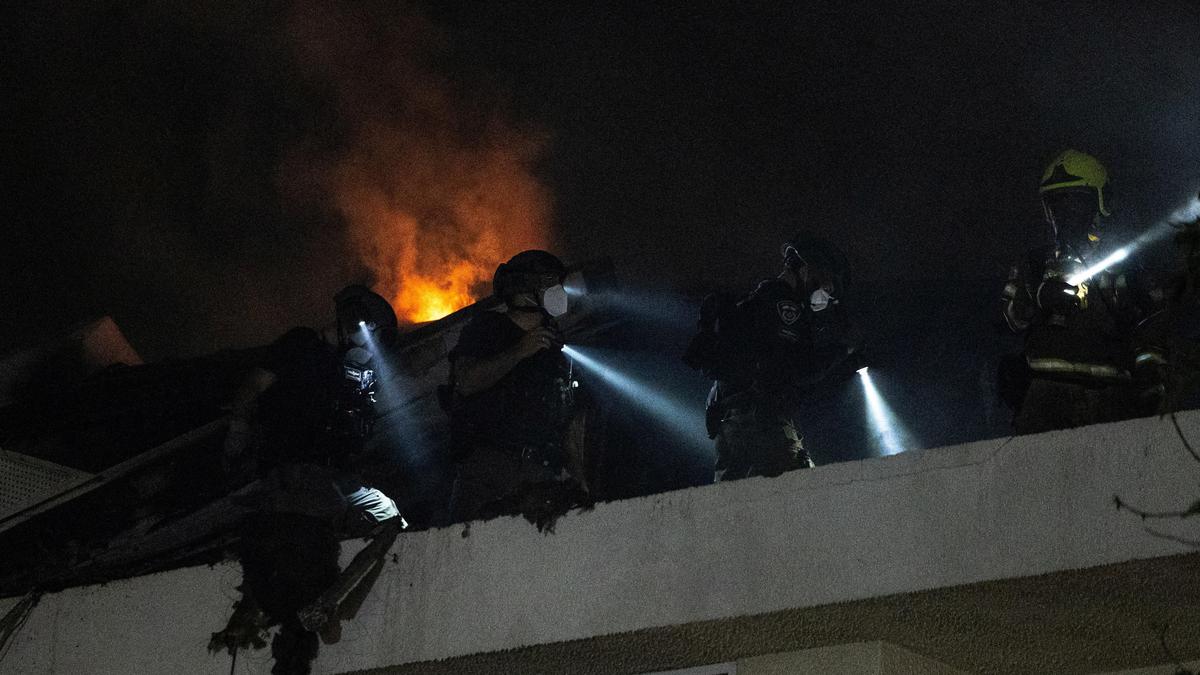
The global energy market is currently staring into a physical and economic abyss as the two-week-old war between the United States, Israel, and Iran moves from the desert to the derrick. Following a massive aerial bombardment on March 13, 2026, aimed at military targets on Kharg Island, the rhetorical safety catch has been flipped. Tehran has now explicitly threatened to reduce any U.S.-linked oil infrastructure in the region to a "pile of ashes." This isn't just about a spike at the pump. It is about the systematic dismantling of the logistical architecture that keeps the modern world fueled, with the Strait of Hormuz serving as the ultimate kill switch.
The Kharg Island Gambit
To understand the sudden escalation, you have to look at Kharg Island. It is the jugular of the Iranian economy, handling roughly 90% of the country’s crude exports. When President Donald Trump announced that U.S. forces had "obliterated" military targets on the island, he was careful to claim the actual oil facilities remained untouched. This is a classic "escalation ladder" maneuver: show the enemy you can touch their most precious asset without actually breaking it yet.
However, the Iranian response suggests they aren't interested in climbing that ladder. They want to knock it over. By threatening "U.S.-linked oil facilities," the Islamic Revolutionary Guard Corps (IRGC) is broadening the theater of war. They aren't just talking about American refineries; they are talking about the Gaza-style urban energy hubs in the UAE, the massive Ras Tanura facilities in Saudi Arabia, and the floating terminals that dot the Persian Gulf.
Why the Strait of Hormuz is the Ultimate Weapon
The math of this conflict is brutal. Approximately 20 million barrels of oil pass through the Strait of Hormuz every single day. That is 20% of the world’s daily consumption.
Unlike previous skirmishes, the 2026 conflict features a level of drone and missile saturation that renders traditional naval escorts nearly obsolete. The U.S. Fifth Fleet is facing a "swarm" problem. Iran has spent decades perfecting low-cost, high-impact asymmetric warfare. They don't need to win a naval battle; they just need to sink one tanker in the narrowest part of the channel or hit one pumping station in a neighboring country to send insurance premiums into the stratosphere.
When insurance companies refuse to cover tankers, the flow of oil stops just as effectively as if the water were physically blocked. We are already seeing this. Brent crude has surged 40% since the hostilities began on February 28. If the "ashes" threat is realized, analysts are no longer looking at $120 a barrel; they are looking at $200.
The Myth of Energy Independence
There is a persistent delusion in Western capitals that domestic production shields the United States from this chaos. It doesn't. Oil is a global fungible commodity. If the Persian Gulf goes dark, Asian buyers—specifically China, which is Iran's largest customer—will scramble for every available barrel in the Atlantic and North Sea. This triggers a global bidding war that hits every consumer from Berlin to Boston.
Furthermore, the technology of this war is exposing the fragility of the "smart" grid. Modern refineries and pipelines are managed by automated systems that are vulnerable to both physical strikes and cyber-incursions. A single well-placed missile on a cooling tower can take a refinery offline for months. These aren't just "attacks"; they are precision-targeted economic assassinations.
The Collateral of Neutrality
The most overlooked factor in this crisis is the position of the GCC states (Saudi Arabia, UAE, Qatar). For years, these nations have tried to pivot toward a post-oil economy while maintaining a delicate balance between Washington and Tehran. That balance has shattered.
By declaring that any country "cooperating" with the U.S. is a target, Iran is forcing a choice. If the U.S. uses regional bases to launch strikes, Iran considers the host nation a combatant. This is why we saw Qatar suspend LNG production and the UAE’s Ruwais refinery cease operations. They aren't just protecting their workers; they are trying to signal to Tehran that they aren't part of the fight. But in a conflict of this scale, there is no such thing as a neutral observer when your backyard is the world's gas station.
Beyond the Rhetoric
The hard truth is that neither side has a clear exit strategy. The U.S. is betting that economic strangulation and surgical strikes will force a new deal or a regime collapse. Iran is betting that the global pain of $10 per gallon gasoline will force the world to demand a U.S. retreat.
It is a game of chicken played with matches in a room full of gasoline fumes. The "pile of ashes" isn't just a threat; it's a potential reality for the global economy if the next 48 hours don't see a significant diplomatic backdown. Given the current posture in both Washington and Tehran, the market isn't just pricing in risk—it's pricing in a catastrophe.
Watch the tanker tracking data in the Strait of Hormuz over the next 24 hours. If the "trickle" of ships turns into a dead stop, the rhetorical war is over, and the global energy depression has begun.
Would you like me to analyze the specific vulnerabilities of the Ras Tanura refinery in the event of a drone swarm attack?