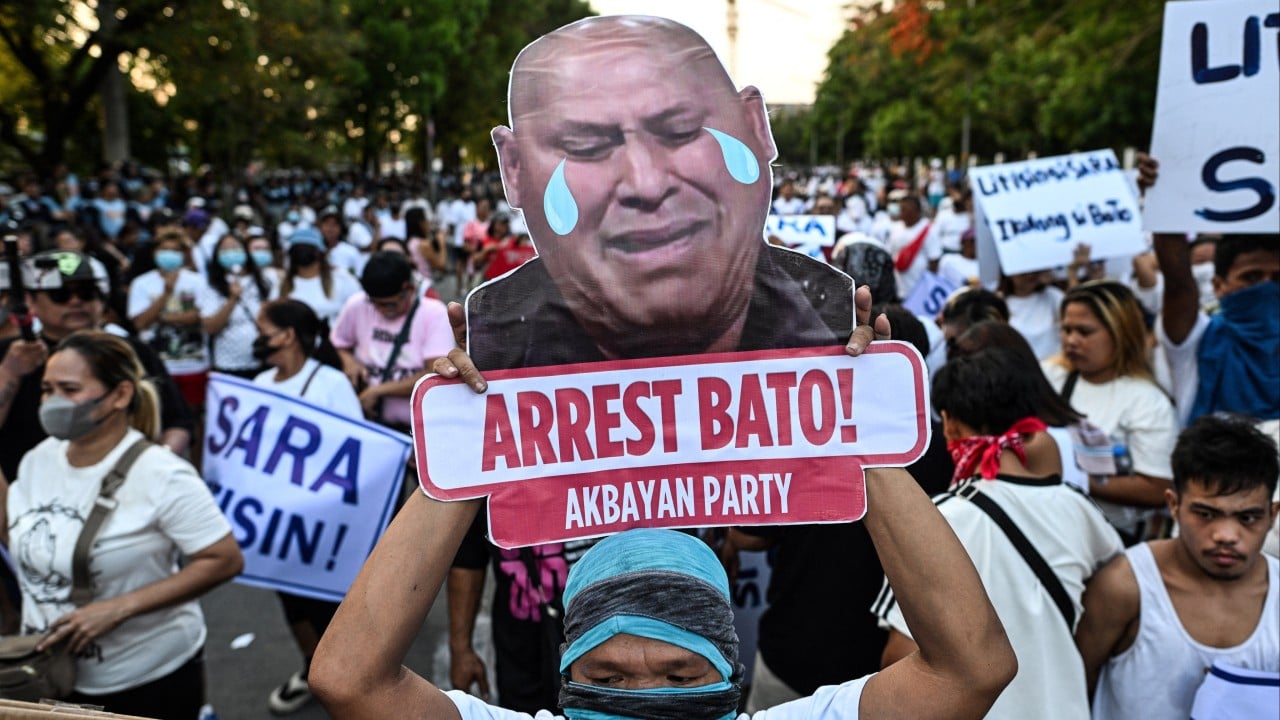
Manila has placed a 50-million-peso reward—roughly $786,000 to $787,000—for information leading to the capture of Senator Ronald "Bato" dela Rosa, declaring the fugitive lawmaker "armed and dangerous" after his arrest warrant from the International Criminal Court was unsealed. The bounty is not just a police manhunt. It is a high-stakes constitutional collision between executive enforcement, Senate sanctuary, and international justice.
When Interior Secretary Jonvic Remulla announced the reward alongside Philippine National Police leadership in late October 2026, he framed the move as an ultimatum to a cornered fugitive. Dela Rosa, who led the national police during the height of former President Rodrigo Duterte's bloody anti-drug campaign from 2016 to 2018, had been evading custody for months following the unsealing of his ICC warrant in May 2026. Duterte had already been arrested in March 2025 and flown to The Hague, where his trial is slated to begin on November 30, 2026.
Yet putting a price tag on a sitting senator's head exposes something far messier than a standard fugitive chase. It reveals how a foreign arrest warrant, a 2019 treaty withdrawal, and a fractured political establishment have collided inside Philippine institutions.
How a Secret Warrant Turned Into a Senate Standoff
Most wire reports treat the bounty as a straightforward next chapter after The Hague unsealed its warrant. That misses the institutional friction that made the reward possible in the first place.
Pre-Trial Chamber I of the ICC originally issued a confidential arrest warrant against Dela Rosa on November 6, 2025, charging him as an alleged indirect co-conspirator in murder counts tied to the drug war, including killings alleged between July 2016 and April 2018. When the ICC unsealed the warrant on May 11, 2026, the standoff shifted from quiet legal maneuvering to open institutional brinkmanship.
A foreign arrest warrant does not automatically function as a domestic Philippine court order, creating a legal gray zone that defense lawyers, senators, and executive officials have exploited from opposite sides.
For months, Dela Rosa oscillated between hiding, seeking judicial protection from the Supreme Court, and briefly surfacing inside the Senate. His reappearance at the Senate in May 2026 triggered dramatic scenes—armed personnel outside and inside the complex, building lockdowns, dueling accounts of warrants and subpoenas, and his eventual slip away from the Senate compound in mid-May.
That episode embarrassed the executive branch. Officials openly acknowledged how awkward it looked for a sitting senator to slip out of sight while claiming Senate protection and petitioning the courts. Once negotiations stalled and a one-week surrender window approached expiration, Remulla hardened the posture: no more gentle talk, a special task force under top police brass, and a hefty cash incentive funded through intelligence channels.
The Legal Fault Lines Behind the Cash Reward
Offering millions of pesos for an arrest looks decisive on a television broadcast. In a courtroom, it invites immediate constitutional pushback.
Dela Rosa's legal counsel wasted no time attacking the reward on two fronts: warrant authority and public spending rules. Their argument rests on a basic procedural question. Under Philippine law and internal police and interior department protocols, a local judge typically examines probable cause and issues a domestic arrest warrant before a suspect is formally placed on a wanted list with a public bounty.
Critics and defense lawyers point out that the Philippines withdrew from the Rome Statute effective March 17, 2019, and argue that no local trial court has adopted the ICC warrant or issued a domestic warrant of its own. From their perspective, using public money—especially intelligence funds—to chase down a citizen on the strength of a foreign tribunal's warrant stretches statutory appropriations rules and risks inflaming street-level vigilante impulses.
What Executive Officials Are Betting On
Government officials see the legal objection differently. Justice leadership and interior officials have argued that intelligence funds can cover confidential operations and information-gathering aimed at locating a fugitive, and they have maintained that the authorities are acting within legal bounds while pursuing accountability for drug war killings.
Even Supreme Court filings in May 2026 underscored how narrow Dela Rosa's legal shield has become. Without an active temporary restraining order or injunctive writ halting his arrest, the senator has had to rely on political alliances, evasion, and procedural objections rather than a court injunction blocking law enforcement.
| Contested Issue | Government Position | Defense and Critics' Position |
|---|---|---|
| Warrant Basis | ICC warrant is valid and enforceable through proper channels and law enforcement action. | No domestic arrest warrant from a Philippine judge exists after the 2019 ICC withdrawal. |
| Bounty Funding | Intelligence and operational funds legally support tracking a fugitive and gathering leads. | Disbursing public or intelligence funds without a local warrant violates budget and audit rules. |
| Security Risk | Labeling him armed and dangerous and setting a reward pressures him to surrender peacefully. | A massive bounty and "armed and dangerous" tag endanger his life and invite vigilantism. |
Why the Numbers and Politics Matter So Much
To understand why this story refuses to fade, look at the human and political stakes behind the headline figure.
Official police tallies from the anti-drug campaign put deaths at more than 6,000 during Duterte's presidency, while human rights groups place the toll far higher—between 12,000 and 30,000. For families of victims, a public bounty against one of the campaign's chief architects symbolizes long-delayed reckoning. Remulla explicitly invoked the victims in defending the crackdown on Dela Rosa, arguing that people killed during the drug war never received their day in court.
At the same time, Dela Rosa is not a minor political figure. He won re-election to the Senate in May 2025 with more than 20.7 million votes, placing third nationwide. That massive vote total shows that Duterte-aligned figures still command deep loyalty among millions of Filipinos, even as rival political camps, impeachment battles, and international prosecutions reshape the balance of power in Manila.
The Risk of Escalation Nobody Wants to Admit
Here is the uncomfortable reality that neither side likes to spell out plainly. Offering 50 million pesos for a high-profile former police general and sitting senator raises the stakes of any encounter.
Officials say they want a peaceful surrender and have warned coddlers against harboring him. Dela Rosa's camp counters that calling him "armed and dangerous" while dangling a life-changing sum of money creates a volatile trap. A botched raid, a misidentified tip, or a confrontation involving armed loyalists could turn a legal standoff into a bloodier crisis overnight.
Watch how the Supreme Court handles pending pleas, how Senate leadership navigates its own institutional authority over an absent member, and whether the manhunt ends in a quiet surrender or a forced capture before The Hague proceedings move forward.