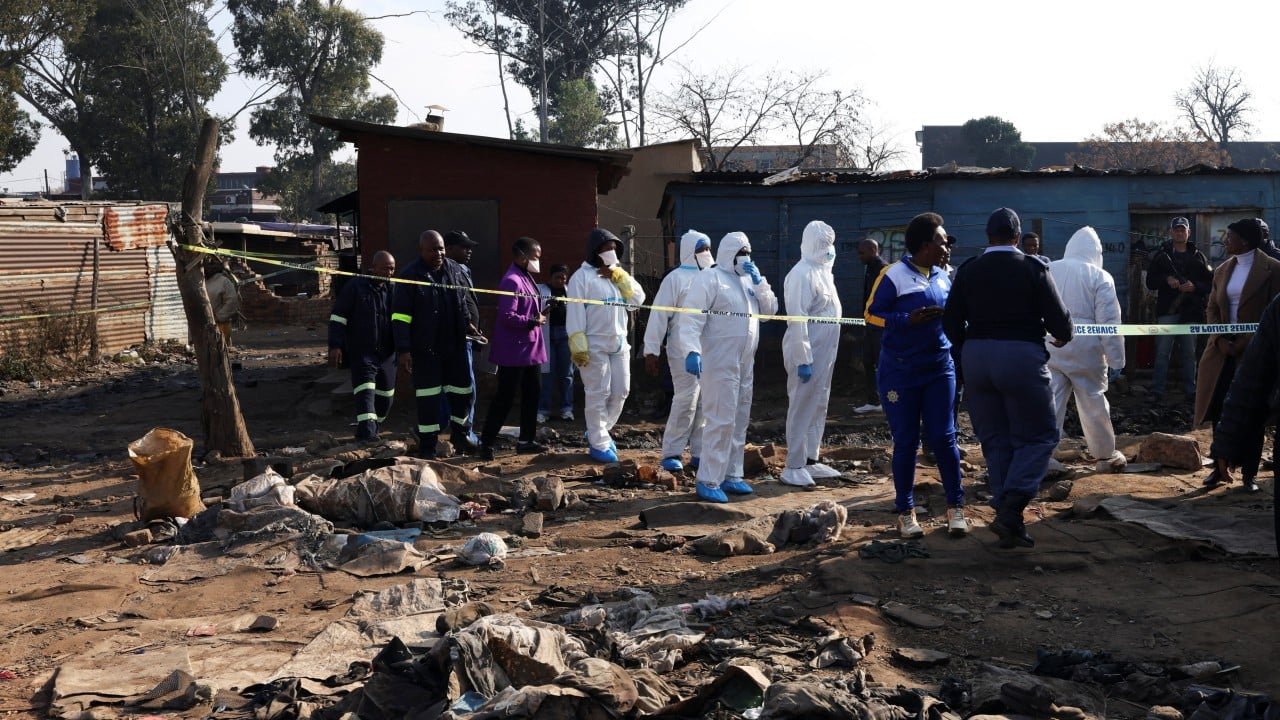
A white Toyota Quantum pulls up near a petrol station in Cleveland, an eastern suburb of Johannesburg. It's just after 11 p.m. on a Tuesday night. More than ten heavily armed men step out of the minibus. They don't hesitate. They slip into the Jumpers informal settlement through its two main entrances, effectively cutting off any easy escape routes for the people inside.
What followed was a systematic, ruthless execution. The gunmen moved from shack to shack, firing indiscriminately into the cramped residential structures and public pathways. By the time the vehicle sped away into the midnight darkness, eleven people lay dead among the makeshift homes. A twelfth victim died shortly after reaching the hospital. Nine others are currently fighting for their lives with severe gunshot wounds.
This isn't just another tragic headline. It's a flashing red light signaling a catastrophic shift in how organized crime operates in South Africa. While regional police commissioners scramble to assemble task teams, the broader public is left asking how a small army can pull off a coordinated military-style ambush in a major economic hub without a single suspect being detained.
Inside the Anatomy of the Jumpers Settlement Ambush
To understand how an attack of this scale happens, you have to understand the geography of an informal settlement. These are unplanned residential areas, tightly packed with structures built from timber, corrugated iron, and plastic sheetings. The alleys are narrow. There are no streetlights. When a heavily armed hit squad enters from both main access points simultaneously, the neighborhood becomes an instant trap.
The South African Police Service (SAPS) confirmed that the attackers targeted multiple locations within the settlement during the single raid. This wasn't a stray argument that escalated. It was a planned, multi-pronged assault designed to maximize casualties and send a brutal message.
Jumpers Settlement Casualty Breakdown:
• Total Dead: 12 (9 men, 3 women)
• Total Wounded: 9 currently hospitalized
• Attackers Involved: More than 10 suspects
• Access Points Targeted: 2 distinct entrances
Emergency medical responders arrived to find absolute chaos, treating survivors scattered across dark corridors between the shacks. The victims weren't gang members caught in a shootout; they were residents caught in a crossfire of heavy caliber rifles.
The Illicit Underground Economy Driving Urban Warfare
SAPS provincial commissioner Tommy Mthombeni has been quick to call the attack barbaric while urging calm, refusing to officially tie the killings to any specific syndicate until the investigation concludes. Local community leaders and neighborhood councilors aren't being quite so diplomatic.
The Cleveland suburb sits right on top of Johannesburg's historical gold reserves. Today, those old, abandoned corporate mine shafts are the focal point of a massive, multi-million dollar illicit gold trade run by "zama zamas"—illegal miners who operate in highly organized, heavily armed syndicates.
These groups don't just dig for gold; they run sophisticated parallel economies inside the informal settlements. They levy taxes, control local businesses, and guard their territories with military-grade weaponry. Just three weeks before this mass shooting, police swept through this exact area, arresting three people and confiscating a stash of ammunition meant for AK-47 rifles. Obviously, that raid barely scratched the surface.
The violence often stems from fierce turf wars over access to specific shafts or tension between different migrant communities living within the shacks. When one syndicate wants to assert dominance or retaliate for a stolen shipment, they don't target individuals. They target the entire neighborhood where the rival group lives to completely break their operational base.
A Systemic Failure Beyond a Simple Police Hunt
SAPS has deployed provincial and district detectives, crime intelligence units, and forensic experts to hunt down the white minibus and its occupants. But let's be honest: a manhunt after the fact is a band-aid on a severed artery.
South Africa already grapples with an average of 60 murders every single day, making its homicide rate one of the highest on earth. Mass shootings involving multiple gunmen are no longer rare anomalies. Just months ago, back-to-back December massacres left over 20 people dead in similar coordinated hits.
The government tried to intervene by deploying the South African National Defence Force (SANDF) to high-risk mining zones to curb this organized crime surge. That deployment was a direct admission that standard policing units are completely outgunned and under-resourced. When an entire squad of killers can drive a prominent model of public transport into a major city zone, execute a dozen people, and drive away clean, the structural cracks in the justice system are fully exposed.
Real Steps Needed to Secure Vulnerable Communities
Chasing a specific Toyota Quantum across Gauteng province won't fix the underlying vulnerability of places like the Jumpers settlement. If authorities want to prevent the next mass casualty event, the strategy has to shift from reactive policing to structural disruption.
First, informal settlements require immediate environmental design interventions. High-density, solar-powered area lighting and the creation of clear, wide access paths are essential. Dark, labyrinthine alleyways completely paralyze local policing efforts while giving criminal syndicates total tactical control over the space.
Second, the state must aggressively choke the supply chains of the illicit mining economy. These syndicates don't survive on the gold dug up by individual miners; they thrive because international smuggling networks buy the product. Targeting the scrap metal yards, illegal gold refineries, and corrupt logistics companies that launder this gold does far more damage to a gang than a standard neighborhood police raid.
Finally, intelligence-led, permanent policing hubs need to be established inside these high-risk areas. Temporary sweeps don't work. The moment the police vehicles leave, the syndicates move right back in. Only a continuous, trusted security presence can give residents the confidence to report illegal weapons caches before those guns are loaded and used in the middle of the night.