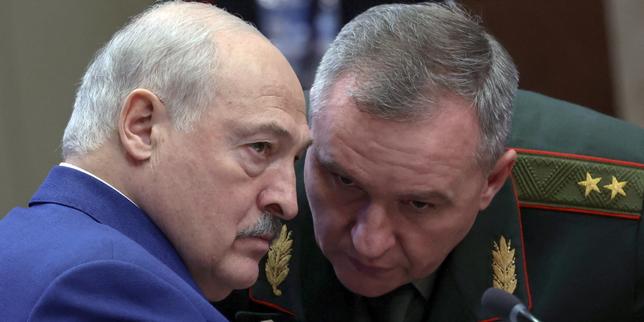
Russia and Belarus have launched coordinated military exercises involving tactical nuclear weapon readiness, marking a sharp escalation in regional saber-rattling. While state media frames these maneuvers as a standard response to "Western provocation," the reality is a calculated display of nuclear blackmail designed to fracture European political resolve. By integrating Belarusian forces directly into the deployment pipeline, the Kremlin is establishing a permanent, forward-deployed nuclear threat on NATO's eastern flank.
The Geography of intimidation
This is not a drill about defense. It is an exercise in coercive diplomacy. Tactical nuclear weapons, which are smaller warheads designed for battlefield use rather than destroying entire cities, have been moved into Belarus over the past year. The current exercises are meant to test the logistical chain required to actually use them.
Moscow wants the West to watch this happen. The choreography involves transport units moving mock warheads from centralized storage facilities to airfield personnel, who then practice attaching them to Iskander short-range missiles and Su-25 attack aircraft.
By pulling Belarus into the loop, Vladimir Putin achieves two goals at once. First, he physically shortens the flight time of a potential missile strike against Poland, Lithuania, or Latvia. Second, he cements Alexander Lukashenko’s regime into a position of total dependency. Once a nation allows foreign nuclear warheads onto its soil, it loses the ability to say no to the power holding the launch codes.
Shifting the Red Lines
For the past two years, the Kremlin has drawn line after line in the sand regarding Western military aid to Ukraine. Artillery, tanks, long-range missiles, and fighter jets were all declared absolute boundaries. Each time those boundaries were crossed, Moscow threatened unspecified consequences.
The current maneuvers indicate that Russia realizes its verbal warnings have lost their sting.
Western capitals have grown increasingly comfortable with ignoring Moscow’s rhetoric. To regain leverage, Russia is moving from spoken threats to physical demonstrations. Seeing a missile crew loading a physical weapon, even a training dummy, creates a different kind of psychological pressure on Western policymakers who must approve the next phases of military support.
The timing is far from accidental. European nations are currently debating how deeply to involve themselves in the long-term defense of Ukraine, with some leaders floating the possibility of training missions on Ukrainian soil. These nuclear drills are a direct vote of intimidation aimed at those specific capitals. The message is simple: back down, or risk a theater-wide escalation that nobody can control.
The Tactical Reality vs. The Strategic Illusion
It is easy to misinterpret what tactical nuclear weapons actually do on a modern battlefield. They are not magic wands that instantly win a war. A single tactical nuclear strike might destroy a specific military base or clear a pocket of resistance, but it does not automatically collapse an enemy nation's will to fight. In fact, it would likely do the opposite, solidifying global opposition and triggering an unprecedented conventional military response from the international community.
The Kremlin understands this perfectly. Therefore, the weapons are far more valuable as a political tool sitting in a silo or on an airfield than they would be if they were actually detonated.
+--------------------------+-------------------------------------------------+
| Weapon Type              | Operational Purpose in Current Context          |
+--------------------------+-------------------------------------------------+
| Iskander-M Missiles      | Low-altitude, high-speed regional intimidation  |
| Su-25 Attack Jets        | Localized battlefield deployment capabilities   |
| Strategic Interceptors   | Background deterrence against global powers     |
+--------------------------+-------------------------------------------------+
The real risk is not a sudden, unprovoked nuclear strike out of nowhere. The danger lies in the breakdown of communication during a crisis. When live nuclear forces are moving around near a tense border, a single radar malfunction, a misidentified training flight, or an overzealous local commander can trigger a chain reaction. History shows that accidents, not grand strategies, are the most frequent catalysts for catastrophe.
The Belarusian Subservience
Alexander Lukashenko has spent decades trying to balance his reliance on Russian money with a desire to maintain a semblance of sovereignty. That balancing act is over. By agreeing to host these weapons and participate in these drills, Minsk has effectively signed away its independent foreign policy.
Belarusian troops are practicing maneuvers where they do not hold the final authority. The Russian military maintains strict custody of the warheads themselves. Lukashenko may boast about having his finger on the trigger, but the Kremlin holds the safety catch.
This creates a complicated dilemma for NATO planners. In the event of a wider conflict, can Belarus be treated as an independent actor, or must it be viewed simply as an extension of the Russian military district? The current drills are designed to blur that line completely, forcing Western strategists to spread their defensive resources across a much wider front.
Fracturing Western Consensus
The ultimate target of this exercise is the unity of the NATO alliance. The Kremlin knows it cannot match the combined economic or conventional military power of the West. Therefore, it must rely on asymmetric methods to exploit political divisions within democratic societies.
Nuclear anxiety is a powerful political wedge. By elevating the visibility of its nuclear forces, Moscow hopes to energize anti-war factions and cautious politicians in Western Europe. The goal is to make the cost of supporting Ukraine look so terrifyingly high that democratic publics demand their governments scale back their involvement.
This strategy relies entirely on creating fear. When a government adjusts its foreign policy out of fear of a nuclear shadow, the blackmail succeeds without a single shot being fired. The coming months will test whether Western leadership can look past the theatrical logistics of these exercises and maintain a coherent, unified strategy, or if the Kremlin’s old-school intimidation tactics still have the power to dictate the terms of European security.