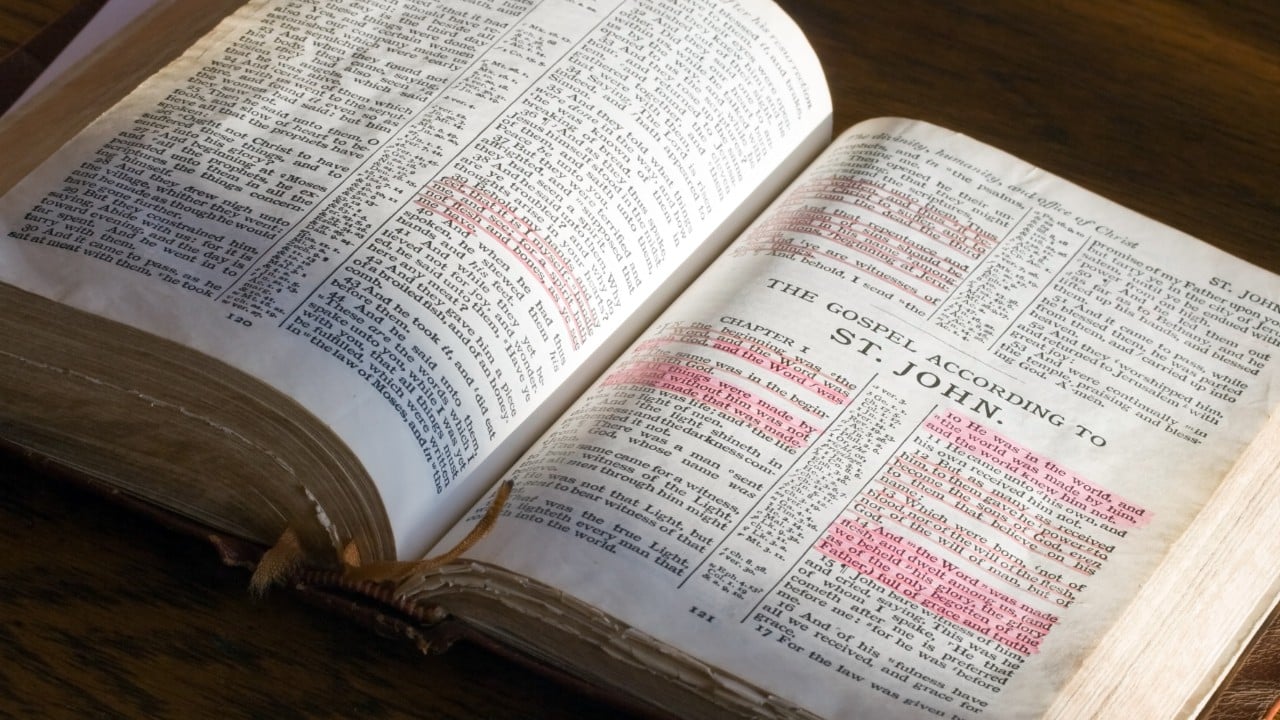
The Texas State Board of Education just rewrote the rules of American public education. In a historic vote, the Republican-dominated panel approved a mandatory K-12 reading list that forces more than 5 million public school students to read specific Bible passages. This is not the optional, incentive-backed curriculum debated in years past. It is an absolute requirement, set to take effect for elementary students in 2030, before expanding to older grades. For the first time since the Supreme Court struck down state-mandated school prayer in 1963, a major state is legally cementing scripture into the daily literacy curriculum.
To understand how this happened, you have to look past the standard political theater. This was not a sudden burst of religious fervor, but the culmination of a decade-long legal and bureaucratic strategy designed to dismantle the traditional wall between church and state.
The Quiet Redesign of Texas Literacy
The mandate did not appear out of thin air. It grew from a seemingly mundane 2023 state law that ordered education officials to establish a standardized, statewide reading list. Local districts traditionally decided which books their students read. By shifting that power to the state board, conservative lawmakers created a centralized bottleneck.
Under the newly approved framework, teachers still retain the technical right to assign outside books. However, they must do so on top of the state-mandated selections. The required list pairs classic literature like Charlotte’s Web and Great Expectations with specific biblical texts. First graders will read basic biblical stories. Fourth graders will advance to New Testament passages detailing the life and teachings of Jesus. By the time those students reach middle and high school, they will be tested on the Sermon on the Mount, the Book of Job, and the Book of Psalms.
This structural shift represents a massive centralization of educational authority. Texas has effectively stripped local school boards of their autonomy over language arts instruction, using a literacy mandate to accomplish what traditional religious legislation could not.
Funding Hooks and Legal Shields
The funding mechanism that paved the way for this mandate traces back to previous legislative sessions. Texas previously introduced an optional, Bible-infused elementary program known as the Bluebonnet Learning curriculum. To secure widespread adoption, the state offered school districts financial incentives. Schools that adopted the scripture-heavy materials received an extra $40 per student annually, plus additional funds to cover printing costs.
For cash-strapped rural districts, that money was impossible to turn down.
While civil liberties groups prepared lawsuits, the legal ground beneath them shifted. Proponents of the new reading list are relying heavily on recent shifts within the federal judiciary. In 2022, the U.S. Supreme Court explicitly abandoned the decades-old Lemon Test, which judges had long used to determine whether a government action unconstitutionally advanced a specific religion. Without that legal benchmark, state lawyers have a much easier path to defend religious curriculum in court. They argue that the Bible is being taught strictly for its historical and cultural influence on Western civilization.
The Disappearance of Global History
The strategy extends far beyond the English department. Simultaneously, the state board has moved to rewrite the K-8 social studies standards. The proposed changes narrow the scope of historical instruction, stripping away significant portions of world history to concentrate almost exclusively on U.S. and Texas history.
The new social studies framework explicitly highlights Texas as a historically Christian state. Critics argue that by removing the broader global context, the curriculum presents a highly selective narrative. Islam, Buddhism, and Hinduism are either minimized or framed through a narrow lens of external conflict, while Protestant Christianity is elevated as the primary driver of human progress.
This creates a serious dilemma for non-Christian families. During the public testimony phase, religious minorities expressed deep concern about how their children would fare under the new system. A public school classroom is not a Sunday school. When a state-sanctioned curriculum presents specific religious tenets as foundational truths, it isolates students who do not share those beliefs.
The National Ripple Effect
What happens in Texas rarely stays in Texas. The state educates roughly one out of every ten public school students in the United States. Because of its massive market share, the textbook publishing industry routinely tailors its national offerings to match the guidelines set by the Texas State Board of Education.
If publishers alter their textbooks to align with the new Texas standards, those Bible-infused materials will inevitably find their way into classrooms across the country, even in states that have actively rejected similar mandates. Oklahoma and Louisiana have already attempted their own classroom religious initiatives, including mandates to display the Ten Commandments. Texas, however, has built a much more sophisticated bureaucratic apparatus by embedding these requirements directly into the core literacy test requirements.
The Burden on the Classroom
The immediate friction will be felt by the teachers. Educators are now caught between strict state mandates and the immediate realities of diverse classrooms. They face the prospect of leading discussions on complex theological texts, such as the New Testament or the Old Testament prophets, without formal theological training or clear guidelines on how to avoid proselytizing.
The state has promised to issue instructional standards and teacher training materials before the 2030 rollout. Yet, the line between academic study and religious indoctrination is notoriously thin. A teacher explaining the literary structure of a psalm is one thing; a teacher explaining the theological necessity of the resurrection to a room of nine-year-olds is entirely another.
By making these texts mandatory, the state has guaranteed a wave of local challenges, parental complaints, and teacher resignations. The policy forces a highly polarized national debate directly onto the desks of elementary school children, turning local classrooms into the ultimate battleground for America's cultural identity.