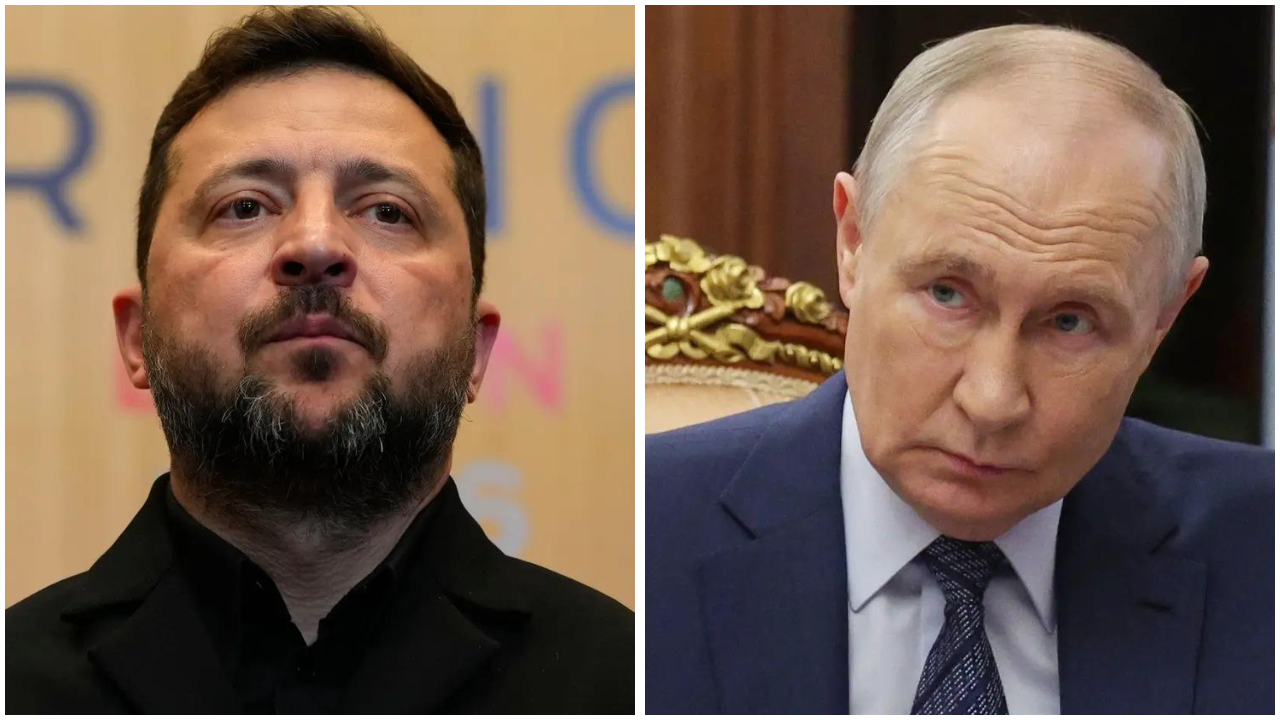
Diplomatic invitations issued from a position of entrenched military occupation are rarely about diplomacy. When Moscow signals that Ukrainian leadership is welcome to visit the Russian capital for serious dialogue, it is not offering a white flag or a genuine compromise. It is deploying a calculated geopolitical maneuver. The overture is designed to shift the blame for continued hostilities onto Kyiv while testing the unity of Western resolve. By framing itself as the party willing to talk, Russia attempts to force a choice between an unconditional surrender masked as negotiation or the burden of perpetuating a brutal war of attrition.
Understanding this tactic requires stripping away the veneer of diplomatic goodwill. For years, the Kremlin has utilized a dual-track strategy of intense military pressure coupled with public declarations of readiness for peace. These offers, however, invariably contain non-negotiable preconditions that would require Ukraine to cede vast swaths of its territory and permanently abandon its sovereign foreign policy goals. It is an invitation to capitulate, issued in the language of reconciliation.
The Anatomy of an Empty Overture
The mechanics of these public invitations follow a predictable pattern. A high-ranking Russian official states that the door to negotiations remains open, provided that Kyiv recognizes the new territorial realities. This phrasing is critical. It demands that before any formal talks even begin, Ukraine must concede the very lands it is actively fighting to liberate.
This is a structural trap. If Ukraine accepts the invitation under these terms, it legitimizes the occupation and guts its own constitutional integrity. If it rejects the offer, Moscow uses the refusal to convince non-Western nations—particularly in the Global South—that Ukraine and its backers are the true obstacles to peace. It is a communication strategy disguised as statecraft.
Historical precedent demonstrates that Moscow views negotiations not as an alternative to conflict, but as an extension of it. During the early stages of the full-scale invasion, talks held in Belarus and Turkey yielded no breakthrough because the fundamental premise of the Russian position was the erosion of Ukrainian sovereignty. The current "open invitation" is a continuation of that exact policy, updated for a prolonged war of attrition.
The Audience Beyond the West
While Western capitals dismiss these invitations as transparent propaganda, the primary audience lies elsewhere. Moscow is playing to a global gallery that is increasingly weary of the economic fallout from the war, including fluctuating energy prices and food insecurity.
- The Global South: Countries in Africa, Asia, and Latin America are repeatedly told that Russia wants to talk, but Ukraine refuses. This narrative complicates Western efforts to maintain a broad international coalition against Moscow.
- Domestic Consumption: Inside Russia, the state media ecosystem uses these offers to reassure the public that the government is acting reasonably, framing the ongoing conflict as a defensive necessity forced upon them by Western stubbornness.
- Western Factions: The invitations feed into political debates within Europe and the United States, providing ammunition to factions that argue against continued military aid on the grounds that a diplomatic solution is readily available if Kyiv would only cooperate.
The Asymmetry of Leverage and Loss
A genuine negotiation requires a baseline of shared facts and a mutual willingness to make concessions. Currently, neither exists. The Kremlin operates on the assumption that time is on its side, betting that Western political changes will eventually choke off the supply of ammunition and funding to Ukraine.
The battlefield remains the ultimate arbiter of these diplomatic maneuvers. Every time Russia offers an olive branch via a press conference, it accompanies the gesture with missile strikes on Ukrainian infrastructure. This juxtaposition reveals the true nature of the strategy. The goal is to break the psychological resilience of the Ukrainian population by pairing physical destruction with the illusion of an easy way out.
+-------------------------------------------------------+
|                THE DIPLOMATIC TRAP                    |
+-------------------------------------------------------+
|  Moscow's Offer: "Come to Moscow for serious talks"   |
|  Hidden Condition: Pre-recognize territorial losses   |
+-------------------------------------------------------+
|                        |                              |
|  If Kyiv Accepts:      |  If Kyiv Rejects:            |
|  - Legitimizes losses  |  - Framed as warmonger       |
|  - Weakens alliances   |  - Splinters global support  |
+-------------------------------------------------------+
For Kyiv, entering into talks without ironclad security guarantees would be catastrophic. A premature ceasefire would simply allow Russian forces to reconstitute their depleted units, fix logistical vulnerabilities, and launch a more effective offensive in the future. The memory of the Minsk agreements, which failed to prevent the 2022 invasion, looms large over every decision made in the Ukrainian presidential office.
Why a Breakthrough Remains Impossible Under Current Terms
The fundamental issue is that the core objectives of both nations are mutually exclusive. Ukraine is fighting for its survival as an independent, democratic state within its internationally recognized borders. The current Russian leadership views Ukraine as an artificial entity that belongs inherently within a Russian sphere of influence. No amount of diplomatic seating arrangements can bridge that existential divide.
Any serious analysis must confront the reality that these public invitations are a substitute for, rather than a pathway to, actual diplomacy. Backchannel communication channels do exist and are used for specific, transactional purposes like prisoner exchanges or the Black Sea grain initiatives of the past. Those successful negotiations happened precisely because they were quiet, specific, and free from the grandstanding of open invitations to capitals.
The public theater of inviting a wartime leader to the aggressor's capital is a calculated performance. It allows the Kremlin to occupy the moral high ground in international forums while maintaining its aggressive posture on the ground. It exploits the natural human desire for an end to violence by presenting a false choice between endless war and immediate, submissive peace.
The path to actual negotiation will not begin with an invitation to Moscow. It will begin only when the strategic calculus changes on the battlefield to the point where a continuation of the war poses a greater risk to the regime in power than a genuine compromise. Until that inflection point is reached, every open door offered by the Kremlin is merely a trapdoor designed to swallow Ukrainian sovereignty whole.