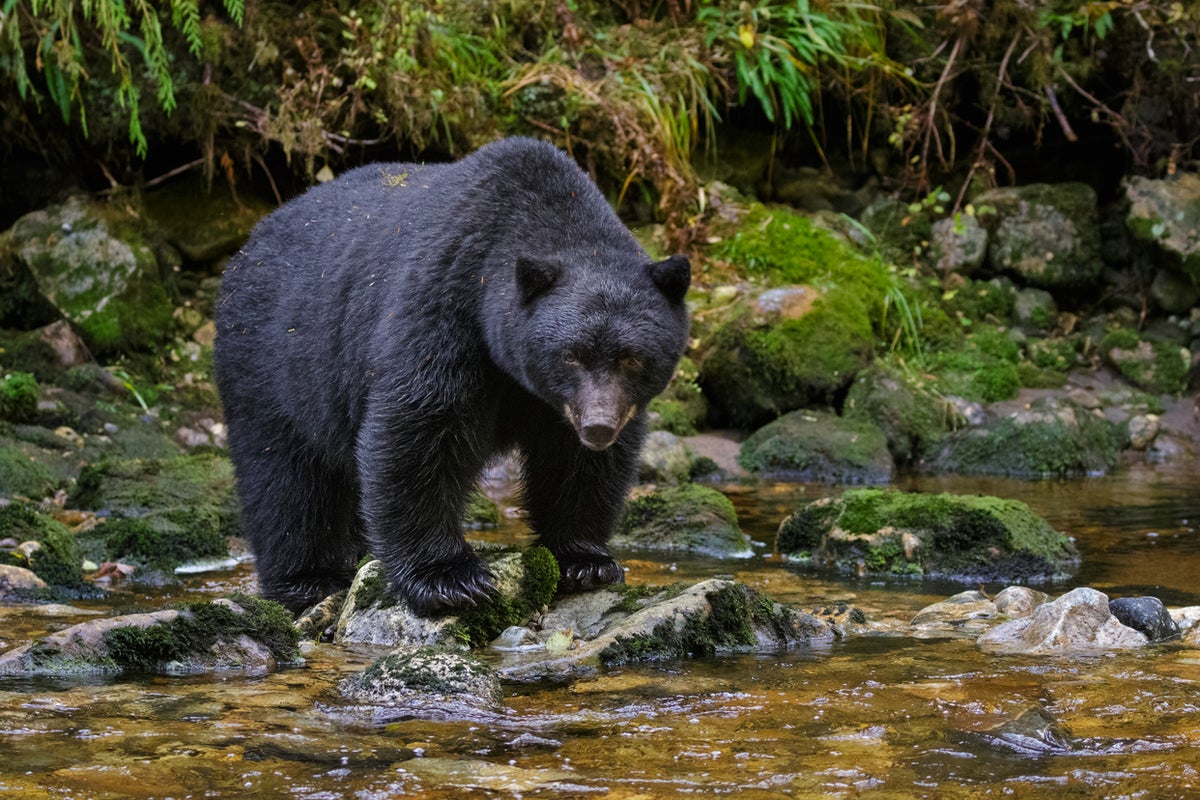
A California couple recently survived a terrifying wildlife encounter, fending off a charging black bear using only a water bottle and a small hatchet. While local media outlets rushed to frame the incident as a sensational tale of human grit, the story uncovers a much deeper crisis developing across the American West. This survival story is not an isolated freak accident. It is a predictable symptom of a rapidly shifting ecosystem where human development and wildlife habitats are colliding at an unprecedented rate.
The mechanics of the attack reveal a stark shift in animal behavior that wildlife biologists have been tracking for over a decade.
The Illusion of the Docile Black Bear
For generations, outdoor enthusiasts treated the American black bear as a predictable, easily spooked scavenger. Hikers were told to make noise, raise their arms, and the animal would run. That playbook is failing.
When the California couple faced the charging animal, their defensive actions broke every standard rule of wildlife safety. Throwing a water bottle and swinging a blunt tool are desperate measures, not recommended protocols. Yet, the aggression they faced suggests the animal had already bypassed its natural fear of humans.
Wildlife management data shows a steady increase in food conditioning, a psychological shift where bears associate humans directly with high-calorie meals. A standard campground trash can contains more dense caloric value than a bear can forage in a week. Once an animal makes that connection, its behavioral matrix alters permanently.
The Caloric Trap
The problem begins with human encroachment into wilderness corridors. As housing developments push further into the foothills of the Sierra Nevada and other mountain ranges, the physical boundaries between suburban properties and wilderness dissolve.
Bears are driven by an intense biological need to consume up to 20,000 calories a day before winter hibernation. When natural forage like berries and acorns dries up due to seasonal shifts or drought, the manicured lawns, fruit trees, and poorly secured garbage bins of suburban neighborhoods become irresistible targets. This is not a case of animals invading human space, but rather human infrastructure baiting wildlife into lethal proximity.
Why Standard Deterrents Are Failing
The public relies heavily on tools like bear spray and noise makers, assuming these items guarantee safety. The reality on the ground is far more complicated.
Bear spray is highly effective, but only under perfect conditions. It requires the user to remain calm, calculate wind direction, and deploy the canister within a specific distance, usually under thirty feet. In a sudden, high-velocity ambush, most people cannot unholster the canister in time.
The Limits of Human Reflexes
A charging black bear can reach speeds of thirty miles per hour. In dense brush, an encounter happens in seconds.
Typical Reaction Window in an Ambush:
0.0 Seconds: Animal detected in brush
1.5 Seconds: Animal closes 50-foot gap
2.5 Seconds: Contact made
If an individual is not already holding a deterrent in their hand with the safety clip removed, the tool is useless. This explains why people resort to improvised weapons like rocks, sticks, or, in the case of the California couple, a hatchet. They use whatever is within arm's reach because the environment offers no time for preparation.
The Problem with Relocation Policies
When a high-profile attack occurs, public pressure often forces wildlife agencies to relocate the animal. State agencies face immense scrutiny from both public safety advocates and animal welfare groups. This creates a difficult balancing act that rarely solves the underlying issue.
Relocation is largely an expensive illusion. Bears possess extraordinary navigational abilities, often traveling hundreds of miles through unfamiliar terrain to return to their original home range. If they do stay in the new location, they frequently clash with the bears already occupying that territory, leading to violent territorial disputes or pushing the weaker animal back toward human settlements.
The Two Strike Rule
Most western states operate under strict wildlife policies regarding habituated animals. An animal that shows curiosity toward human camps might get tagged and moved once. An animal that displays direct aggression or enters an occupied dwelling is almost always euthanized.
This reality shifts the moral weight of the conversation. The survival of the California couple is a relief, but the sequence of events that put them in that position began months, perhaps years earlier, when a community failed to secure its waste. Every unfastened dumpster lid is essentially a death warrant for a local bear.
Rethinking Infrastructure in the Wilderness Interface
Solving this crisis requires moving past the sensationalism of survival stories and focusing on systemic infrastructure changes. True safety does not come from carrying better weapons into the woods; it comes from eliminating the attractants that draw apex predators into human spaces in the first place.
- Mandatory Bear-Proof Housing Codes: Municipalities in high-risk zones must mandate internal garbage storage and certified bear-proof exterior bins, enforced by heavy fines.
- Green Corridor Planning: Urban development must include wide, contiguous tracts of land that allow wildlife to migrate through valleys without entering residential zones.
- Public Education Overhauls: Tourism boards and park services need to replace passive signage with active, mandatory safety briefings for visitors entering high-density bear habitats.
The encounter in California proved that human resourcefulness can win out in a desperate moment. Relying on luck, a water bottle, and a hatchet is a terrible strategy for a region experiencing a fundamental breakdown in coexistence.