Four days without food. Four days without water. Four days trapped inside a damaged Flatbush apartment while heavy machinery tore through the rubble next door.
Most people reading about the Isaac cat rescue after the Brooklyn building collapse treat it like a simple feel-good miracle. A terrified pet vanishes during a tragedy, emergency crews dig through the chaos, and a 13-year-old girl gets her best friend back. That version of the story feels warm, neat, and easy to digest.
It's also incomplete.
If you've ever worked around disaster response or animal rescue, you know that getting a frightened cat out of a condemned building isn't luck. It's a slow, high-stakes collision of structural engineering rules, feline survival instincts, and neighborhood persistence. When the building collapsed in Flatbush, Brooklyn, around 4 p.m. on Wednesday, November 11, 2026, eight people lost their lives—including two children, two construction workers, and four other adults. Four firefighters and 14 civilians suffered injuries. Amid that immediate human devastation, 13-year-old Zariah Coleman rushed home to the neighboring damaged building, tried to duck under the police tape, and realized she couldn't reach her cat.
What happened over the next 96 hours reveals how municipal agencies and local rescuers actually operate when a pet is trapped behind a red-tagged perimeter.
Why Initial Sweeps Missed Isaac Inside the Damaged Apartment
First responders have one primary mission during the first 48 hours of a structural collapse: save human lives. That's non-negotiable.
When emergency crews initially entered the damaged neighboring building where Zariah Coleman lived, they looked for Isaac. They didn't find him. To an outsider, that sounds like someone didn't look hard enough. Zariah herself told reporters at a Friday news conference that while workers said they checked the house, she didn't think they truly found where he would go.
She was right about why he stayed hidden.
Cats don't respond to emergencies the way dogs do. A dog might bark at the sound of heavy boots or run toward a stranger's flashlight. A terrified cat does the exact opposite. Under extreme acoustic stress—think collapsing concrete, sirens, and heavy excavation equipment operating right outside—a cat's sympathetic nervous system triggers a total freeze response. They wedge themselves into the smallest, darkest, tightest enclosure available and refuse to make a sound.
"I just really hope they come and get our cat. He's hiding from them, and I think he's scared." — Zariah Coleman, speaking at a news conference following the collapse
When rescuers finally got inside on Sunday, November 15, they didn't find Isaac sitting on the sofa. According to The Associated Press, they heard a faint meow and discovered him tucked inside a cabinet beneath the kitchen sink.
Think about that spot for a second. A lower kitchen cabinet is dark, enclosed on all sides, and muffled from outside vibration. First responders sweeping a damaged apartment for life safety hazards check rooms, beds, and obvious floor spaces. They aren't spending twenty minutes sitting silently on a kitchen floor waiting for a cat to trust the air enough to vocalize. Unless you understand feline fear behavior, you walk right past a closed cabinet door and assume the apartment is empty.
How Flatbush Cats and City Agencies Coordinated the Entry
You can't just kick down a door in a collapse zone because you love animals. Structural instability kills rescuers.
After the Wednesday collapse, Zariah's building was evacuated due to structural damage from the adjacent site. Police tape went up immediately. Zariah admitted she wanted to go inside herself, explaining that when she saw what happened to her house, her first thought was Isaac, though the sheer scale of the destruction made her realize she didn't know what she was going to face.
Getting permission to re-enter required formal coordination across multiple municipal layers. Allie Taylor, director of the NYC Mayor's Office of Animal Welfare, confirmed that her office partnered directly with the New York City Department of Buildings (DOB) and the local nonprofit Flatbush Cats.
Here's why that specific partnership mattered:
- Structural clearance came first. The Department of Buildings had to assess whether entering the Coleman family's apartment posed an imminent collapse risk to human life. No rescue group operates inside a disaster perimeter without DOB sign-off.
- Specialized feline handling replaced generic search tactics. Will Zweigart, Executive Director of Flatbush Cats, went inside the damaged apartment alongside DOB coordination. Local cat rescuers know how to move quietly, listen for low-frequency vocalizations, and check cabinets, appliances, and box springs without spooking an animal deeper into wall voids.
- Immediate veterinary triage stood ready. Rescuing a dehydrated cat is only half the job. Flatbush Cats operates its own nonprofit facility, Flatbush Veterinary Clinic, meaning Isaac went straight from the carrier into clinical care rather than sitting in a municipal holding cage.
New York City Mayor Zohran Mamdani later thanked Taylor's office, the Department of Buildings, and Flatbush Cats on X for pulling off the recovery. Honestly, that level of interagency cooperation isn't guaranteed in every city. In many jurisdictions, once a building is condemned, pets are written off until demolition crews arrive weeks later.
What Four Days Without Food or Water Does to a Cat
People hear "four days" and assume a healthy house cat can easily tough it out. That's dangerous misinformation.
While humans can sometimes survive weeks without food, domestic cats have a unique liver metabolism that breaks down rapidly during starvation. When a cat stops eating for 48 to 72 hours, its body mobilizes fat reserves faster than the liver can process them. This triggers hepatic lipidosis, commonly called fatty liver disease. If left untreated, it leads to liver failure and death.
Dehydration hits even faster.
Isaac went four full days—from Wednesday afternoon until Sunday—without any access to food or water. By day four, severe dehydration thickens the blood, strains the kidneys, and drops body temperature. You don't fix that by dumping a bowl of kibble and tap water in front of a rescued cat. Doing that can actually cause refeeding complications or vomiting.
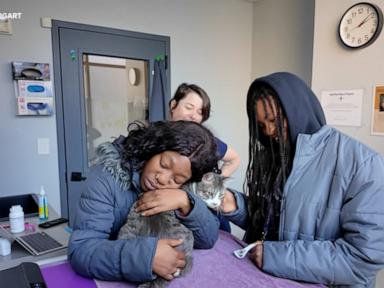
When Will Zweigart brought Isaac out in the carrier and let Zariah greet him briefly outside, the cat was immediately transported to Flatbush Veterinary Clinic for medical evaluation and treatment before his official release back to the family. Veterinarians treat four-day entrapment cases with controlled intravenous or subcutaneous fluids, electrolyte monitoring, and gradual caloric reintroduction.
The Bigger Disaster Reality Pet Owners Ignore
Isaac's survival grabbed headlines because it offered one small point of light during a week defined by grief in Flatbush. Eight families were mourning loved ones. Residents were displaced, and investigators were still working to determine why the neighboring structure gave way while construction was underway. (Zariah even noted to reporters that residents used to feel their building shaking during the nearby construction work.)
Yet if you zoom out from Brooklyn, Isaac's story exposes a massive blind spot in how households prepare for urban emergencies.
According to the American Veterinary Medical Association (AVMA), roughly 34.1% of U.S. households own at least one cat—accounting for roughly 77 million pet cats nationwide. Despite those numbers, most apartment dwellers have zero extraction plan if a fire, gas leak, or structural collapse hits while they're at work or school.
Past disaster data backs up how bad the odds usually get:
- A National Institutes of Health (NIH) study of 365 survivors from Hurricanes Katrina and Rita found that 17.3% lost a pet during the storms and aftermath.
- Research published in the Journal of Homeland Security and Emergency Management estimated that 80% to 85% of companion animals rescued during major disasters were never reunited with their original owners.
Why do reunion rates crater? Because animals bolt when walls fail, carriers are buried in closets, microchips aren't registered with current phone numbers, and first responders don't know an animal is inside the apartment in the first place.
Isaac survived because Zariah spoke up publicly, refused to let people assume the apartment was empty, and kept pressing until specialists checked the exact kind of tight hiding spot a scared cat chooses.
Practical Steps Every Apartment Cat Owner Should Take Today
You can't prevent a neighboring construction site from failing, and you can't predict an urban emergency. You can, however, make sure rescuers actually find your cat if you're locked behind police tape.
- Put a pet alert sticker on your front door and main window. List the exact number and species of animals inside. If firefighters or building inspectors sweep your unit, they need to know they're looking for one cat—not zero.
- Block off unreachable voids before an emergency happens. Cats wedge behind dishwashers, inside torn box springs, and deep inside lower cabinets. Keep cabinet latches secure and block gaps under heavy appliances so a panicked cat hides in a room where rescuers can actually reach them.
- Store a hard-sided carrier in an accessible hallway closet. Cardboard carriers disintegrate in rain or sprinkler water, and fabric bags collapse under debris. Keep a rigid plastic carrier near your exit with a familiar-smelling towel inside.
- Verify your cat's microchip registration tonight. Having a chip implanted means nothing if the database still lists your old address or an inactive landline. Log into the registry and confirm your cell phone and an out-of-area emergency contact are listed.
- Save your local municipal animal welfare office and neighborhood rescue contacts in your phone. In New York City, having direct contacts for groups like Flatbush Cats and the Mayor's Office of Animal Welfare made the difference between a red-tagged door staying shut and a targeted rescue happening on day four. Find out which organizations hold emergency access agreements in your city before you ever need them.
Watch the local broadcast coverage of the rescue and update in Rescuers give update on cat found days after building collapse. This video features reporters and veterinary updates detailing Isaac's physical condition after his four days trapped inside the damaged Flatbush building.


