The air on a September morning in New York always smells of salt from the harbor and roasted chestnuts from the carts on the corner, right up until the moment it smells of nothing you have ever encountered in your life. Jet fuel. Pulverized concrete. The copper tang of fear.
Walk down a quiet street in Brooklyn or Queens or lower Manhattan, and you will see them. The red doors. Sometimes they are rolling steel grates scarred by soot and scraped by the chassis of heavy engines. Sometimes they are glossy, painted red wood flanked by heavy brass handles worn mirror-bright by the palms of twenty-year-olds who thought they were invincible. Behind those doors sits a machine of iron and muscle, ready to roar into the dark at forty seconds' notice.
In the immediate wake of that Tuesday, the world outside those red doors went mad with grief. Vigils choked the sidewalks with melting wax and cheap plastic candles. Strangers hugged strangers on subways, weeping into wool coats. Politicians stood on rubble and made promises about never forgetting that echoed against the ruined steel beams of the World Trade Center.
Memory is a slippery creature. It fades when the flowers die and the television cameras pack up their lenses and move on to the next disaster. The world went back to work. Traffic jammed the bridges. The stock market reopened. Life resumed its relentless, bruising pace.
But inside the firehouse, time fractured.
To understand what happened to the nine men who never came home to their quarters, you have to understand the geometry of a firehouse kitchen. It is the heart of the operation. It is where a rookie from Staten Island burns the morning eggs while a thirty-year veteran watches from behind a folded newspaper, offering gruelingly specific critiques on the physics of heat distribution. It is where children are brought to see where their fathers vanish for twenty-four hours at a time. It is a room built entirely on the assumption that everyone will come back to the table for dinner.
On that Tuesday, nine chairs stayed empty.
Imagine walking into that room at dawn on Wednesday. The coffee pot is still warm. A jacket is slung over the back of a chair, the name tape stitched over the breast pocket in heavy navy thread. The boots sit by the apparatus floor, the mud from the previous shift still drying in the treads. Nobody touches the boots. For days, weeks, months, those boots remain exactly where their owners kicked them off.
This is the invisible tax paid by those who stay behind. We talk endlessly about the physical destruction of the towers, the thousands of lives extinguished in a blinding flash of aviation fuel and gravity. We speak in macro numbers that numb the brain. Three thousand souls. An entire generation marked by a single, jagged line drawn through history.
Yet the true weight of loss is microscopic. It lives in the kitchen chair. It lives in the sudden silence that falls over a rig floor when someone drops a wrench and nobody laughs. It lives in the locker room, where a padlock remains clicked shut because opening it would mean admitting the finality of the absence.
We often sanitize grief. We prefer our heroes wrapped in flags and reduced to bronze plaques. Bronze does not bleed. Bronze does not wake up sweating in the middle of the night, listening for the station tones that never drop. The nine men who vanished into the dust of lower Manhattan were not marble statues. They were mortgage payers, Little League coaches, men who complained about bad knees and argued passionately about the proper way to dress a brisket.
When the roof collapsed, it did not just take lives. It tore a hole in the fabric of an extended family that operates on a level of intimacy most civilians never experience. Firefighters sleep ten feet away from each other. They share meals, fears, jokes, and the terrifying knowledge that their lives depend entirely on the competence and courage of the man standing next to them. Losing one of them is like losing a limb. Losing nine is an amputation that leaves the body permanently altered, learning how to walk again on crutches of memory and routine.
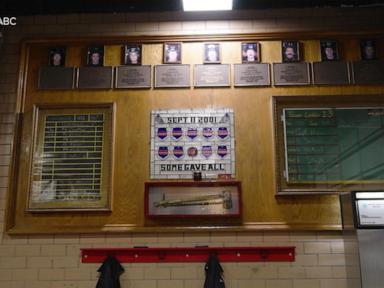
Years pass. The firehouse gets a new coat of paint. The rookies who were in grade school when the towers fell now stand on the rig floor, wearing gear that smells of modern synthetics rather than old canvas. They look at the photographs framed on the wall. Black-and-white portraits mostly, or faded polaroids with rounded edges. They point to a face. Who was that?
And an older captain pauses, wiping grease from his hands with a rag, and tells a story. He tells about the time that guy stole a municipal golf cart or carried an elderly woman down six flights of smoke-filled stairs with a smile on his face. He brings the ghost back to life for three minutes, right there between the diesel fumes and the polish.
That is how you fight the dark. Not with grand monuments of granite, though those have their place, but with the stubborn refusal to let a human being dissolve into a statistic.
The red doors stay open. The engines still roll when the bells ring out across the city. Somewhere out there, an alarm is sounding right now, cutting through the noise of the traffic and the sirens and the indifferent rush of millions of people going about their day. And somewhere inside an old brick building, a heavy engine rumbles to life, its tires gripping the concrete as it charges out into the light, carrying people who know the exact cost of the uniform they wear, and who choose to wear it anyway.
The names on the wall do not speak. They do not need to. Their silence is louder than any speech ever delivered from a podium. It is a quiet reminder of what we are capable of when the world breaks open, and of the ordinary men who stood in the center of the ruin so that the rest of us could walk out into the sun.