The wind over the Mulchatna River basin doesn't just blow. It carves. It is a sharp, indifferent blade that scours the Alaskan interior, reminding anything with a pulse that life here is a privilege, not a right. For the caribou, that privilege is currently being revoked.
A few decades ago, the Mulchatna herd was a living tide. Nearly 200,000 animals moved across the moss and lichen like a single, pulsing organism. Today, that number has shriveled to roughly 12,000. When a population collapses that fast, the silence it leaves behind is heavy. It is a silence felt in the empty freezers of indigenous hunters and in the worried conversations of biologists who see a foundational piece of the Arctic ecosystem sliding toward a ghost-story status.
This is the backdrop for a legal battle that recently reached a boiling point in a Fairbanks courtroom. A Superior Court judge just handed down a ruling that sounds, to the uninitiated, like a script for a grim action movie: state wildlife agents have the legal green light to lean out of helicopters and gun down wolves and bears to give the caribou a fighting chance.
It is brutal. It is surgical. And according to the state, it is the only way left to stop the bleeding.
The Math of the Meadow
Conservation is often discussed in soft, poetic terms, but on the ground, it is a cold game of arithmetic. Imagine a small village where the birth rate has plummeted while the local predators are thriving. If you do nothing, the village vanishes. If you intervene, you have to decide who lives and who dies.
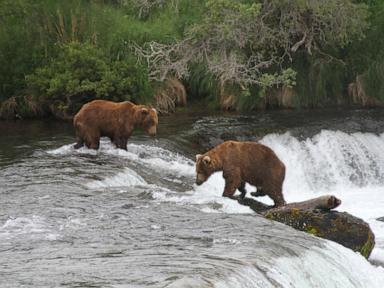
The Alaska Department of Fish and Game (ADF&G) looked at the Mulchatna numbers and saw a "predator pit." This is a biological trap where a prey population becomes so small that even a normal amount of hunting by wolves and bears prevents it from ever recovering. Every calf born is essentially a meal pre-ordered by a grizzly or a wolf pack.
To break the cycle, the state proposed an intensive management plan. In the spring of 2023, they took to the skies. In just a few weeks, officials killed 94 brown bears, five black bears, and five wolves. They didn't do it for sport or for trophies. They did it because, in their estimation, the caribou were "nutritionally stressed" and couldn't survive both the environment and the teeth.
Critics, led by groups like the Alaska Wildlife Alliance, didn't see a rescue mission. They saw a slaughter. They argued that the state bypassed its own rules, ignoring the potential impacts of habitat loss or disease, and jumped straight to the most violent solution available. They sued to stop the program, calling the aerial culling an overreach that ignored the complexity of the wild.
Judge Thomas Temple disagreed. He ruled that the state acted within its authority. The caribou, under Alaskan law, are a "preferred use" resource. That means when the herd is dying, the state has a mandate to do whatever is necessary—including the systematic removal of predators—to bring them back.
The View from the Skid
Picture a pilot hovering over the sprawling, featureless tundra. In the back, a state professional holds a shotgun or a rifle. This isn't the romanticized version of "The Great Outdoors" found in coffee table books. It is high-stakes, high-stress work.
The helicopter provides an vantage point that no ground-based hunter could ever achieve. From the air, the thickets where bears hide become transparent. The distance a wolf can run is irrelevant when followed by a machine that never gets tired. This technological advantage is exactly what makes people uncomfortable. It feels like cheating.
But the state argues that "fair chase" isn't the point here. This isn't hunting; it’s management. If you have a localized infection, you don't give the bacteria a fair chance; you apply an antibiotic. In the eyes of the ADF&G, the bears and wolves in the Mulchatna range are the infection threatening the survival of the caribou.
Yet, there is a haunting quality to this logic. Brown bears are slow-reproducing, long-lived animals with complex social structures. To remove nearly a hundred of them from a specific area in a single season is a massive ecological shock. We are effectively playing God with a specialized toolkit, betting that we understand the ripples we are creating in the pond.
The Empty Plate
To understand why a judge would allow such a drastic measure, you have to look away from the animals and toward the people. Alaska is one of the few places left in America where "subsistence" isn't a hobby—it’s a caloric necessity.
In the remote villages scattered across the Mulchatna range, the caribou herd is the local grocery store. When the herd disappears, the cost of living skyrockets. Replacing caribou meat with store-bought beef flown in on bush planes is a financial impossibility for many families.
Consider a hypothetical family in a village like Quinhagak. For generations, the arrival of the herd meant security. It meant a winter where the kids grew up strong. Now, those families look at empty ridges. For them, the bears aren't majestic symbols of the wilderness; they are the things eating their children's dinner.
This human element is the invisible weight on the judge’s scales. The law in Alaska is written to protect the people’s right to harvest the land. When a predator population gets in the way of that right, the state is legally obligated to tilt the balance back in favor of the humans.
The Uncertainty of the Wild
The real tragedy of the Mulchatna herd is that no one actually knows if the killing will work. Nature is famously bad at following human scripts.
Some biologists argue that the caribou are struggling because the climate is changing, shifting the timing of the spring melt and altering the nutrients in the lichen they eat. If the habitat is the problem, killing every bear in the state won't bring the caribou back. It would just leave a broken landscape with fewer bears and still-dying caribou.
The state’s counter-argument is that we don't have the luxury of waiting for a twenty-year longitudinal study. If we wait for perfect data, the Mulchatna herd will be a memory. They are choosing a "coarse tool" because it is the only tool they can grab right now.
The courtroom victory for the state means the helicopters will likely return. The rotors will thump over the quiet valleys, and the snow will be stained red again this spring. It is a desperate gamble, a violent intervention designed to save a quiet, grazing species from the brink of localized extinction.
We are left with a jagged reality. To save a forest, sometimes you have to cut down the trees. To save a herd, we have decided we must kill the things that hunt them. It is a heavy burden for a state to carry—the blood of the predator on the hands of the protector.
As the helicopters lift off, the tundra remains indifferent. The wind continues to carve the land, and the few remaining caribou keep their heads down, searching for a bit of green in a world that has become increasingly lethal. The machines in the sky are just the latest predators in a landscape that has always demanded a high price for survival.