The air inside a typical government hearing room feels heavy, filtered by industrial vents and weighed down by the scent of old paper and lukewarm coffee. It is a place of procedures. It is a place where the grandest shifts in human safety are often decided not by a dramatic vote, but by the subtle adjustment of a rulebook. For decades, the American vaccine program has operated within these rooms under a specific set of checks and balances—a system of courts and committees designed to keep the peace between innovation and public anxiety.
Now, that peace is fraying.
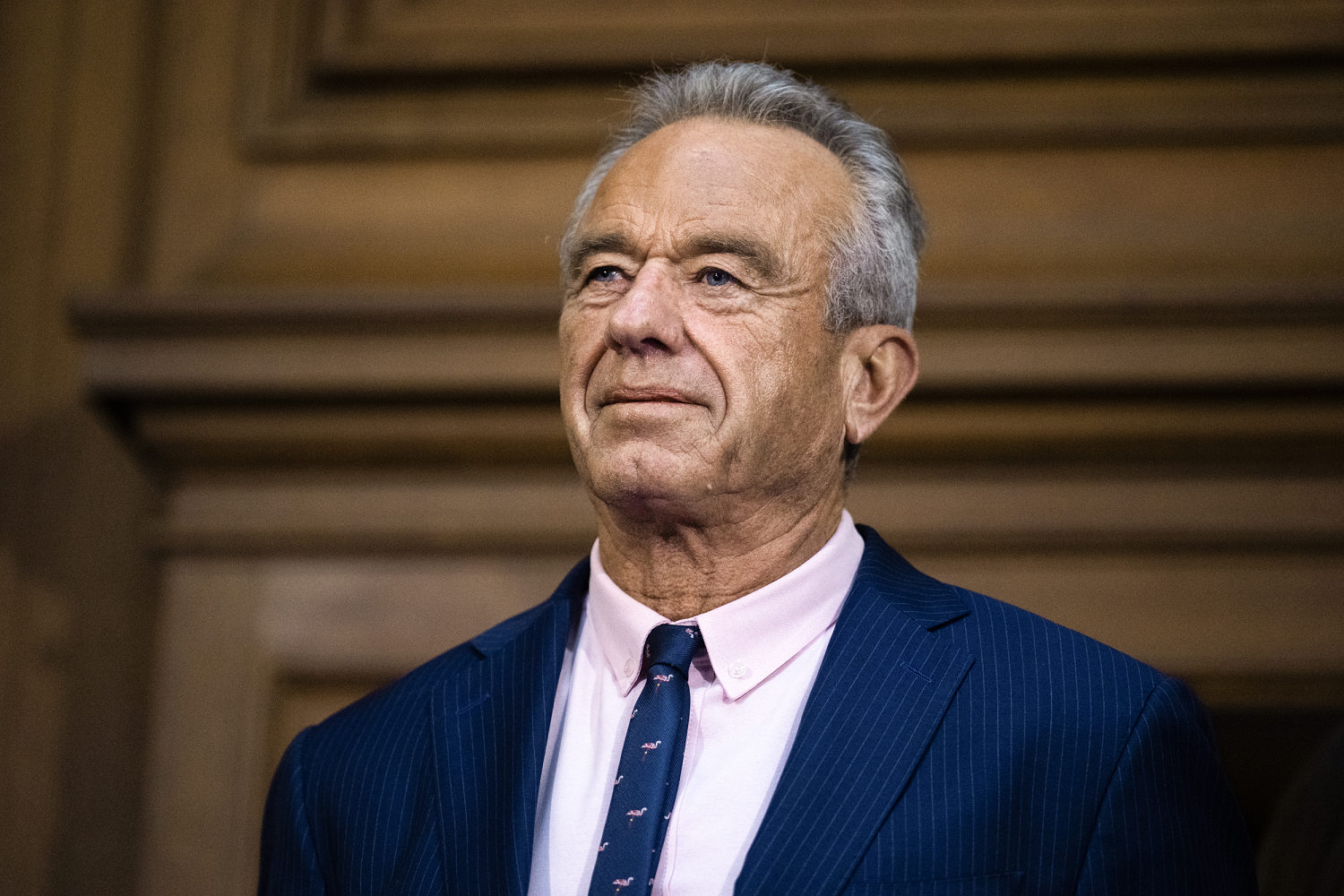
Robert F. Kennedy Jr. sits at the center of a storm that is less about medical science and more about the mechanics of power. While the headlines focus on his long-held skepticism regarding immunization, the real story is buried in the administrative architecture he is currently redesigning. He isn't just changing the conversation. He is changing the plumbing.
Consider a young mother sitting at her kitchen table in 2026. She is surrounded by a digital roar of conflicting information. On one side, the established medical community speaks in the language of population health and statistical significance. On the other, a new guard promises "transparency" and "choice." The bridge between these two worlds has historically been a federal court order—a legal guardrail intended to prevent political figures from overstepping their bounds when it comes to vaccine policy.
But there is a loophole in every law.
The Art of the Workaround
The federal courts previously signaled that the executive branch cannot simply dismantle vaccine recommendations on a whim. There are precedents. There are protections. However, the legal system is built to address actions, not the creation of new advisory bodies. By establishing a new "vaccine safety panel," the administration is essentially building a second house next to the old one. They aren't tearing down the original structure; they are just making sure no one wants to live in it anymore.
Legal experts watching these developments describe it as a procedural sidestep. If a court says you cannot fire the people who make the rules, you simply create a new group of people whose job it is to "review" those rules. You don't break the law. You make the law irrelevant.
This isn't just a win for a political movement. It is a fundamental shift in how we determine what is true. In the past, the "truth" of a vaccine’s safety was a consensus reached by career scientists at the CDC and FDA. Under the new panel system, that truth becomes a contested territory. The panel acts as a filter. It decides which data reaches the public and which experts are allowed to speak with the authority of the state.
The Invisible Stakes of a Canceled Consensus
Imagine a heavy, intricate clock. For eighty years, we have trusted that the gears—scientists, doctors, and regulators—were turning in sync. We didn't need to understand the mechanics to know the time. This trust allowed for the near-total eradication of polio and the containment of measles. It was a silent, social contract.
When that clock begins to be dismantled, the immediate effect isn't a catastrophe. It is a silence. A hesitation.
The danger of bypassing court orders through administrative maneuvering isn't that a "bad" vaccine will suddenly be forced on the public. The danger is the opposite. It is the slow-motion collapse of public confidence. When a panel is perceived as being hand-picked to reach a specific, pre-determined conclusion, the very concept of "safety" becomes a partisan talking point.
One side sees a brave crusade for truth. The other sees the dismantling of the shield that protects us from ancient diseases.
Caught in the middle is the local pediatrician. Picture Dr. Aris, who has spent twenty years in a small-town clinic. She used to point to the CDC guidelines as the gold standard. They were the rock she stood on when talking to hesitant parents. Now, the rock is shifting. If the federal government itself is split into competing panels—one saying the vaccines are the cornerstone of health, the other "just asking questions"—Dr. Aris loses her most powerful tool: clarity.
Doubt is a powerful contagion. It doesn't need to prove its case to be effective. It only needs to exist.
The New Architecture of Authority
The legal strategy at play here is brilliant in its simplicity. By framing the new panel as an advisory body rather than a regulatory one, the administration can argue it is merely seeking "more information." Courts are generally hesitant to block the government from seeking advice.
Yet, in the world of public perception, advice is authority.
If this panel decides to highlight rare side effects while downplaying the risks of the diseases themselves, they aren't technically breaking any medical regulations. They are simply changing the narrative. They are shifting the "burden of proof." For nearly a century, the burden was on the virus to prove it could kill us. Now, the burden is being shifted back onto the vaccine to prove it is 100% perfect—a standard that exists nowhere else in medicine.
This is the "human-centric" reality of the policy change. It isn't a dry legal battle over the Administrative Procedure Act. It is a battle over the anxiety of every parent who has ever stayed up late at night wondering if they are making the right choice for their child.
We are witnessing the birth of a dual-track reality. One track is built on decades of peer-reviewed data and global health results. The other is built on the skepticism of a new political era. By using administrative panels to sidestep the courts, the administration ensures that these two realities will never have to meet in a fair fight. They will simply coexist, creating a permanent state of confusion.
The Fragility of the Shield
We often forget that public health is a collective effort. It is the only form of medicine where your neighbor’s choices directly affect your own survival. If the new panel succeeds in making vaccine skepticism a mainstream, government-sanctioned position, the "herd immunity" we’ve relied on for generations begins to evaporate.
It starts with a few families opting out. Then a few more. Then a school district. Then a state.
The lawyers will continue to argue about whether the panel violates the spirit of previous court orders. They will file briefs and cite obscure statutes. They will debate the fine line between "executive oversight" and "regulatory capture." But while they talk, the foundation of the system is being replaced.
The old system was far from perfect. It was often slow, sometimes bureaucratic, and occasionally opaque. But it was a system built on the idea that health should be insulated from the shifting winds of the election cycle. When you replace that insulation with a political panel, you aren't just changing the rules. You are inviting the wind inside.
The real impact of RFK Jr.’s new rules won’t be felt in a courtroom. It will be felt in the quiet aisles of a pharmacy three years from now, when a person looks at a vial and wonders, for the first time, who they are supposed to believe.
When the gatekeepers are at war with the gates, the house cannot stand. We are moving into an era where the truth is no longer a shared destination, but a choose-your-own-adventure story, and the cost of the wrong choice is a price we haven't had to pay in a very long time.
The pen moves across the paper in Washington. A rule is changed. A panel is formed. And somewhere, a virus that has been waiting in the shadows for decades begins to find its way back into the light.