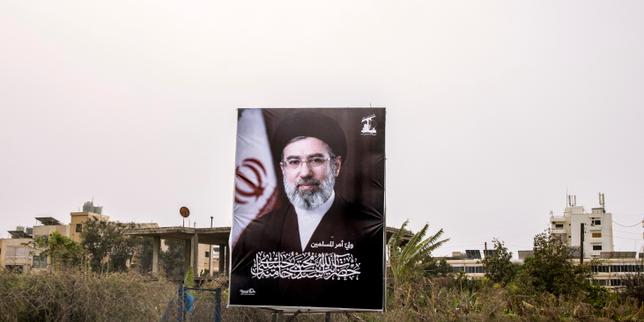
The recent pronouncements from the Iranian Supreme Leader regarding retaliatory measures against the United States and Israel signify a shift from strategic patience to a calculated doctrine of "proactive defense." This shift is not merely rhetorical; it is a response to the systematic degradation of Iranian proxies and the penetration of its internal security apparatus. To understand the current risk profile, one must deconstruct the Iranian strategy into three functional domains: kinetic signaling, the preservation of the "Axis of Resistance" infrastructure, and the management of domestic legitimacy through external projection.
The Triad of Iranian Strategic Calculus
The Supreme Leader’s threats operate within a structured framework designed to restore a deterrence equilibrium that was shattered by recent tactical successes in the Levant. This calculus relies on three specific variables:
- Kinetic Proportion: The need to deliver a strike significant enough to satisfy hardline domestic factions and regional proxies, yet calibrated to avoid triggering a full-scale conventional war that Iran is ill-equipped to win.
- Proxy Vitality: Assessing the remaining operational capacity of Hezbollah and Hamas. If these assets are neutralized, Iran loses its primary "forward defense" mechanism, forcing it to rely on direct engagement or its nascent ballistic program.
- Sanctity of the Islamic Republic: The survival of the clerical regime is the absolute priority. Every escalatory step is measured against the risk of an Israeli or American strike on critical infrastructure, specifically energy exports or nuclear enrichment sites.
The Mechanics of the Escalation Ladder
Deterrence in the Middle East functions as a series of rungs on an escalation ladder. Iran’s current position suggests an intent to move from "Rung 2: Grey Zone Operations" (cyberattacks, maritime harassment) to "Rung 4: Direct State-on-State Confrontation." This transition creates a significant structural risk for global energy markets and regional stability.
The Breakdown of Grey Zone Efficacy
For decades, Iran utilized plausible deniability to project power. However, the intensity of recent Israeli intelligence operations—exemplified by the decapitation of Hezbollah’s leadership and the assassination of Ismail Haniyeh in Tehran—has rendered grey zone tactics insufficient. When the "shadow war" becomes visible and one-sided, the disadvantaged party is forced into overt action to prevent a total collapse of its deterrent credibility.
Ballistic and Drone Volumetrics
The technical reality of Iranian threats rests on its inventory of medium-range ballistic missiles (MRBMs) and "suicide" drones (UAVs). Analysts tracking the April and October 2024 salvos noted a transition in Iranian tactics. The reliance on sheer volume (saturation attacks) aims to overwhelm the Arrow 3 and David’s Sling missile defense systems. The cost-to-kill ratio favors the defender in the short term but creates a logistics bottleneck. If Iran can force Israel and the U.S. to deplete their interceptor stockpiles faster than they can be replenished, the defensive umbrella fails.
The Economic Cost Function of Regional War
The Iranian threat to "crushing response" includes the implicit threat to the Strait of Hormuz. Approximately 20% of the world's total oil consumption passes through this chokepoint.
The economic logic of an Iranian strike on maritime routes is a double-edged sword. While it would trigger a global price spike—punishing the West—it would also likely alienate China, Iran's primary oil customer and diplomatic shield. This creates an Economic Constraint Loop:
- Action: Mining the Strait or seizing tankers.
- Result: Immediate rise in Brent Crude prices; global inflationary pressure.
- Feedback: Massive loss of Iranian revenue as China seeks alternative suppliers and the U.S. Navy enforces a total blockade.
Given this loop, Iran’s most likely path is not a total closure of the Strait, but a "pulsed disruption" strategy designed to create market volatility without triggering a total embargo.
Identifying the Miscalculation Risk
The primary flaw in the current Iranian-Israeli standoff is the "Intelligence Gap." Both sides are operating under assumptions regarding the other's "red lines" that may no longer be accurate.
- The Israeli Red Line: Previously, Israel tolerated proxy harassment. Now, the doctrine has shifted toward "The Octopus Doctrine," where the focus is on hitting the "head" (Tehran) rather than the "tentacles" (proxies).
- The Iranian Red Line: Tehran assumed its soil was a sanctuary. The July 2024 events proved otherwise.
When both parties believe the other is bluffing, the probability of a "Black Swan" event—an accidental hit on a high-value civilian target or a catastrophic intelligence failure—increases exponentially. This is the Entropy of Deterrence: the longer a high-tension state persists without a resolution, the more likely a random variable will dictate the outcome.
The Role of the United States as a Security Guarantor
The presence of U.S. carrier strike groups and THAAD (Terminal High Altitude Area Defense) batteries in the region serves a dual purpose. It provides a technical shield for Israel, but more importantly, it acts as a "tripwire."
The Supreme Leader’s specific mention of the United States indicates a recognition that any strike on Israel is effectively a strike on American strategic interests. This necessitates a "Multi-Front Containment" model:
- Northern Front: Deterring Hezbollah from full-scale mobilization.
- Red Sea Front: Neutralizing Houthi disruption of global trade.
- Direct Front: Intercepting Iranian launches before they enter Israeli airspace.
The logistical burden of maintaining this posture is significant. The U.S. is essentially subsidizing regional security at the cost of its "Pivot to Asia" strategy. Iran knows this and uses time as a weapon, hoping to exhaust American political will.
Structural Vulnerabilities in the Iranian Position
Despite the aggressive rhetoric, Iran faces systemic internal pressures that limit its kinetic options. The "Women, Life, Freedom" movement and the chronic devaluation of the Rial have created a fractured domestic landscape.
- Logistical Fragility: Iranian conventional forces (Artesh) are largely equipped with aging hardware. Their reliance on asymmetric tools is a necessity, not just a choice.
- Command and Control (C2) Degradation: The loss of key IRGC (Islamic Revolutionary Guard Corps) commanders has disrupted the informal networks that manage regional proxies.
These vulnerabilities suggest that the "crushing response" may be more cyber-centric or focused on "soft" targets (embassies, international commercial interests) rather than a direct military invasion, which is functionally impossible for Tehran.
The Nuclear Threshold Paradox
The most dangerous variable in the Supreme Leader's threat matrix is the acceleration of the nuclear program. As conventional deterrence (the proxies) fails, the "Nuclear Option" becomes more attractive as a survival guarantee.
This creates a Pre-emption Incentive for Israel. If Israeli leadership perceives that Iran is using the current chaos to sprint toward a 90% enrichment level, the window for a diplomatic or limited kinetic solution closes. We are entering a phase where "maximum pressure" meets "maximum resistance," leaving no room for the face-saving exits that characterized previous decades of the conflict.
The strategic play for regional actors is no longer about "winning" a conflict, but about managing a permanent state of low-intensity war. To navigate this, the following operational adjustments are required:
- Hardening of Critical Infrastructure: Shift from reactive defense to redundant systems across energy and water sectors.
- Intelligence Decoupling: Reducing reliance on single-source signals to avoid the "Mirror Imaging" trap—where one assumes the enemy thinks like oneself.
- Asymmetric Diplomacy: Engaging sub-state actors and local populations within Iran to increase the internal cost of external aggression.
The situation has evolved beyond the point where simple de-escalation is possible. The goal now is the containment of the inevitable "response" to ensure it does not cross the threshold into a regional conflagration that would redefine the global order for the next quarter-century.