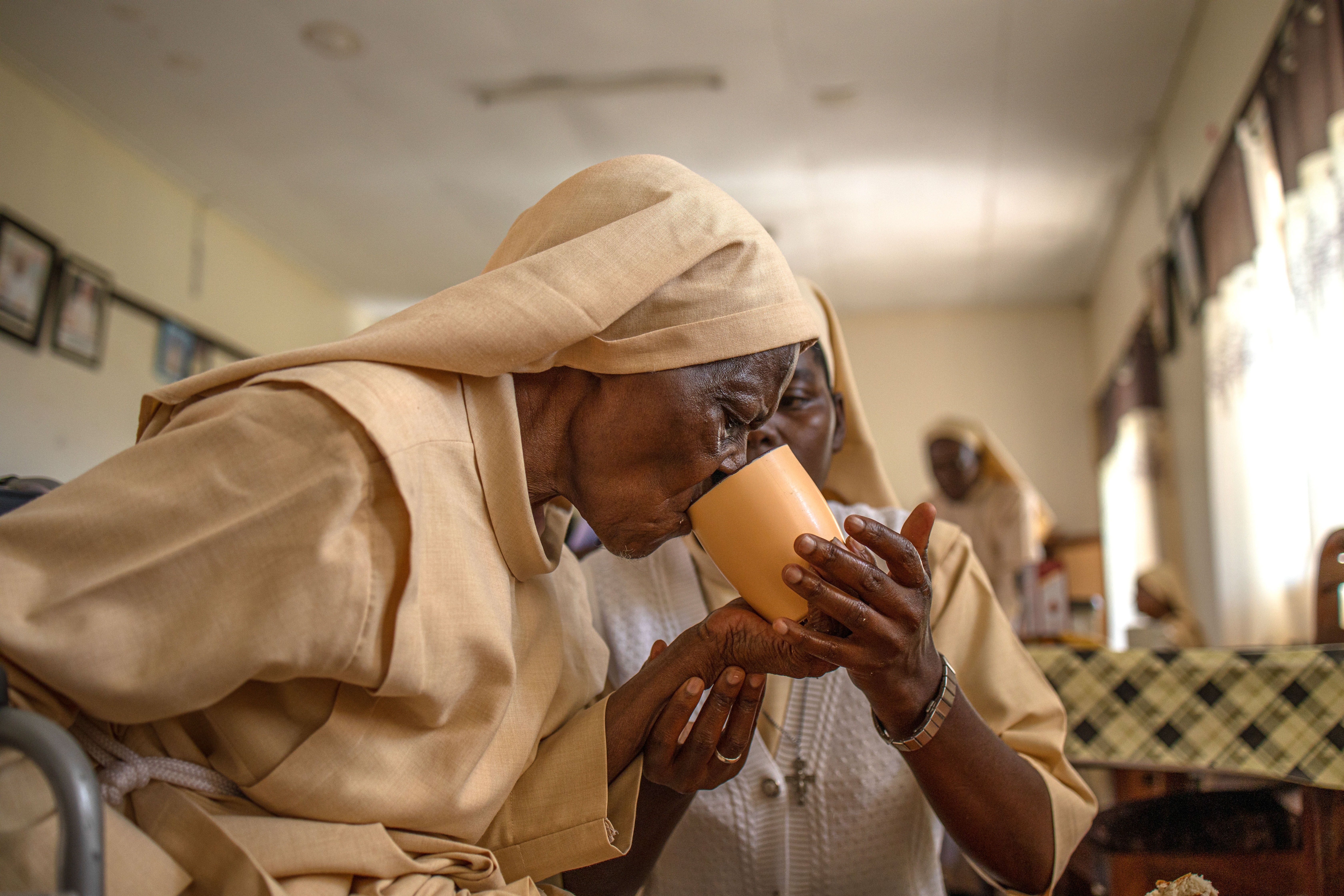
Catholic sisters spent the last century building the infrastructure of American compassion. They ran the hospitals that saved your relatives. They taught generations of children in crowded parochial school classrooms. They operated soup kitchens, staffed shelters, and showed up in the poorest neighborhoods when everyone else left. They did all this without asking for a traditional salary, a 401k, or a corner office.
Now, they are growing old. The bill for their care is due, and the bank accounts are terrifyingly empty.
We are witnessing an unprecedented retirement crisis of Catholic nuns across the United States. It is a quiet emergency happening behind the brick walls of convents and motherhouses. For decades, the myth of the self-sustaining church masked a brutal economic reality. Women religious—the official term for Catholic sisters—are aging rapidly, and the financial structures meant to support them are collapsing.
This isn't just a religious issue. It's a massive labor and social crisis. Women who donated millions of hours of skilled healthcare and education to society are facing a retirement without basic financial security. Understanding how this happened requires looking at a system that failed to plan for the very women who built it.
The Flawed Math of Lifelong Service
The root of the retirement crisis of Catholic nuns comes down to simple, harsh arithmetic. For generations, religious orders operated on an assumption of perpetual growth. Young women entered convents in large numbers during the early and mid-twentieth century. These younger sisters earned stipends or small salaries, which funded the care of the small percentage of older, retired sisters.
The system worked beautifully until the numbers flipped.
Data from the National Religious Retirement Office shows a stark demographic cliff. In many American orders, the average age of a sister is now well over 80. In some communities, it pushes past 85. For every young woman entering a convent today, there are dozens of older sisters who require full-time care. The financial pyramid has inverted.
Consider how these women lived. When a sister worked as a nurse or teacher in the 1950s, 1960s, or 1970s, she didn't take home a paycheck. Her institution paid a tiny stipend directly to her religious order. This money covered immediate needs: food, simple habits, community vehicles, and modest housing. There was no surplus. Orders didn't accumulate capital investments or buy commercial real estate to fund future pensions. They put every extra dime back into their ministries.
They trusted the future. But the future changed.
Why Social Security Left Convents Behind
Many people assume that retired sisters simply draw standard Social Security checks like any other American worker. That assumption is wrong.
Historically, members of religious orders who took a vow of poverty were excluded from the Social Security system. It wasn't until 1972 that federal law allowed religious institutes to opt into Social Security for their members. Even after opting in, the benefits were calculated based on the meager stipends the sisters received, not the market value of their professional labor.
If a sister spent thirty years teaching high school but her order received a stipend equivalent to $2,000 a year for her work, her eventual Social Security payout was shockingly low. Today, many elderly sisters receive monthly Social Security checks that are a fraction of what an average secular worker gets. It's barely enough to cover a week of groceries, let alone 24-hour medical care.
Worse, thousands of older sisters worked during the peak of their careers before 1972. They contributed nothing to the system during those years, meaning they have massive gaps in their work histories. They spent a lifetime working sixty hours a week, yet on paper, the government views them as if they barely worked at all.
The Crushing Cost of Assisted Living
Aging in America is expensive for anyone. For religious orders, it's an existential threat.
Sisters don't retire to Florida condos. They stay in their motherhouses, which were built decades ago to house hundreds of young, active women. These buildings are now giant white elephants. They are drafty, expensive to heat, and completely unsuited for women with mobility issues. Retrofitting a 1920s brick convent with elevators, ramps, and accessible bathrooms costs millions of dollars that these orders don't have.
When a sister develops dementia, Parkinson’s, or needs advanced physical therapy, the community must adapt. They have to hire outside nurses, aides, and therapists. The median cost of a private room in an assisted living facility in the US now hovers around $5,000 a month, while nursing home care easily tops $8,000 a month. Multiply that by thirty, fifty, or one hundred ailing sisters in a single community, and the math becomes terrifying.
Religious orders are legally independent entities. The Vatican doesn't fund them. Local dioceses don't pay their bills. If an order of sisters runs out of money to care for its elderly members, they are on their own. They are forced to sell off historic properties, land, and cherished artifacts just to pay for prescription drugs and hospital beds.
How to Help the Women Who Helped Everyone Else
This crisis won't fix itself, and waiting for a miracle isn't a strategy. Solving this requires direct, aggressive action from laypeople, donors, and communities that benefited from these women's labor.
If you want to make a tangible difference in the lives of these aging women, here is how to direct your energy and resources.
Direct financial support remains the fastest way to stabilize an order in crisis. The National Religious Retirement Office coordinates an annual collection in Catholic parishes, but you can bypass the bureaucracy and donate directly to specific motherhouses. Look up orders that operated in your hometown or taught you as a child. They accept direct donations specifically earmarked for their retirement and healthcare funds.
Volunteer your professional skills. Orders often lack the administrative budget to hire top-tier financial planners, eldercare consultants, or real estate attorneys. If you have expertise in navigating Medicaid, managing commercial property sales, or structuring long-term investments, offer your services pro bono. Helping an order transition a massive, vacant convent into an income-generating property or an affordable senior housing complex can secure their financial future for decades.
Advocate for the preservation of their legacy. When orders are forced to sell land, developers often swoop in to bulldoze historic spaces. Work with local historical societies and land trusts to help orders sell their properties to conservation groups or community organizations. This ensures the sisters receive fair market value for their assets while guaranteeing that the land they tended for a century continues to serve the public good.
Stop viewing this as a charity case and start viewing it as a matter of justice. These women gave everything they had to build the social safety net we rely on today. Ensuring they spend their final years in dignity, comfort, and safety is the absolute least we owe them.