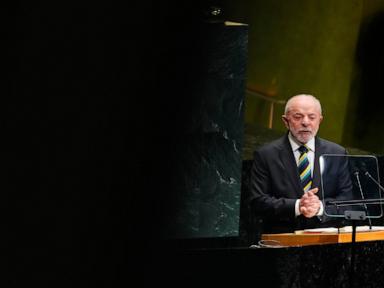
International diplomacy operates on a distinct set of incentive structures where public declarations serve as instruments of domestic political survival and strategic deterrence rather than platforms for open negotiation. When heads of state address the United Nations General Assembly during active electoral or military cycles, the performance is engineered to manage multiple distinct audiences simultaneously. Benjamin Netanyahu’s address amid mounting geopolitical volatility and domestic electoral pressure represents a masterclass in audience segmentation and framing. To deconstruct this performance requires evaluating it not through the lens of standard diplomatic rhetoric, but as a high-stakes calculation of political cost, deterrence signaling, and coalition maintenance.
The Tripartite Audience Matrix
Political communication in multilateral forums rarely targets the assembled body. Instead, it functions as a broadcast medium directed toward three distinct domestic and international constituencies, each requiring a tailored message to achieve a specific behavioral outcome.
The primary constituency is the domestic electorate. In a polarized political environment marked by impending elections or coalition instability, leaders must project unyielding resolve. The strategic objective is to preempt opposition framing by occupying the hardline position on national security. Every rhetorical flourish, historical parallel, and direct challenge issued from the podium is stress-tested against how it plays on domestic evening news cycles.
The secondary audience comprises regional adversaries and allied capitals. Here, the objective shifts from persuasion to signaling thresholds of deterrence. By explicitly detailing red lines and operational capabilities, the speaker attempts to alter the calculus of opposing actors without necessarily committing to immediate military escalation. This functions as verbal deterrence economics where the cost of miscalculation is made explicitly clear through public threat inflation.
The tertiary audience is the international multilateral apparatus itself. Addressing the United Nations serves a dual purpose for leaders facing institutional hostility. It provides a platform to systematically dismantle international criticism while simultaneously reinforcing a narrative of sovereign exceptionalism. By openly defying institutional consensus, the speaker communicates to domestic supporters that international pressure is not a reflection of objective failure, but proof of targeted political bias.
The Cost Function of Diplomatic Defiance
Confrontational rhetoric at the global stage carries measurable costs and benefits. Understanding why leaders repeatedly choose polarization over conciliation requires mapping this exact cost-benefit equation.
Benefits                          Costs
----------------------------     -----------------------------
Domestic Rally Effect             Diplomatic Isolation
Erosion of Opponent Momentum      Institutional Retaliation
Consolidation of Coalition Base    Accelerated Resolution Deadlocks
The immediate benefit is the consolidation of political loyalty. When external pressure mounts, nationalist framing triggers an in-group solidarity mechanism. Swing voters or hesitant coalition partners are frequently compelled to rally around the flag when the national leader is perceived as standing alone against hostile international bodies. This compresses internal dissent and realigns the political debate around security rather than economic governance or institutional corruption.
Conversely, the structural cost involves the hardening of diplomatic stalemates. When a leader explicitly dismisses international critiques as morally compromised or politically motivated, negotiating space evaporates. Mediators find themselves stripped of operational leverage because any compromise can be framed by political opponents as capitulation. The long-term price of short-term domestic consolidation is the systematic erosion of multilateral trust and the foreclosure of diplomatic off-ramps.
Framing Mechanisms and Narrative Control
Effective political communication relies on the active framing of adversaries and the monopolization of moral authority. In high-stakes addresses, this is achieved through specific rhetorical structures designed to constrain the analytical scope of the listener.
The first mechanism is moral simplification. Complex multi-party conflicts are reduced to a binary struggle between civilization and existential threat. This eliminates nuance and raises the political stakes to an absolute maximum. If survival is the baseline metric of evaluation, standard policy critiques are invalidated. To disagree with the tactical execution is framed as opposing the objective itself.
The second mechanism is historical inversion. Speakers frequently co-opt historical trauma to establish a direct lineage between past atrocities and current security dilemmas. This establishes an unassailable moral defense. By invoking historical precedents where international inaction led to catastrophe, the speaker shifts the burden of proof onto critics, implying that any hesitation today is a repetition of historical moral failure.
Strategic Forecast and Systemic Impact
The long-term systemic consequence of aggressive multilateral speechifying is the progressive degradation of international norms. When global forums are utilized exclusively as domestic campaign platforms, the institutional capacity for conflict resolution declines.
As leaders prioritize immediate electoral survival and baseline deterrence signaling over diplomatic consensus, the international system moves toward transactional fragmentation. Alliances become increasingly brittle, multilateral institutions are reduced to partisan weapons, and the structural predictability of global politics diminishes. The speech at the podium is finished within minutes, but the systemic friction it generates reshapes geopolitical calculations for years.