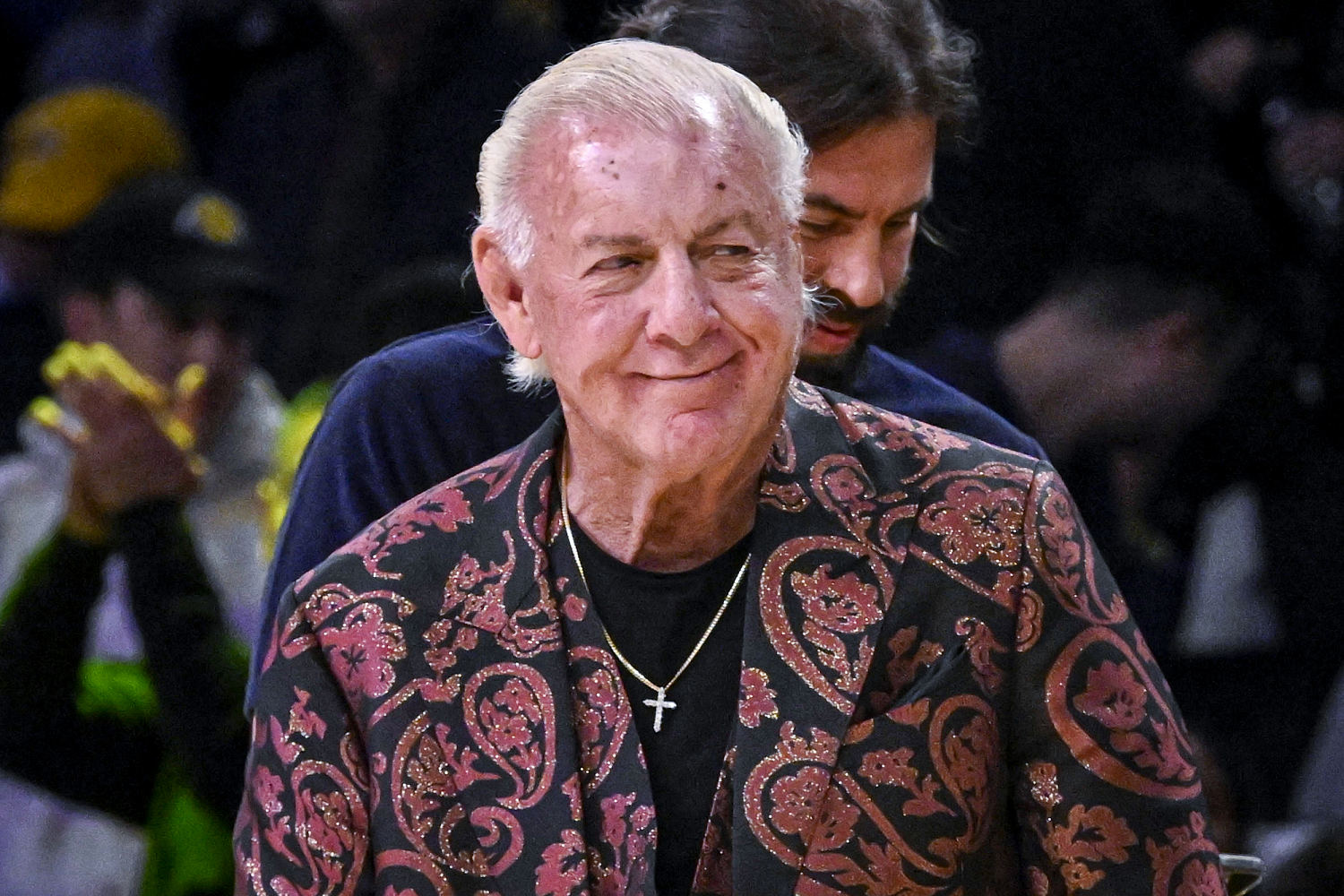
Professional wrestling icon Ric Flair is recovering following a hospitalization caused by a recent fall, adding another sobering chapter to the well-documented medical history of one of sports entertainment's most durable figures. While initial reports frame the incident as a routine tumble common among septuagenarians, a closer examination of Flair’s decades-long physical toll, combined with his history of catastrophic organ failure and neurological trauma, reveals why even a minor slip carries severe clinical risks for veterans of the squared circle.
A fall is never just a fall when your body has absorbed forty years of high-impact trauma. For an average man in his late seventies, losing balance on a hard surface might result in a bruised hip or a fractured wrist. For Richard Fliehr, known globally as the "Nature Boy," the physiological baseline is entirely different. Decades of back bumps on thinly padded wooden rings, coupled with surviving a 1975 plane crash that broke his back in three places and a near-fatal bout of septic shock and kidney failure in 2017, leave zero margin for error.
The Hidden Mechanics of a Wrestler's Fall
When mainstream entertainment outlets report that a retired wrestler took a spill, they treat it like a standard celebrity health blip. That misses the underlying biomechanics entirely. Wrestling does not merely wear down joints; it systematically degrades proprioception—the body's internal GPS that tells the brain where limbs are positioned in space.
Consider what happens during a standard wrestling match. Performers spend decades training their central nervous system to override the natural human instinct to break a fall with their hands. Instead, they learn to take the impact flat across their upper back and shoulders to protect their wrists and elbows. Over thousands of matches, this repetitive blunt-force trauma damages the delicate sensory receptors in the cervical spine and inner ear.
When a retired performer loses their footing in everyday life, two conflicting neural pathways collide. Their aging vestibular system fails to register the sudden shift in gravity quickly enough, while decades of muscle memory suppress the protective reflex to catch themselves. The result is an unprotected, high-velocity impact against concrete, tile, or hardwood.
Why Age Multiplies Ring Trauma
To understand the severity of Flair's recent hospitalization, look at the cumulative effect of chronic traumatic encephalopathy (CTE) and cervical stenosis—two conditions rampant among wrestlers from the territory era. Even without an official post-mortem diagnosis, the behavioral and physical markers of repetitive head trauma are well established in medical literature surrounding contact sports.
Subtle deficits in balance, delayed reaction times, and sudden drops in blood pressure—known clinically as orthostatic hypotension—frequently plague former athletes who spent careers taking unprotected chair shots and diving off top ropes. When you pair neurological wear with a cardiovascular system that has already endured the implantation of a pacemaker, a simple stumble becomes a complex diagnostic puzzle for emergency room physicians. Doctors cannot simply slap an ice pack on a bruise and discharge the patient. They have to rule out intracranial bleeding, cardiac arrhythmias, and internal organ stress before clearing someone with Flair's specific chart.
A Medical History Built on Survival
Flair’s resilience has become a foundational myth in professional wrestling, often celebrated by fans and promoters alike as proof of his superhuman toughness. Yet reviewing his documented medical timeline strips away the theatrical bravado and exposes a body pushed far past standard human limits.
- The 1975 Wilmington Plane Crash: At just 26 years old, Flair survived a Cessna crash that killed the pilot and paralyzed fellow wrestler Johnny Valentine. Doctors told Flair he would never walk again due to three crushed vertebrae. He returned to the ring less than six months later, altering his wrestling style from a power brawler to the high-stamina, bump-heavy technician that defined his career.
- The 2017 Coma and Organ Failure: Following decades of heavy alcohol consumption and grueling travel schedules, Flair was rushed to an Atlanta hospital with severe abdominal pain. Surgeons had to remove part of his bowel, and he spent over a week in a medically induced coma while battling kidney failure and congestive heart failure. His family was explicitly told he had a 20 percent chance of survival.
- Subsequent Cardiac Interventions: Between 2019 and 2022, Flair underwent multiple procedures related to his heart, including pacemaker adjustments and treatments for blood clots, all while publicly insisting he felt fine and continuing to make grueling personal appearances.
Each of these events left permanent structural scar tissue. The 2017 hospitalization alone required massive fluid resuscitation and aggressive surgical intervention, permanently altering his vascular integrity and metabolic baseline. When an individual with that specific history hits the floor, trauma teams immediately look for silent complications. A minor impact can trigger localized bleeding in patients taking blood thinners, or induce a dangerous spike in stress hormones that taxes a compromised heart.
The Myth of the Invincible Legend
Professional wrestling thrives on suspension of disbelief, a culture that inadvertently endangers its aging stars long after they stop taking bumps for a paycheck. Fans want to see the invincible showman strutting down the aisle in a sequined robe, shouting his signature catchphrases without a hint of fragility. Promoters, podcast networks, and convention organizers are more than happy to book these appearances, monetizing nostalgia until the talent physically cannot board the flight.
Flair himself has fed this machine relentlessly. Despite declaring retirement multiple times—most famously in a tearful, cinematic farewell against Shawn Michaels at WrestleMania XXIV in 2008—he repeatedly stepped back into the spotlight. In July 2022, at 73 years old, he wrestled what was billed as his "Last Match" in Nashville, Tennessee. During that bout, Flair visibly passed out twice from dehydration and exhaustion, later admitting he had forgotten crucial parts of the match due to severe fluid loss.
That night in Nashville served as a stark warning about the illusion of physical readiness. Performing in a controlled, choreographed environment with two younger wrestlers protecting him at every turn still pushed Flair to the brink of medical collapse. Daily life offers no such choreography. There is no referee checking on you when you slip on a wet floor, and no partner there to catch your weight before your head hits the ground.
The Economics of Never Stepping Down
Why do icons like Flair continue to maintain punishing travel schedules into their late seventies? The answer lies in the broken financial architecture of the wrestling business during its transition from regional territories to a global corporate monopoly.
Unlike modern athletes in the NFL, NBA, or MLB, wrestlers from the 1970s, 1980s, and 1990s were classified strictly as independent contractors. There were no union-backed pensions, no comprehensive post-career health insurance plans, and no structured financial literacy programs. Top draws made staggering sums of cash on the road, only to burn through it via private planes, divorce settlements, IRS disputes, and an industry-wide culture of excess.
When the spotlights finally dim, the medical bills do not stop arriving. For many legends, the convention circuit, autograph signings, and brand endorsements are not vanity projects; they are economic lifelines. Staying relevant requires staying visible, which means enduring grueling cross-country flights, living out of hotel rooms, and standing on concrete convention floors for eight hours a day—conditions that actively degrade balance, sleep quality, and cardiovascular stability.
What Recovery Actually Looks Like at Seventy-Seven
The public relations language surrounding celebrity hospitalizations is notoriously sanitized. Phrases like "resting comfortably," "in good spirits," and "expected to make a full recovery" are deployed immediately to calm sponsors, event promoters, and worried fans. While Flair's team has struck a predictably optimistic tone following his latest hospital stay, clinical reality tells a more nuanced story.
Recovery from a fall in your late seventies is rarely a linear return to baseline. Even when imaging rules out major fractures or acute brain bleeds, the secondary effects of hospitalization can be devastating for an older athlete.
- Rapid Muscle Atrophy: Hospital bed rest causes older adults to lose skeletal muscle mass at an accelerated rate—sometimes up to two percent per day. For someone relying on muscular strength to compensate for degraded joint stability and spinal damage, losing even a fraction of leg and core strength dramatically increases the statistical probability of a second, more severe fall within six months.
- Vestibular Deconditioning: Extended periods lying flat disrupt the inner ear's adaptation to upright movement. When a patient finally stands up after three or four days in a hospital bed, blood pressure drops and dizziness spikes, creating an immediate hazard during physical therapy.
- Medication Cascades: Treating acute fall pain often requires analgesics or muscle relaxants. In patients with compromised kidney or liver function from past medical crises, standard doses clear the bloodstream much more slowly, leading to lingering cognitive fog and impaired motor coordination.
Physical therapists working with geriatric trauma patients focus intensely on breaking this cycle early. Rehabilitation is less about rebuilding athletic prowess and more about mastering basic fall-prevention mechanics: strengthening the hip flexors, retraining ankle proprioception, and eliminating environmental hazards at home.
The Industry Blind Spot Nobody Wants to Fix
Every time a wrestling legend lands in the emergency room, social media floods with prayers, highlight reels, and nostalgic tributes. Within forty-eight hours, the news cycle moves on, and the underlying structural issues remain untouched.
Modern wrestling promotions have made undeniable strides in acute concussion protocols, wellness testing, and substance abuse rehabilitation for active rosters. Yet the industry still lacks a formalized, preventative care framework for its aging alumni. Legends contracts—often little more than merchandising and intellectual property licensing deals—rarely mandate comprehensive geriatric neurological screenings, cardiovascular stress monitoring, or mandatory travel restrictions for performers exhibiting clear signs of physical decline.
We treat these athletes like mythical characters because that is how they were marketed to us for half a century. When Ric Flair struts out in a custom suit, flashing a Rolex and boasting about limousines and jets, it is easy to forget that beneath the tailored fabric sits a 77-year-old frame held together by surgical steel, scar tissue, and sheer stubbornness.
Surviving a fall and walking out of the hospital is a testament to modern emergency medicine and Flair's undeniable grit, yet the margin between a routine recovery and a permanent tragedy shrinks with every passing year. Until the culture surrounding sports entertainment stops demanding that its broken heroes perform until they physically collapse, emergency room doors will remain a regular stop on the farewell tour.


