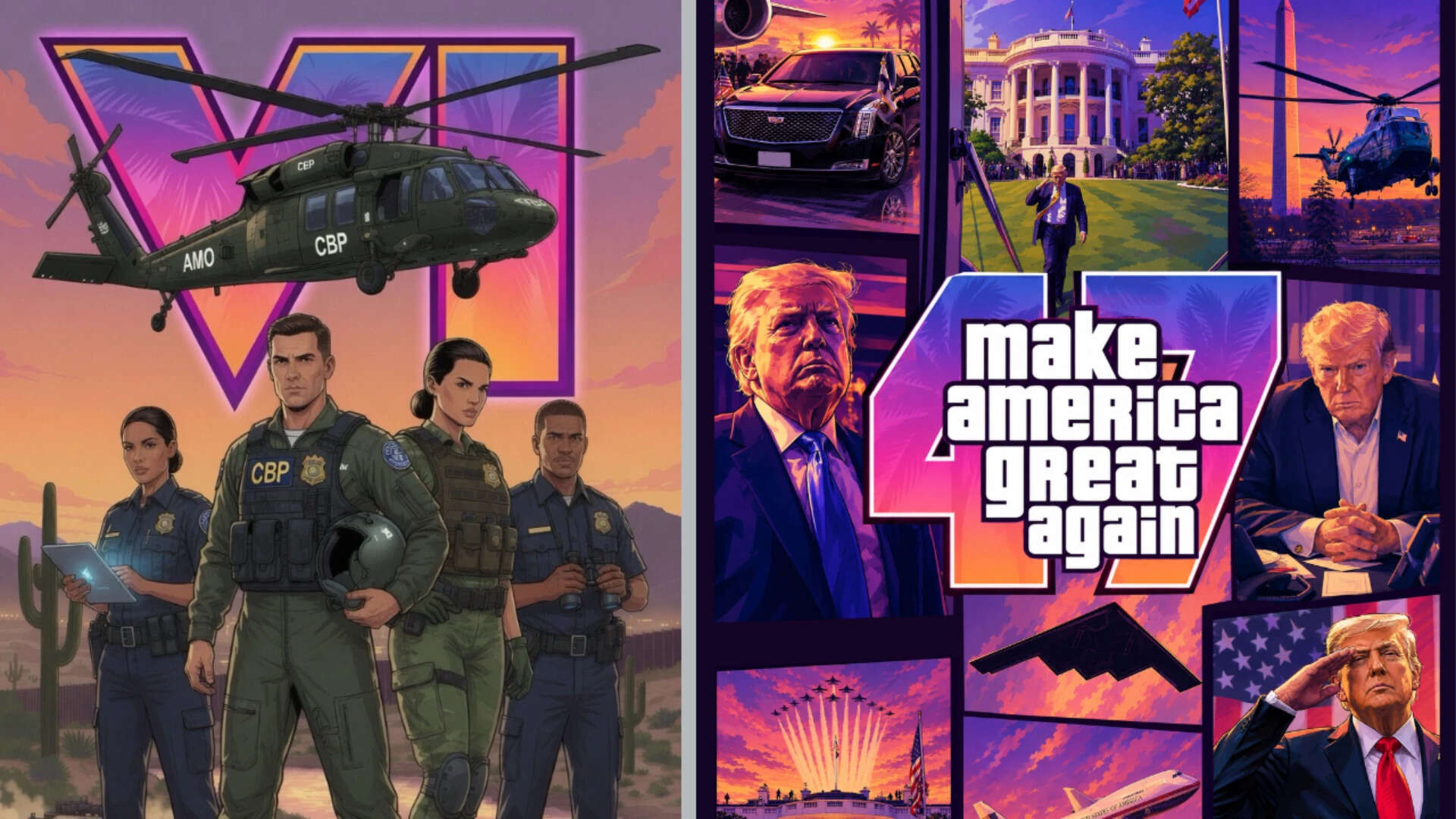
The tech and gaming press loves a manufactured David versus Goliath narrative. When political campaigns or White House officials appropriate pop culture iconography, the internet instantly clamors for a multi-billion-dollar corporate smackdown.
Case in point: the recent uproar over a campaign poster heavily mimicking the distinct, neon-soaked aesthetic of Grand Theft Auto VI. Commentators rushed to their keyboards, breathlessly waiting for Rockstar Games or its parent company, Take-Two Interactive, to unleash an army of intellectual property lawyers. Instead, the studio offered a laughably brief, dismissive response.
The mainstream consensus immediately labeled this two-word reaction as a subtle, savage shutdown. They viewed it as a corporate titan putting politicians in their place.
They got it completely wrong.
Rockstar Games did not issue a brief response out of anger or calculated defiance. They did it because, from a cold, hard brand perspective, the political poster was free marketing for a product that already commands more cultural gravity than any political campaign on earth. The lazy assumption that gaming companies must defend their IP against every political entity misses the entire mechanics of modern attention economics.
The Myth of the Sacred Intellectual Property
When a political figure uses a piece of art, the immediate reaction from the creative class is to scream about copyright infringement. We saw it when musicians sued over campaign rally playlists. We see it now with video games.
But Grand Theft Auto is not a fragile indie darling. It is an apex predator of entertainment.
Intellectual property law exists to protect a brand from commercial dilution and consumer confusion. If a competitor releases a game called "Great Larceny Auto," Take-Two Interactive files a lawsuit within minutes. They do this because consumer confusion directly impacts their bottom line.
A political campaign using a stylized poster does not confuse a single consumer. Nobody looks at a political ad and thinks, "Ah, yes, Rockstar Games is now running for office."
I have watched corporate legal teams analyze these exact scenarios. The math is simple. Going to court over a parody poster costs hundreds of thousands of dollars in billable hours. More importantly, it drags a brand into a hyper-partisan news cycle.
Rockstar Games values one thing above all else: absolute control over their own narrative. Filing a formal lawsuit hands that control over to cable news networks and political pundits. By offering a tiny, dismissive acknowledgment, Rockstar stayed completely out of the mud while keeping the focus entirely on their upcoming release.
Entertainment Outgrew Washington a Decade Ago
The core flaw in the public's reaction is the belief that a nod from Washington officials carries weight. It implies that a video game company should feel violated or validated by political attention.
Let's look at the actual numbers.
Grand Theft Auto V generated $1 billion in retail sales within three days of its release. It is the most financially successful entertainment product in human history, pulling in over $8 billion since its launch. The trailer for GTA 6 shattered YouTube records, amassing over 90 million views in a single 24-hour period.
Compare that to the reach of a standard political press release or a localized campaign asset. Washington is not the cultural tastemaker anymore. It is a lagging indicator. Politicians use gaming aesthetics because they are desperately trying to borrow relevance from an industry that completely dwarfs them in engagement, cultural impact, and revenue.
Rockstar's two-word dismissal was not a calculated legal warning. It was the reaction of an empire looking down at a minor provincial dispute. It was the corporate equivalent of checking a notification, realizing it does not affect quarterly earnings, and clearing the screen.
The Cost of the Counter-Attack
There is a distinct downside to ignoring political appropriations of a brand. It can alienate pockets of a player base who want their favorite studio to take a hard, ideological stance. Fans often demand that corporations act as moral arbiters, punishing political opponents through public relations warfare.
But executing that strategy is a trap.
Had Rockstar engaged in a massive legal battle or issued a fiery, partisan condemnation, they would have broken the golden rule of mass-market entertainment: never alienate half your potential audience over something that has zero impact on gameplay.
Grand Theft Auto is built on satirizing the entirety of American culture. It mocks the left, the right, the corporate elite, and the counter-culture with equal malice. The moment Rockstar aligns itself with or against a specific political faction in the real world, the teeth of their in-game satire get blunt. They lose the neutrality required to mock everyone effectively.
Stop Asking the Wrong Questions
The internet keeps asking: "How will Rockstar punish this unauthorized use of their brand?"
The real question you should ask is: "Why are we surprised that a multi-billion-dollar entity chose silence over a pointless PR war?"
If you run a business or manage a brand, the temptation to swing back at every unauthorized mention is incredibly high. Ego dictates that you must defend your territory. But ego is an expensive luxury in the attention economy.
When an entity borrows your aesthetic, they are admitting defeat. They are admitting that their own visual language is insufficient to capture the public's imagination, so they must steal yours.
The status quo media wants a fight because fights generate clicks. Rockstar Games wants to sell 100 million copies of a video game.
Recognize the difference between a threat to your business and a desperate cry for relevance from an outsider. Then, act accordingly. Give them two words, or give them nothing at all, and get back to building your empire.